
Table of Contents
Cat Hyperthyroidism Complete Guide for Owners on Diagnosis and Treatment Options
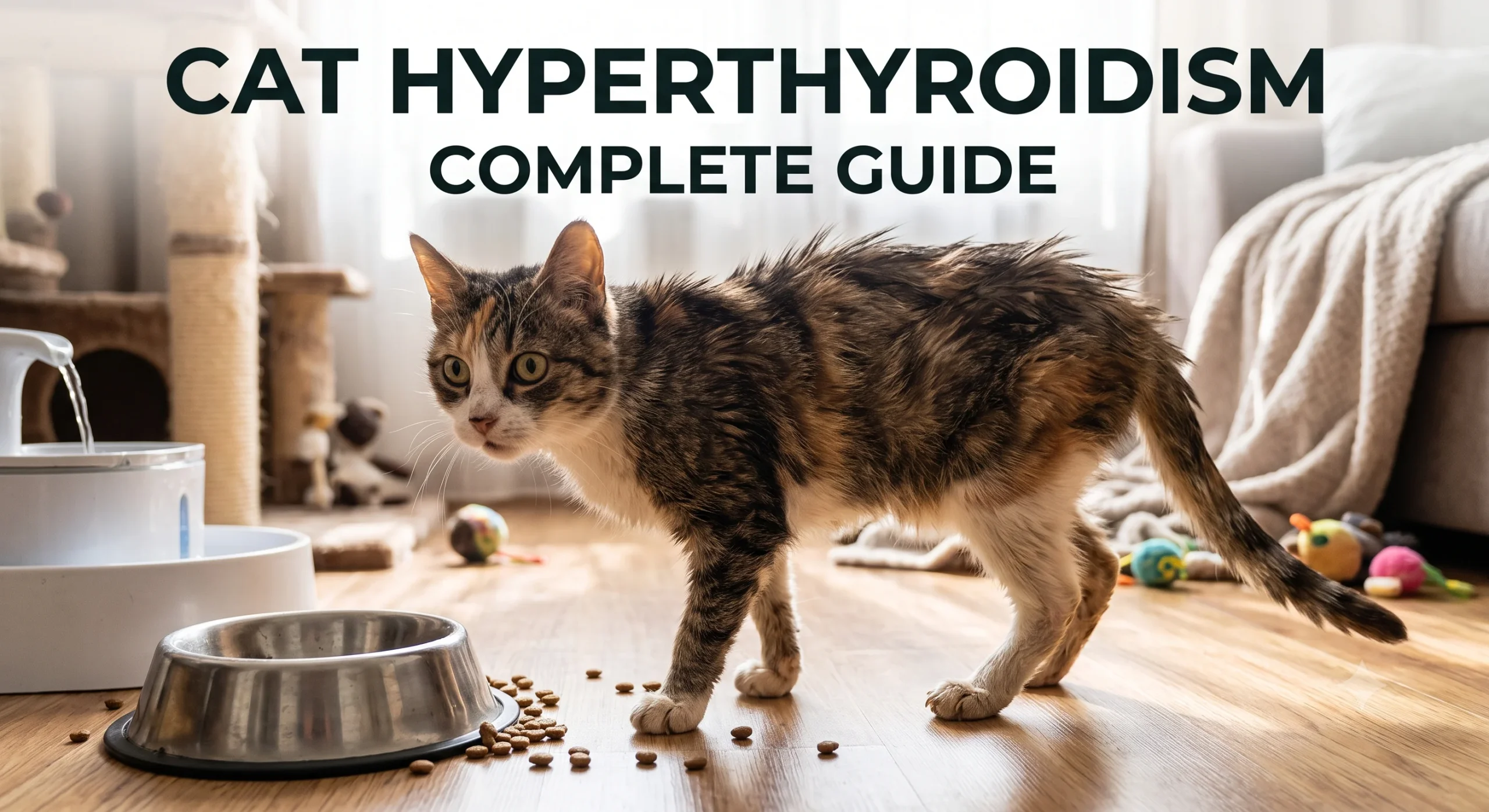
Your cat is eating like they have not seen food in days. They finish every meal instantly and then beg for more. You would think this is a great sign, but they are losing weight. Their ribs are becoming more prominent and you can feel their backbone when you pet them.
They drink from the toilet, the faucet, the dog’s water bowl. They are hyperactive, up all night, vocalizing constantly, and vomiting with troubling regularity. You may think it is old age or maybe dementia. But there is another common cause that affects approximately one in ten cats over the age of ten: hyperthyroidism. It is manageable and it is treatable, but if it goes undiagnosed, it damages the heart and kidneys permanently.
As a certified veterinary expert and professional cat behaviorist, I have diagnosed and treated more feline hyperthyroidism cases than I can count. I have seen owners mistake the weight loss for cancer, the hyperactivity for simple aging, and the vomiting for hairball problems.
I have also seen the remarkable transformation that occurs once treatment begins: the voracious hunger subsides, the weight stabilizes, the vocalizations cease, and the cat returns to their normal self. This guide covers everything you need to know: what hyperthyroidism is and why it happens, the symptoms that owners commonly miss, how veterinarians diagnose the condition, the four major treatment options with their pros and cons, how to monitor your cat after treatment, and what the long term outlook is for cats living with this condition.
📚 Recommended Cat Guides
🐱 The Trainable Cat Book
Learn proven methods to train your cat and stop unwanted behaviors.
View Book →❤️ Complete Cat Care Manual
Your complete guide to cat nutrition, health, grooming, behavior, and daily care.
Get the Manual →What Cat Hyperthyroidism Actually Is
Hyperthyroidism is caused by a benign tumor called an adenoma in one or both lobes of the thyroid gland. In rare cases accounting for less than five percent of cases, the tumor is malignant and is called thyroid carcinoma. The adenoma causes excessive production of the thyroid hormones T3 and T4, which are responsible for regulating the cat’s metabolism.
When these hormones are present at abnormally high levels, the cat’s entire body operates in overdrive. The heart beats faster, the digestive system moves more quickly, the metabolic rate skyrockets, and every organ system is affected. This explains why hyperthyroid cats eat more but lose weight. Their metabolic rate is so high that they burn through calories faster than they can consume them, no matter how much they eat.
Why Older Cats Are at Risk
Feline hyperthyroidism almost exclusively affects middle aged and older cats. The average age at diagnosis is approximately thirteen years, and it is rare in cats under eight years old. The reason for this age correlation is not entirely understood, but hypotheses include cumulative exposure to dietary and environmental goitrogenic substances over the cat’s lifetime, as well as the natural aging of the thyroid gland increasing the likelihood of adenoma development. Some studies have suggested a link with certain chemicals in cat food, cat litter, and flame retardants in furniture, though a definitive cause has not been established.
Common Symptoms Owners Miss
Voracious Appetite with Weight Loss
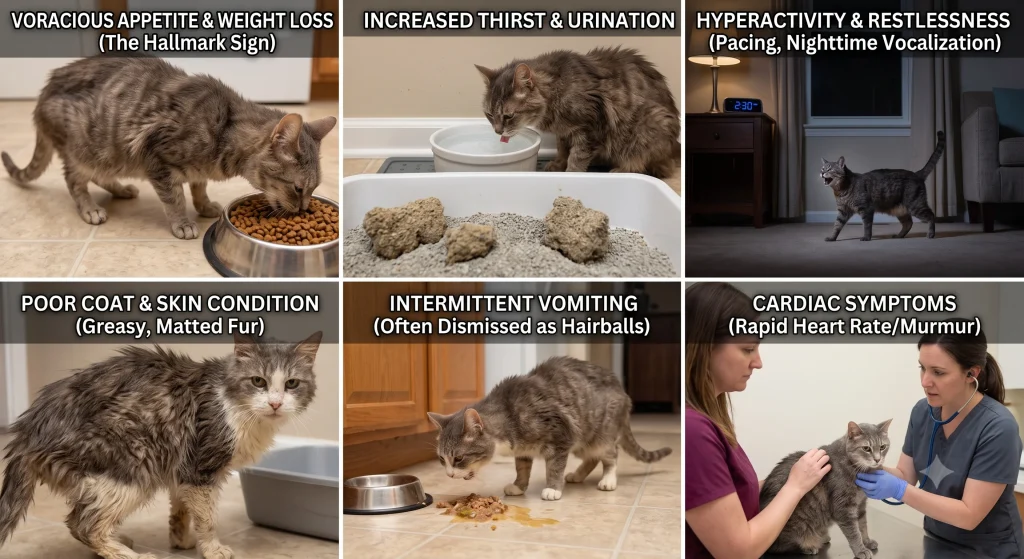
This is the hallmark symptom of hyperthyroidism. Owners often mistake the increased appetite for a good sign, assuming their cat is healthy because they eat well. The weight loss that accompanies it may be attributed to the cat being more active or simply aging. In hyperthyroidism, the weight loss happens despite the cat eating everything in sight. The excess thyroid hormones cause the body to burn calories at an accelerated rate, and the cat cannot keep up no matter how much they consume. This is the symptom that should trigger an immediate veterinary visit: eating more but weighing less.
Increased Thirst and Urination
Increased thirst and urination are common in hyperthyroid cats. The elevated metabolic rate increases blood flow through the kidneys, leading to greater urine production. Owners may notice huge clumps in the litter box, more frequent trips to the water bowl, and drinking from unusual places like sinks or toilets. This symptom overlaps with kidney disease and diabetes, which are also common in older cats, so veterinary blood work is necessary to distinguish the cause.
Hyperactivity and Restlessness
Hyperthyroid cats often seem wired. They pace, vocalize loudly and persistently, and have difficulty settling down. Owners may report that the cat is awake all night yowling, cannot get comfortable, and seems anxious or unsettled. This is often misattributed to dementia or behavioral problems in senior cats. The increased thyroid hormones stimulate the central nervous system, causing a constant state of high arousal. Cats that were previously calm may become difficult to live with due to their incessant activity and nighttime vocalization.
Vomiting and Diarrhea
Chronic intermittent vomiting is a frequent complaint in hyperthyroid cats. The rapid movement of food through the digestive tract, combined with the increased volume of food the cat consumes, often leads to regurgitation or vomiting shortly after meals. Diarrhea may occur for similar reasons. The digestive system is processing food too quickly for adequate nutrient and water absorption. Owners often dismiss these signs as hairballs or a sensitive stomach, but persistent vomiting in a senior cat warrants a thyroid check.
Poor Coat and Skin Condition
Hyperthyroid cats often have a greasy, unkempt, or matted coat. You might notice bald spots, thinning fur, or excessive shedding. The cat may groom less frequently because they are agitated and restless, and the metabolic changes affect the hair follicles directly. Some cats develop a moth eaten appearance along the flanks and abdomen where the hair has thinned significantly. This occurs without significant itching unless there is a secondary skin infection.
Cardiac Symptoms
The increased metabolic rate forces the heart to pump faster and harder. Hyperthyroid cats often develop an elevated heart rate of more than 220 beats per minute and may have a heart murmur or arrhythmia. In severe or long-standing cases, the cat can develop hypertrophic cardiomyopathy, a thickening of the heart muscle that may lead to congestive heart failure. Some hyperthyroid cats first present for respiratory distress or collapse caused by uncontrolled heart disease, with the underlying thyroid issue only discovered during subsequent testing.
Aggression and Irritability
Behavior changes in hyperthyroid cats are common. Owners may notice their cat becoming irritable, aggressive, or intolerant of being touched or handled. The constant metabolic stimulation also stimulates the adrenal system, producing a fight or flight response that lowers the threshold for aggression. This is sometimes referred to as feline hyperthyroid hate. The transformation of a formerly calm cat into an unpredictable one can be stressful, but treatment often resolves these behavioral issues completely.
Diagnosis What to Expect at the Vet
Physical Examination
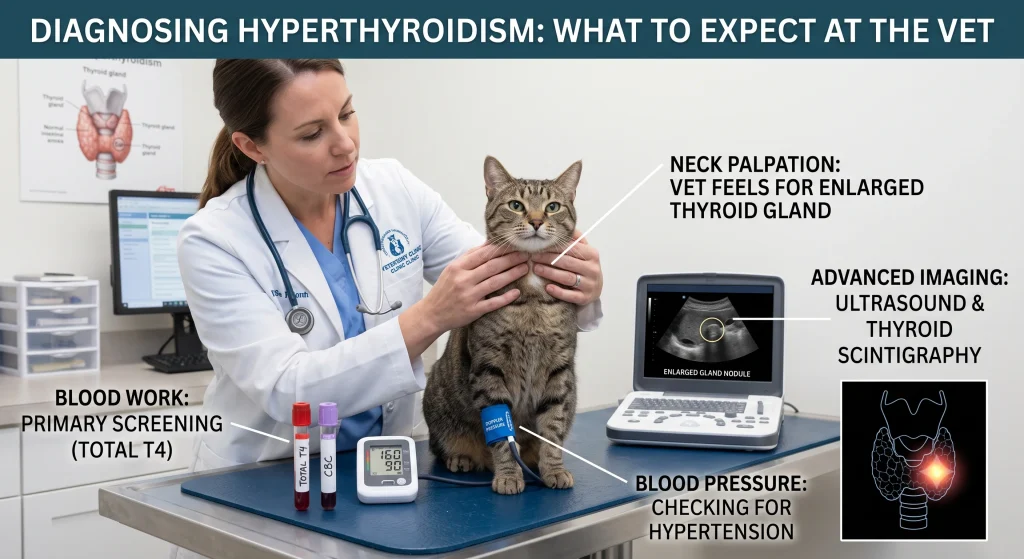
Your vet will feel your cat’s neck for an enlarged thyroid gland. A normal thyroid gland cannot be felt. An enlarged thyroid gland feels like a small smooth movable mass under the skin on either side of the windpipe. Approximately seventy percent of hyperthyroid cats have an enlarged gland that can be detected on physical exam. Your vet will also listen to the heart, check blood pressure, feel the abdomen for other masses, and evaluate the cat’s overall body condition.
Blood Work
The diagnosis of hyperthyroidism is confirmed by measuring thyroid hormone levels. The primary screening test is total T4. If the total T4 is elevated and the cat has consistent clinical signs, the diagnosis is confirmed. However, approximately ten percent of hyperthyroid cats will have a total T4 that falls within the normal reference range. This is called occult hyperthyroidism. In these cases, your vet may run additional tests such as free T4 or T3 measurement. Severe illness elsewhere in the body can suppress thyroid hormones to normal levels, a phenomenon known as euthyroid sick syndrome. Thyroid testing should ideally be done when the cat is otherwise stable.
Blood Pressure Measurement
Hypertension, or high blood pressure, is a common consequence of hyperthyroidism. The elevated heart rate and increased peripheral vascular resistance lead to higher arterial pressure. Chronic high blood pressure damages the eyes, kidneys, heart, and brain. Hyperthyroid cats should have their blood pressure measured before and after treatment. Untreated hypertension can cause sudden blindness due to retinal detachment.
Chemistry Panel and Complete Blood Count
Full blood work is important both to rule out other diseases and to assess the cat’s general organ function before starting treatment. Hyperthyroidism can mask or worsen kidney disease because the elevated heart rate and metabolic rate increase blood flow to the kidneys, falsely elevating the glomerular filtration rate. When hyperthyroidism is treated and the heart rate decreases, age related kidney disease may become apparent. Baseline blood work helps track these changes.
Advanced Diagnostics
If the diagnosis remains unclear despite blood work and clinical signs, additional testing may include a thyroid suppression test or thyroid scintigraphy. A thyroid nuclear scan provides the most accurate information about the size and functional activity of thyroid tissue, which can help localize a single adenoma versus more diffuse involvement. Ultrasound of the neck can also identify a tumor nodule.
Treatment Options for Hyperthyroidism
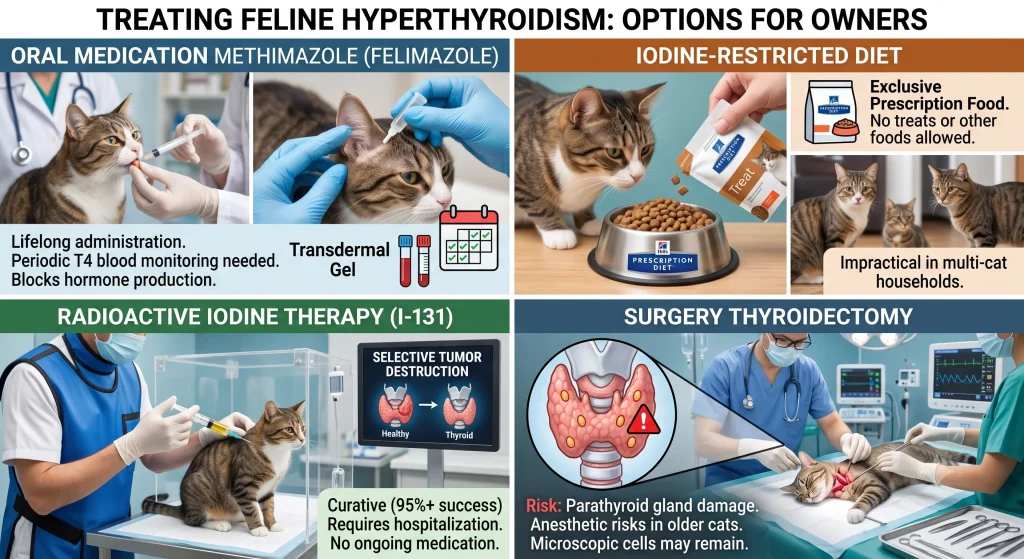
Oral Medication Methimazole
Methimazole is a drug that blocks the production of thyroid hormones. It is given lifelong, typically once to twice daily, as a tablet or liquid. Some cats will also accept a transdermal gel applied to the inner ear. Methimazole is effective at controlling hyperthyroidism and is relatively affordable. The drawbacks include the need for daily administration, the possibility of unpleasant taste, the need for regular blood monitoring to adjust the dose, and potential side effects including vomiting, loss of appetite, and rare liver damage or blood disorders. Methimazole does not cure the thyroid tumor. It only blocks hormone production. Cats receiving methimazole therapy need periodic monitoring of T4 levels and blood counts.
Iodine Restricted Diet
Thyroid hormones contain iodine. Without dietary iodine, the hyperactive thyroid cannot produce excessive T4. Prescription low iodine diets are designed to starve the thyroid. This is a noninvasive approach that requires exclusive feeding of the prescription diet. No treats, no other foods, and no supplements with iodine content are allowed. This requirement alone makes this approach impractical for many owners of multiple cats or free roaming cats. Many cats refuse to eat this food, and concurrent kidney disease influences phosphorus and protein content decisions.
Radioactive Iodine Therapy
Radioactive iodine is the most effective and the only curative treatment for feline hyperthyroidism. A single injection of I-131 is absorbed selectively by the active thyroid tumor cells. The concentrated radiation destroys the abnormal adenoma tissue without harming the rest of the body. The success rate is over 95 percent with a single injection. It treats both lobes simultaneously regardless of where the adenomas are located, and it requires no ongoing medication or special diet.
The major drawbacks are cost, ranging from approximately one thousand to two thousand dollars depending on the clinic, the need for specialized facilities, and mandatory hospitalization for three to seven days until the cat’s radiation levels drop to a safe level. While the owner cannot cuddle during this period, the outcome is often worth the temporary separation.
Surgery Thyroidectomy
Surgical removal of the affected thyroid lobe or lobes is an option, especially when a single adenoma is present. It offers a permanent cure and eliminates the need for daily medication. The risks include the possibility of damaging the adjacent parathyroid glands that control calcium levels, anesthetic risks in an older cat with hyperthyroid heart disease, and the chance of recurrence if microscopic adenoma cells remain. If surgery is selected, a thyroid scan before operating gives the surgeon the best chance of success by identifying which lobes are involved.
Managing a Cat After Treatment
Following stabilization or cure, a hyperthyroid cat enters a new phase of care. Their appetite returns to normal, weight stabilizes over weeks, and the heart rate settles. Owners need to transition from thyroid monitoring to broader senior care. This is not the end of the story. Hyperthyroidism can unmask underlying kidney disease because it increases renal blood flow. As the thyroid normalizes, renal blood flow decreases and compromised kidneys may become apparent. Your vet will check blood work four weeks after starting methimazole, two to four weeks after radioactive iodine, or as soon as signs of lethargy, vomiting, or decreased appetite appear.
Quality of life considerations should include whether the cat is eating well, maintaining healthy body condition, and interacting normally. Cats cured by radioactive iodine or surgery generally have excellent long term outlooks provided their heart and kidneys have not sustained permanent damage. Cats receiving ongoing medication also have good quality of life as long as side effects are managed. Owners should schedule veterinary visits every six to twelve months for general senior wellness checks.
Expert Tips From My Practice
I have had more conversations with owners about hyperthyroidism than about any other condition in senior cats. The mistake I see most often is attributing the symptoms to old age and deciding against treatment. Owners assume that because their cat is fourteen years old, they are just naturally slowing down or losing weight. Hyperthyroidism is treatable at any age. A seventeen year old hyperthyroid cat can have completely normal health after radioactive iodine therapy. Chronological age alone is not a reason to withhold therapy. The decision you should be making is not whether the cat is too old, but whether the treatment is safe given the results of cardiac and renal assessment.
- Treat early before heart damage occurs. Chronic rapid heart rate and hypertension eventually lead to thickening of the heart muscle and heart failure. Early treatment prevents irreversible cardiac changes.
- Monitor total T4 four weeks after starting therapy. Whether you choose methimazole, diet, or radioactive iodine, always recheck T4 levels after the body adjusts to the intervention.
- Never adjust methimazole dose without blood work. Guessing the dose leads to undertreatment or overtreatment because cats vary widely in their sensitivity. Recheck blood levels every three to six months.
- Monitor kidney values after treatment begins. Hyperthyroidism hides kidney disease by raising renal blood flow. Check creatinine and BUN after T4 normalization.
- Always measure blood pressure. Hypertension is common in hyperthyroid cats and must be addressed to prevent blindness and organ damage.
- Keep a weight log at home. Weigh your cat weekly on the same scale. Stable weight means the treatment plan is working.
- Consider radioactive iodine early. One treatment and done. It avoids daily medication and diet restrictions and offers permanent resolution.
- Do not let cost scare you away from radioactive iodine. Compare the cost to months or years of medication, blood work, and veterinary visits. The long term value often favors the curative option.
FAQ
What are the first signs of hyperthyroidism in cats?
The most common early signs are weight loss despite increased appetite, excessive thirst and urination, and hyperactivity or restlessness. Owners often think the cat is just aging, but these changes warrant a veterinary visit.
Can hyperthyroidism in cats be cured?
Yes. Radioactive iodine therapy offers a permanent cure with a single injection in over 95 percent of cats. Thyroidectomy is also curative if all abnormal tissue is removed. Oral medication and diet manage the disease but do not cure it.
How long can a cat live with hyperthyroidism?
With proper treatment, cats diagnosed with hyperthyroidism have excellent long term prognosis. Many cats live five or more years after diagnosis, often succumbing to other age related diseases rather than the thyroid condition itself.
Is hyperthyroidism painful for cats?
Hyperthyroidism itself is not painful. However, some of its effects can cause discomfort. The rapid heart rate and high blood pressure can make a cat feel unwell, vomiting can be uncomfortable, and secondary complications require management.
How is hyperthyroidism in cats diagnosed?
The main screening test measures total T4 levels in the blood. Additional tests such as free T4, T3, and thyroid scintigraphy may be needed if the total T4 is borderline or the cat has consistent symptoms with normal blood work.
What is the best treatment for hyperthyroidism in cats?
The best curative treatment is radioactive iodine therapy. It resolves the condition permanently with no need for ongoing medication or diet. Methimazole medication and low iodine diets are alternatives when cats have concurrent conditions or budget limitations.
Can hyperthyroidism in cats cause heart problems?
Yes. High thyroid hormone levels cause the heart to beat faster and with more force, leading to hypertrophic cardiomyopathy, heart murmur, arrhythmia, and eventually congestive heart failure. Managing hyperthyroidism often improves heart function significantly.
Is methimazole safe for cats?
Methimazole is generally safe but requires careful monitoring. Side effects occur in up to 20 percent of cats and include vomiting, decreased appetite, and lethargy. Rare serious side effects include liver damage and blood cell disorders.
Does a low iodine diet work for cats?
Yes, prescription low iodine diets are effective when fed exclusively. No other foods, treats, or snacks can be given. This approach is impractical for multi-cat homes or free roaming cats where complete owner compliance is difficult.
What happens if hyperthyroidism is left untreated?
Untreated hyperthyroidism leads to progressive weight loss, heart damage including hypertrophy and failure, hypertension causing blindness, kidney damage, and eventually death. Treatment significantly extends both lifespan and quality of life.