

Table of Contents
Stop Cat Scratching Furniture
Your cat just destroyed your brand new couch. Again. The armrest is shredded. The corners are destroyed. And you are furious. But here is the thing. Your cat is not doing it to make you mad. Scratching is a natural. Essential. Biological behavior. Your cat needs to scratch. The problem is not the scratching. The problem is WHERE they are scratching.
As a certified veterinary expert and professional cat behaviorist. I have helped thousands of cat owners solve this exact problem. And I can tell you. It can be solved. Without declawing. Without punishment. Without stress. The solution is redirecting the behavior. Not stopping it. You want your cat to scratch. Just not your furniture.
This guide teaches you everything. Why cats scratch. How to stop destructive scratching. And how to protect your furniture. While keeping your cat happy. By the end. You will have a solution that works. For both of you.
📚 Recommended Cat Guides
🐱 The Trainable Cat Book
Learn proven methods to train your cat and stop unwanted behaviors.
View Book →❤️ Complete Cat Care Manual
Your complete guide to cat nutrition, health, grooming, behavior, and daily care.
Get the Manual →Why Do Cats Scratch Furniture
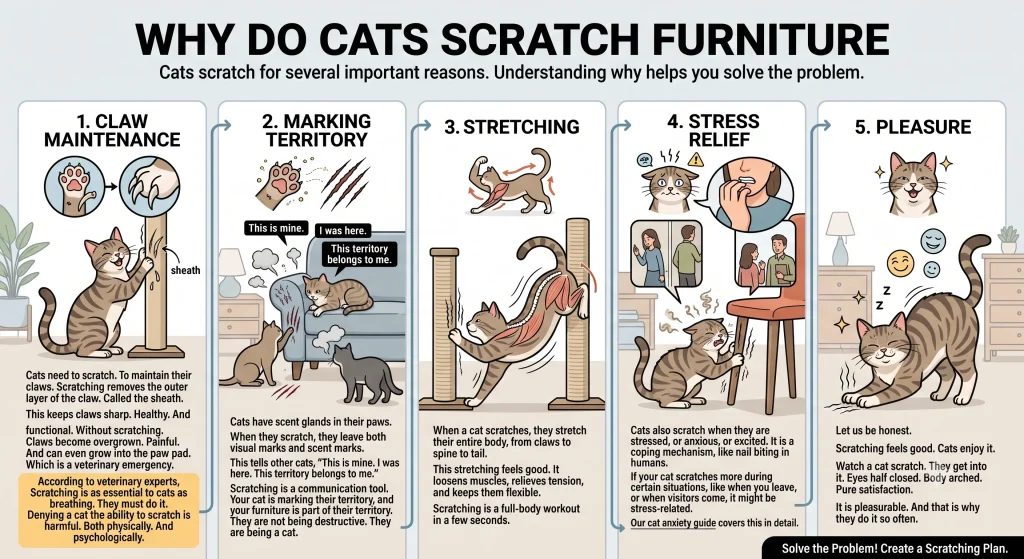
Cats scratch for several important reasons. Understanding why helps you solve the problem.
1. Claw Maintenance
Cats need to scratch. To maintain their claws. Scratching removes the outer layer of the claw. Called the sheath. This keeps claws sharp. Healthy. And functional. Without scratching. Claws become overgrown. Painful. And can even grow into the paw pad. Which is a veterinary emergency.
According to veterinary experts. Scratching is as essential to cats as breathing. They must do it. Denying a cat the ability to scratch is harmful. Both physically. And psychologically.
2. Marking Territory
Cats have scent glands in their paws. When they scratch. They leave both visual marks. And scent marks. This tells other cats. This is mine. I was here. This territory belongs to me.
Scratching is a communication tool. Your cat is marking their territory. And your furniture is part of their territory. They are not being destructive. They are being a cat.
3. Stretching
When a cat scratches. They stretch their entire body. From claws to spine. To tail. This stretching feels good. It loosens muscles. Relieves tension. And keeps them flexible. Scratching is a full body workout. In a few seconds.
4. Stress Relief
Cats also scratch when they are stressed. Or anxious. Or excited. It is a coping mechanism. Like nail biting in humans. If your cat scratches more during certain situations. Like when you leave. Or when visitors come. It might be stress-related. Our cat anxiety guide covers this in detail.
5. Pleasure
Let us be honest. Scratching feels good. Cats enjoy it. Watch a cat scratch. They get into it. Eyes half closed. Body arched. Pure satisfaction. It is pleasurable. And that is why they do it so often.
Why Do Cats Scratch Furniture Specifically
Cats choose furniture for several reasons.
- Texture. Upholstery. Fabric. And wood provide the perfect resistance. For claw removal. The texture feels good. And provides a satisfying scratch.
- Location. Furniture is usually in central. High-traffic areas. Cats want to mark visible. Important spots. Your couch is prime real estate.
- Height. Couch backs. And chair arms. Are at the perfect height. For a full body stretch. Cats love scratching at different heights. Furniture provides options.
- Scent. Your furniture smells like you. Cats want to mix their scent with yours. It is a bonding behavior. And a territory claim. Both at once.
- Availability. Let us face it. Furniture is always there. And scratching posts are not always accessible. If the post is in another room. The couch is right here. Cats choose convenience.
How to Stop Cat Scratching Furniture
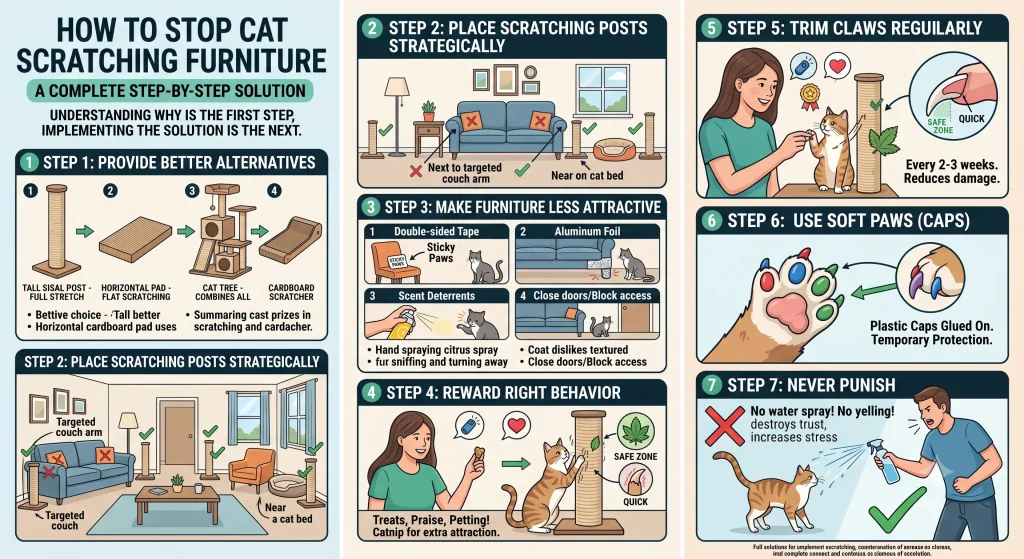
Here is the complete solution. Step by step.
Step 1: Provide Better Alternatives
This is the most important step. You cannot stop scratching. Without providing an alternative. Your cat needs to scratch. Give them something better than your furniture.
- Scratching posts. Get at least one per room. Tall enough for your cat to fully stretch. Sturdy enough not to wobble. Covered in sisal rope. Or carpet. Or cardboard.
- Scratching pads. Horizontal scratching options. Some cats prefer scratching flat. Not vertical. Provide both options. See what your cat prefers.
- Scratching trees. Cat trees with built-in scratching surfaces. These are great. Because they combine scratching. With climbing. And perching. Cats love them.
- Cardboard scratchers. Cheap. Effective. And cats love them. Place them near the furniture your cat currently scratches.
Step 2: Place Scratching Posts Strategically
Location matters. Place scratching posts near the furniture your cat currently targets. If your cat scratches the couch arm. Put a post right next to the couch arm. If they scratch the door frame. Put a post next to the door. Make the correct option easier. Than the wrong one.
Also place posts in high-traffic areas. Where your cat spends time. Near their bed. Near windows. Near doorways. Cats want to mark visible. Important spots. Make sure scratching posts are in those spots.
Step 3: Make Furniture Less Attractive
While making posts more attractive. Make furniture less attractive. Here is how.
- Double-sided tape. Apply to furniture surfaces. Cats hate the sticky feeling. Products like Sticky Paws are designed for this. They are safe. And effective.
- Aluminum foil. Cover furniture with foil. Cats dislike the texture. And sound. Temporary. But effective while training.
- Scent deterrents. Cats dislike citrus. Apply citrus spray to furniture. Reapply regularly. This makes the furniture smell bad. To your cat.
- Plastic covers. Use furniture covers. Or plastic guards. These protect the surface. While you train. They are not permanent. Just temporary protection.
- Remove access. Close doors. Or block rooms. When you are not home. Prevent access to furniture. Until training is complete.
Step 4: Reward Scratching the Right Things
When your cat uses the scratching post. Reward them. Treats. Praise. Petting. Whatever your cat loves. They need to know. This is the right behavior. Clicker training works perfectly here. Our clicker training guide covers this technique in detail.
You can also rub catnip on the scratching post. This makes it more attractive. Some cats go crazy for catnip. Others do not. Try it. See what works.
Step 5: Trim Their Claws Regularly
Regular nail trimming reduces the damage. From scratching. Trim your cat’s claws every two to three weeks. This keeps them short. And reduces the impact on furniture. Use proper cat nail clippers. And learn the correct technique. Our complete cat care guide covers nail trimming basics.
Step 6: Use Soft Paws
Soft Paws are plastic caps. That glue onto your cat’s claws. They prevent damage. While your cat still scratches. They are safe. Painless. And temporary. Great for training. While you work on the behavior. Ask your vet about proper application.
Step 7: Never Punish
Punishing a cat for scratching does not work. It makes things worse. Cats do not understand punishment. They just become afraid. Of you. Which leads to more stress. And more scratching. Or other behavioral problems. Never spray your cat with water. Never yell. Never physically punish. It is counterproductive. And harmful.
What Surfaces Do Cats Prefer to Scratch
Most cats prefer sisal rope. It provides the perfect resistance. And texture. For claw maintenance. Other preferences include.
| Surface | Cat Preference | Best For |
|---|---|---|
| Sisal rope | Very high | Vertical scratching posts |
| Cardboard | High | Horizontal scratchers |
| Carpet | Medium to high | Scratching posts and pads |
| Wood | Medium | Natural outdoor scratching |
| Fabric | Medium | Furniture protection needed |
| Leather | Low to medium | Often targeted for texture |
Observe your cat. See what surfaces they prefer. Then provide those surfaces. In the right locations.
How to Train Your Cat to Use a Scratching Post

1. Make It Attractive
Apply catnip. Or silver vine. To the post. This makes it irresistible. Many cats will immediately start scratching. Because the scent draws them in.
2. Demonstrate
Scratch the post yourself. With your nails. Cats are curious. They will investigate. And often mimic. This sounds silly. But it works. Show your cat. This is what this thing is for.
3. Reward Exploration
When your cat approaches the post. Treat them. When they touch it. Treat them. When they scratch it. Big reward. Treat. Praise. Make the post the best thing in the room.
4. Deter from Furniture
When your cat scratches furniture. Gently redirect them. Pick them up. Place them near the scratching post. Do not punish. Just redirect. Over time. They will learn. Post equals good. Furniture equals boring.
5. Be Consistent
Consistency is key. Every time your cat scratches the post. Reward. Every time they scratch furniture. Redirect. No exceptions. The more consistent you are. The faster they learn.
Expert Tips From My Practice
The most important thing I tell cat owners about scratching is this. You cannot stop scratching. It is biologically essential. Your goal is not to stop the behavior. Your goal is to redirect it. Provide better options. Make them attractive. And make the furniture less attractive. That is the formula. And it works every time.
- Get multiple posts. One is not enough. You need several. At least one per room. More is better. Cats like options.
- Get tall posts. Your cat needs to fully stretch. A short post is not satisfying. Get posts that are at least 30 inches tall. Taller is better.
- Get sturdy posts. A wobbly post is scary. If the post moves when your cat scratches it. They will not use it. Get heavy. Sturdy posts. That do not tip.
- Know your cat. Some cats prefer vertical scratching. Some prefer horizontal. Some prefer carpet. Some prefer sisal. Observe. And provide what they like.
- Replace when worn. Scratching posts wear out. When they are shredded. Replace them. A worn post is not satisfying. Keep posts in good condition.
- Never declaw. Declawing is amputation. It is painful. And causes long-term behavioral problems. Including more biting. And litter box avoidance. There are always better solutions. Resources like our complete cat care books provide humane solutions for every behavior problem.
- Be patient. Changing behavior takes time. It might take weeks. Or months. Be consistent. And patient. The results are worth it.
FAQ
How do I stop my cat from scratching furniture?
Provide scratching posts near the furniture. Reward using the posts. Make furniture less attractive with tape or spray. Never punish. Redirect to the post. Be consistent. And patient. The behavior can be redirected. Not stopped.
Why does my cat scratch furniture at night?
Nighttime scratching is common. Cats are most active at dawn and dusk. They scratch at night because they are active. And bored. Provide enrichment. And scratching options. In rooms where your cat spends time at night.
Do cats grow out of scratching furniture?
No. Cats do not grow out of scratching. It is a lifelong behavior. But they can be trained to scratch appropriate surfaces. Early training is best. But adult cats can learn too.
What can I put on furniture to stop cat scratching?
Double-sided tape works best. Products like Sticky Paws are designed for this. Aluminum foil also works. As does citrus spray. These make the furniture unappealing. While you train your cat to use alternatives.
Should I punish my cat for scratching furniture?
Never. Punishment does not work. It makes your cat afraid. And stressed. Which leads to more behavioral problems. Including more scratching. Use positive reinforcement instead. Reward good behavior. Redirect bad behavior.
How many scratching posts do I need?
At least one per room. More is better. Cats like options. And different types. Vertical posts. Horizontal pads. Cardboard scratchers. Cat trees. Provide variety. In multiple locations.
Why does my cat scratch more when I leave?
Increased scratching when you leave. Is usually stress-related. Your cat is anxious. Scratching provides comfort. And marks territory. Address the anxiety. With enrichment. Routine. And calm departures. Our cat anxiety guide covers solutions.
Do cats prefer carpet or sisal scratching posts?
Most cats prefer sisal. It provides better resistance. And texture. For claw maintenance. But every cat is different. Some prefer carpet. Observe your cat. And provide what they like.
Can I train an older cat to stop scratching furniture?
Yes. Older cats can be trained. It takes longer. Because habits are established. But with patience. Consistency. And better alternatives. Older cats can learn. New scratching habits.
How long does it take to stop cat scratching furniture?
Usually four to eight weeks. With consistent training. Some cats learn faster. Others take longer. The key is providing better alternatives. Making them attractive. And making furniture unappealing. Every cat is different.
Are scratching posts better than scratching pads?
Neither is better. It depends on your cat. Some prefer vertical posts. Others prefer horizontal pads. Provide both options. See what your cat uses most. Then provide more of that type.
Why does my cat scratch wood furniture specifically?
Cats like wood because of the texture. And the sound. Wood provides satisfying resistance. And the scratching sound is appealing. Cover wood surfaces. And provide sisal alternatives. Which offer similar texture.