

Table of Contents
How to Change Cat Food Safely Without Upsetting Their Stomach
Switching your cat’s food sounds simple enough. You buy a new bag or can, scoop it into the bowl, and your cat eats it. That is exactly what most people do, and it is exactly why their cat ends up with diarrhea, vomiting, or refusing to eat altogether. Cats are creatures of habit, and their digestive systems are far more sensitive to dietary changes than most owners realize. A sudden food change disrupts the balance of bacteria in their gut, causes inflammation in the digestive tract, and triggers stress responses that lead to nausea and loose stools.
In severe cases, a rapid food change can cause a complete appetite refusal that lasts for days, which is especially dangerous for cats prone to hepatic lipidosis, a condition where the liver shuts down when a cat does not eat for more than forty-eight to seventy-two hours. The good news is that changing your cat’s food safely is straightforward once you understand the process, and the transition period is only seven to fourteen days for most cats.
Whether you are switching to a different brand, moving from dry food to wet food, adjusting for a health condition like kidney disease or food allergies, or simply trying to upgrade to a higher quality diet, the same gradual transition principle applies.
This guide covers exactly how long the transition should take for different types of food changes, the step by step mixing schedule that works for sensitive stomachs, what to do when your cat refuses the new food, common mistakes that cause transition failures, how to handle cats with food allergies or medical conditions, and signs that the transition is going well versus signs that you need to slow down. A proper food transition protects your cat’s digestive health and sets the foundation for long term nutrition success.
📚 Recommended Cat Guides
🐱 The Trainable Cat Book
Learn proven methods to train your cat and stop unwanted behaviors.
View Book →❤️ Complete Cat Care Manual
Your complete guide to cat nutrition, health, grooming, behavior, and daily care.
Get the Manual →Why Cats Cannot Handle Sudden Food Changes
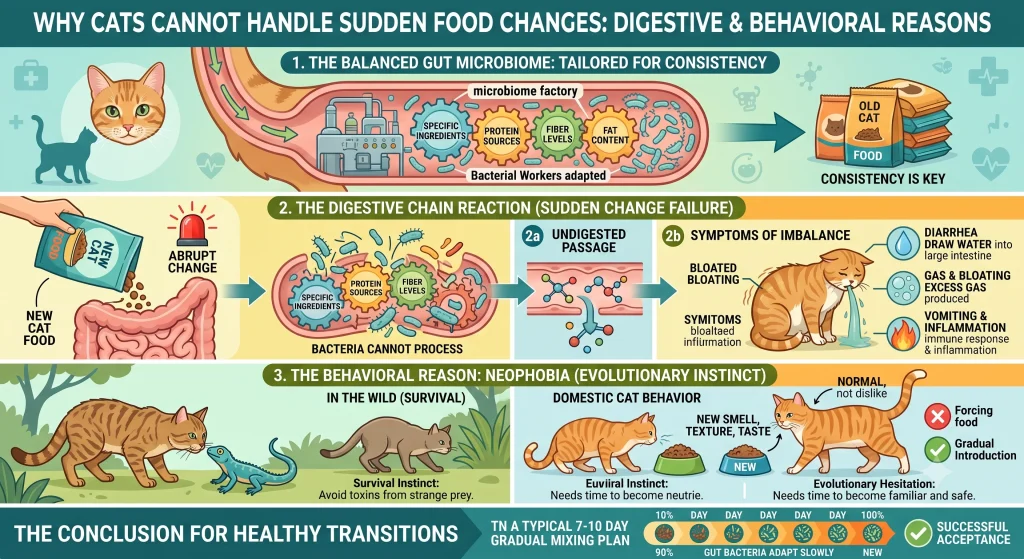
A cat’s digestive system is built around consistency. The gut contains billions of beneficial bacteria that have adapted to break down the specific ingredients, protein sources, fiber levels, and fat content of their current food. When you suddenly introduce a new food with different ingredients or different proportions of nutrients, the existing bacterial population cannot process it efficiently. Undigested food passes into the large intestine, where it draws water and causes diarrhea. The bacterial imbalance also produces excess gas, leading to bloating and discomfort. The unfamiliar ingredients may trigger an immune response in the gut lining, causing inflammation and vomiting.
Cats also have a strong neophobia response to new foods, which is an evolutionary survival mechanism. In the wild, eating something unfamiliar could mean consuming a toxic substance. Domestic cats retain this instinct, and many cats will sniff or lick a new food and walk away without tasting it. This is normal and not a sign that your cat dislikes the food. It simply means the cat needs time to become familiar with the smell, texture, and taste before they feel safe eating it. Forcing a new food without a transition period almost always backfires.
The Standard Seven Day Transition Schedule

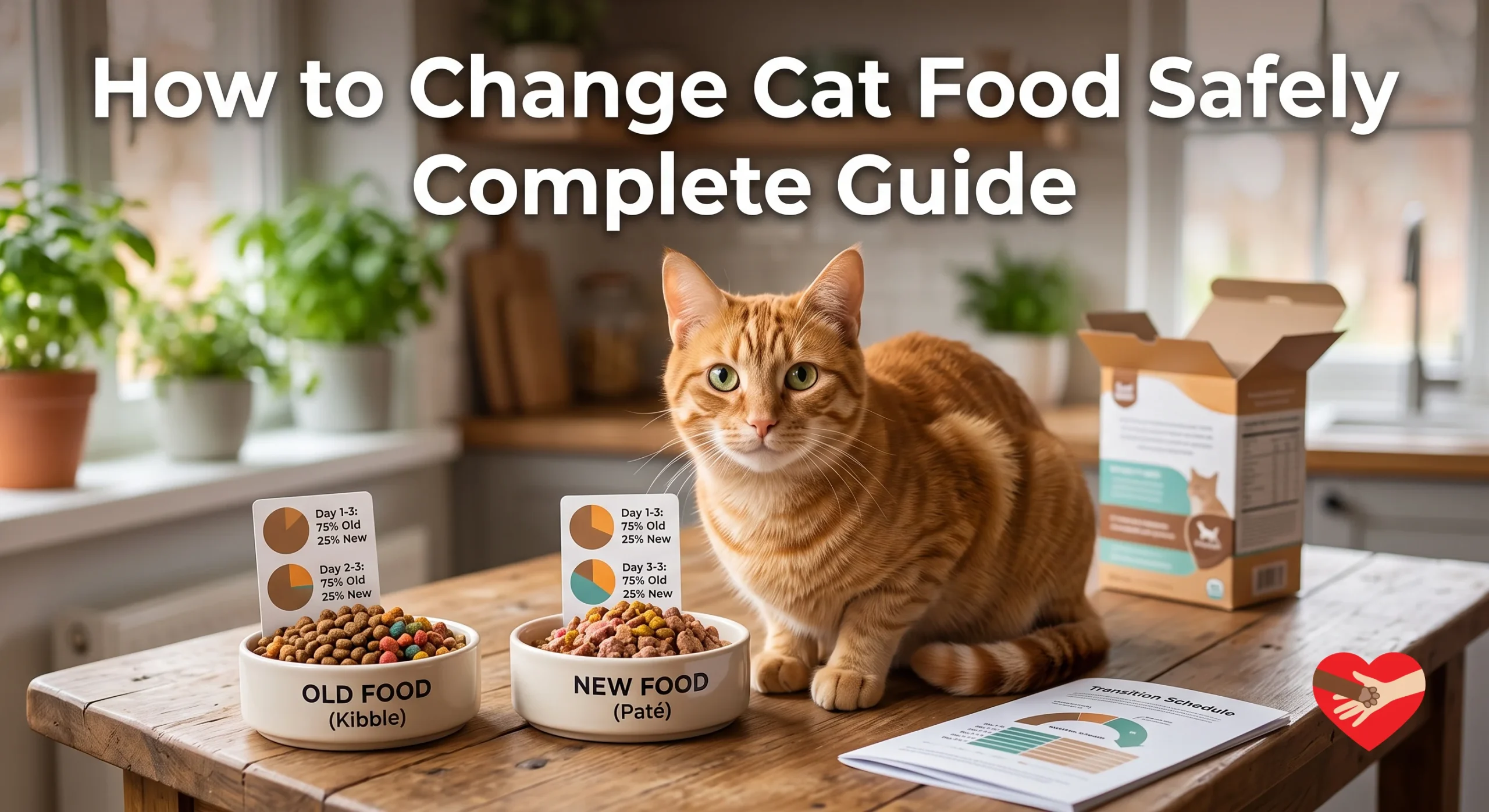
The standard food transition schedule works for most healthy cats switching between two standard commercial diets. The schedule spreads the change over seven days, gradually increasing the proportion of new food while decreasing the old food. This gives the gut bacteria time to adapt to the new ingredients without overwhelming the digestive system.
Days One and Two
Mix twenty-five percent new food with seventy-five percent old food. This is a very small amount of new food, typically just a tablespoon mixed into a full meal. Most cats will not notice this small proportion and will eat their meal normally. The gut bacteria begin encountering the new ingredients in small amounts that they can handle without disruption.
Days Three and Four
Move to fifty percent new food and fifty percent old food. This is the halfway point, and it is where digestive issues most commonly appear. If your cat shows any signs of stomach upset, diarrhea, or appetite reduction at this stage, go back to the previous ratio for another two days before trying again. Mixing the food thoroughly is important at this stage because some cats will pick out the pieces they recognize and leave the new food behind.
Days Five and Six
Increase to seventy-five percent new food and twenty-five percent old food. At this point your cat is mostly eating the new diet and the transition is nearly complete. Most cats handle this stage well if they made it through the fifty percent stage without issues.
Day Seven
Feed one hundred percent new food. The transition is complete. Monitor your cat for another three to four days after the full switch to ensure everything settles normally.
Extended Transition for Sensitive Cats
Some cats need a longer transition period, particularly those with sensitive stomachs, inflammatory bowel disease, food allergies, or a history of digestive issues. For these cats, extending the transition to fourteen days is recommended. The principle remains the same, but you spend three to four days at each stage instead of two. This slower approach gives the gut more time to adapt and significantly reduces the risk of digestive upset.
Senior cats also benefit from a longer transition period. Aging digestive systems are less resilient and take longer to adjust to new nutrient profiles. Kittens under six months generally transition more quickly than adults, but you should still follow a minimum seven day schedule to be safe.
What to Do When Your Cat Refuses the New Food
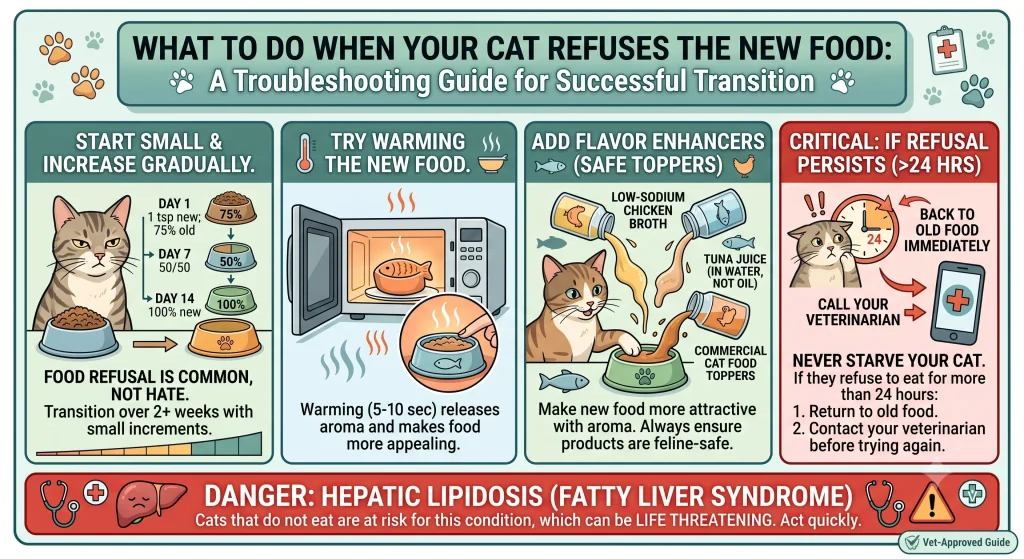
Food refusal during a transition is common and does not necessarily mean your cat hates the new food. Start by mixing a very small amount of new food with their current food, as little as one teaspoon, and gradually increase over a longer period. Try warming the new food slightly in the microwave for five to ten seconds, which releases more aroma and makes the food more appealing.
You can also add a small amount of a flavor enhancer like low sodium chicken broth, tuna juice, or a commercial cat food topper to make the new food more attractive. Never starve your cat into accepting new food. If your cat refuses to eat for more than twenty-four hours, return to their old food immediately and consult your veterinarian before trying again. Cats that do not eat are at risk for hepatic lipidosis, which can be life threatening.
Common Mistakes That Cause Transition Failures
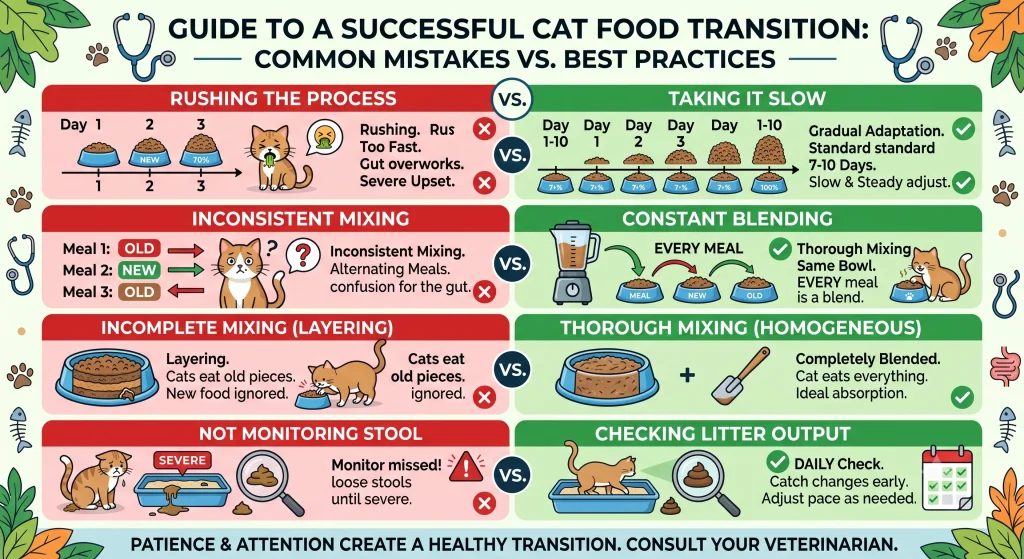
The most common mistake is rushing the process. Owners often try to switch food in two or three days, which is too fast for most cats. Another frequent mistake is inconsistent mixing, where the owner gives new food one meal and old food the next instead of blending them together in the same bowl. This does not give the gut a chance to adapt gradually.
Incomplete mixing is another problem. If you simply layer new food on top of old food, cats will eat the familiar pieces and avoid the new ones, effectively delaying the transition. Thorough mixing is essential. Not monitoring stool quality during the transition leads to problems being missed until they become severe. Checking litter box output daily during the transition helps you catch loose stools early and adjust the pace accordingly.
Transitioning for Specific Health Conditions
Cats with kidney disease need careful food transitions because the new prescription diet has a very different nutrient profile than regular cat food. Kidney diets are lower in protein, phosphorus, and sodium, and these changes can be particularly hard on the digestive system. A fourteen day transition is recommended for kidney diet changes. Cats with food allergies need transition periods of at least fourteen days because the immune system needs time to stop reacting to the old ingredients and accept the new protein source. Diabetic cats should have their food transition coordinated with their veterinarian because changes in carbohydrate and protein content can affect insulin requirements and blood glucose levels.
Monitoring Your Cat During the Transition
During any food transition, monitor these key indicators daily. Stool consistency should remain formed and well shaped throughout the transition. Loose stools indicate the transition is moving too fast. Appetite should remain consistent. Any reduction in food intake is a signal to slow down. Energy levels and behavior should remain normal. Lethargy or hiding may indicate digestive discomfort. Water intake may increase slightly during the transition as the body adjusts to different moisture content in the food. If any of these indicators show concerning changes, return to the previous stage of the transition schedule for three to four additional days before trying to advance again.
Expert Tips From My Practice
Patience is the most important ingredient in a successful food transition. I have seen owners try to switch food in three days and then give up entirely because their cat had severe diarrhea. The seven day schedule exists for a reason. It works, and it works consistently. If you have a cat that is particularly resistant to change, extend it to fourteen days.
There is no rush. A slow transition that succeeds is infinitely better than a fast transition that fails and sets you back to square one. The other tip I always give is to transition during a calm period. Do not try to change your cat’s food during a move, when you are traveling, or during any other stressful event. Cats cope with stress poorly, and combining stress with a food change dramatically increases the chance of refusal or digestive upset.
- Always transition over seven days minimum. This gives gut bacteria time to adapt safely.
- Monitor stool daily. Check litter box output and consistency throughout the transition period.
- Never starve your cat. If they refuse to eat for more than twenty-four hours, return to old food immediately.
- Mix food thoroughly. Blending old and new together prevents picky eaters from sorting pieces.
- Warm new food slightly. Released aroma makes unfamiliar food more appealing to hesitant cats.
- Extend for sensitive cats. Fourteen days is better than seven for cats with digestive issues or allergies.
- Coordinate vet diets with your vet. Prescription diets have different nutrient profiles that need careful management.
- Transition during calm periods. Avoid switching food during moves, holidays, or other stressful events.
FAQ
How long does it take to transition a cat to new food?
Most cats need seven days to transition safely. Sensitive cats or those with health conditions may need fourteen days. Never try to switch food in less than seven days.
Can I switch cat food cold turkey?
No. Sudden food changes cause diarrhea, vomiting, and appetite refusal. Always use a gradual transition schedule mixing old and new food over seven to fourteen days.
What if my cat refuses the new food?
Start with a very small amount mixed into their old food. Warm it slightly to release aroma. Add a flavor enhancer like tuna juice. Never starve your cat into eating.
Is it normal for my cat to have loose stools during the transition?
Mild loose stools can occur at the fifty percent stage. If diarrhea develops, go back to the previous ratio for a few more days before advancing again.
Can I switch between wet and dry food?
Yes. Follow the same gradual transition schedule. The moisture difference is significant, so pay close attention to stool consistency during the switch.
How do I switch to a prescription diet?
Extend the transition to fourteen days minimum. Prescription diets have very different nutrient profiles and need extra time for the digestive system to adapt.
What if my cat has food allergies?
Coordinate with your veterinarian. Food allergy transitions need at least fourteen days and may require an elimination diet phase before introducing new protein sources.
Can I transition during stressful times like a move?
Avoid it. Cats handle stress poorly, and combining stress with a food change increases the risk of refusal or digestive upset. Wait until things settle.
How do I know if the transition is going well?
Stool remains formed, appetite stays consistent, energy levels are normal, and your cat continues eating without hesitation at each stage.
Can kittens transition faster than adult cats?
Kittens under six months may adapt more quickly, but still use a minimum seven day schedule. Their digestive systems are still developing and need careful handling.