

Table of Contents
How Much Should I Feed My Cat
You scoop some kibble into the bowl. Your cat eats. You scoop more later. Your cat eats that too. You have no idea if you are feeding too much, too little, or just about right. You look at the feeding guide on the bag and it seems like way more than what you give, but your cat is getting a bit round around the middle. Or maybe they seem thin but you are not sure what normal looks like.
Feeding your cat is the single most impactful thing you do for their health every single day, yet most cat owners are guessing. Overfeeding leads to obesity, diabetes, joint problems, and a shortened lifespan. Underfeeding leads to malnutrition, muscle wasting, immune deficiency, and organ damage. The margin between too much and too little is narrower than most people realize, and it depends on variables that change throughout your cat’s life.
As a certified veterinary expert and professional cat behaviorist, I have guided thousands of cat owners through the process of determining exactly how much and what to feed their cats based on age, weight, activity level, health status, and individual metabolic differences. This guide covers the science behind feline nutritional needs, how to calculate exact portions for your specific cat, the critical differences between life stages, how to adjust feeding for indoor versus outdoor cats, the truth about free feeding versus measured meals, and how to monitor whether your feeding amount is right. Getting this right means the difference between a cat that thrives for twenty years and one that develops preventable chronic disease.
📚 Recommended Cat Guides
🐱 The Trainable Cat Book
Learn proven methods to train your cat and stop unwanted behaviors.
View Book →❤️ Complete Cat Care Manual
Your complete guide to cat nutrition, health, grooming, behavior, and daily care.
Get the Manual →Understanding Feline Nutritional Requirements
Why Cats Are Not Small Dogs
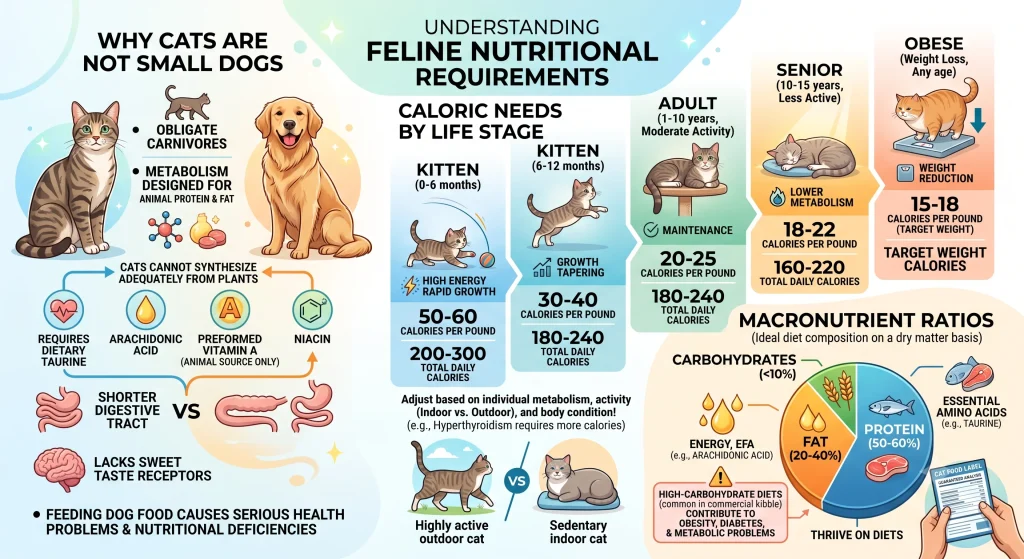
Cats are obligate carnivores, which means their metabolism is fundamentally designed to process animal protein and fat, not carbohydrates. Unlike dogs, which adapted over thousands of years to digest a more varied diet including plant material, cats require dietary taurine, arachidonic acid, vitamin A from animal sources, and niacin that they cannot synthesize in adequate amounts. Their digestive tracts are shorter, their livers process protein differently, and their taste receptors lack the ability to detect sweetness. Feeding a cat the same way you feed a dog, or worse, feeding a cat dog food, creates nutritional deficiencies that cause serious health problems over time.
Caloric Needs by Life Stage
A cat’s caloric requirements change dramatically throughout their life. Understanding these changes prevents both underfeeding and overfeeding during critical developmental and aging periods.
| Life Stage | Age | Daily Calories per Pound | Total Daily Calories |
|---|---|---|---|
| Kitten (growing) | 0 to 6 months | 50 to 60 calories per pound | 200 to 300 calories |
| Kitten (growing) | 6 to 12 months | 30 to 40 calories per pound | 180 to 240 calories |
| Adult (moderate activity) | 1 to 10 years | 20 to 25 calories per pound | 180 to 240 calories |
| Senior (less active) | 10 to 15 years | 18 to 22 calories per pound | 160 to 220 calories |
| Obese (weight loss) | Any age | 15 to 18 calories per pound | Target weight calories |
These figures represent starting points. Individual cats vary significantly in metabolic rate, activity level, and efficiency of nutrient absorption. A highly active outdoor cat may need thirty percent more calories than a sedentary indoor cat of the same weight. A senior cat with hyperthyroidism may need significantly more calories than the average senior. The key is using these guidelines as a baseline and adjusting based on your cat’s body condition.
Macronutrient Ratios
The ideal macronutrient profile for cats emphasizes protein and fat while minimizing carbohydrates. Research suggests that cats thrive on diets containing approximately fifty to sixty percent protein, twenty to forty percent fat, and less than ten percent carbohydrates on a dry matter basis. High carbohydrate diets, common in commercial kibble, contribute to obesity, diabetes, and other metabolic problems. Reading and understanding guaranteed analysis on cat food labels helps you select foods that meet these nutritional targets.
How to Calculate Your Cat’s Ideal Portions
Step One: Determine Ideal Body Weight
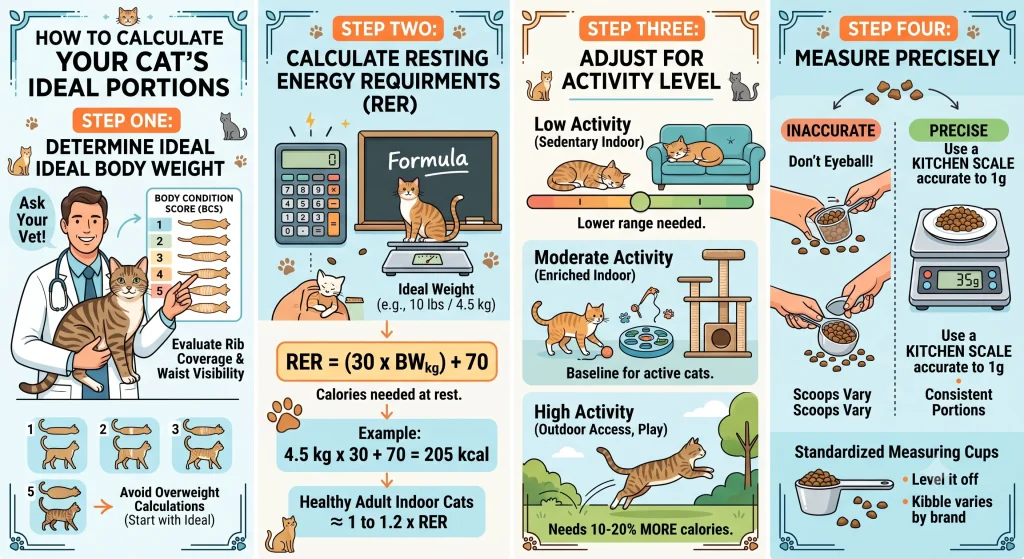
Before calculating portions, determine what your cat should weigh, not what they currently weigh. An overweight cat fed according to their current weight will continue gaining weight. A cat at ideal weight fed according to ideal weight maintains appropriately. Your veterinarian assesses ideal body weight using body condition scoring, evaluating rib coverage, waist visibility, and abdominal fat deposits. Most domestic cats have an ideal weight between eight and twelve pounds, though larger breeds like Maine Coons and Ragdolls may be appropriately larger.
Step Two: Calculate Resting Energy Requirements
The resting energy requirement represents the calories a cat needs at complete rest. For an average adult indoor cat, the RER is calculated as thirty times the body weight in kilograms plus seventy. For a ten pound cat weighing four and a half kilograms, the RER is approximately two hundred five calories. This is the baseline before accounting for activity, growth, pregnancy, or illness. Most healthy adult indoor cats need approximately one to one point two times their RER, meaning that ten pound cat needs roughly two hundred to two hundred fifty calories daily.
📚 The Complete Cat Care Bundle
Get 3 premium eBooks covering cat training, behavior, nutrition, and health. Instant digital download in one value-packed bundle.
Get the Bundle →Step Three: Adjust for Activity Level
Activity level significantly affects caloric needs. Cats that spend time outdoors, play actively, or live in stimulating environments with vertical spaces, puzzle feeders, and interactive play burn more calories than cats that sleep most of the day in a quiet apartment. Indoor cats with limited enrichment may need the lower end of caloric recommendations, while cats with access to outdoor spaces or extensive indoor activity may need ten to twenty percent more. Adjusting portions based on observed activity rather than generic guidelines produces better outcomes.
Step Four: Measure Precisely
Estimating food amounts by handfuls, scoops, or eyeballing is inaccurate and the primary cause of feline obesity. A kitchen scale accurate to one gram provides the most precise measurement. Weighing food portions daily or weekly ensures consistency. If you prefer volume measurement, use standardized measuring cups and level them off. One cup of dry kibble can vary by twenty to thirty calories between brands, so following the specific feeding guide on your cat’s food package provides the most accurate starting point.
Feeding Guidelines by Cat Type
Indoor Adult Cats
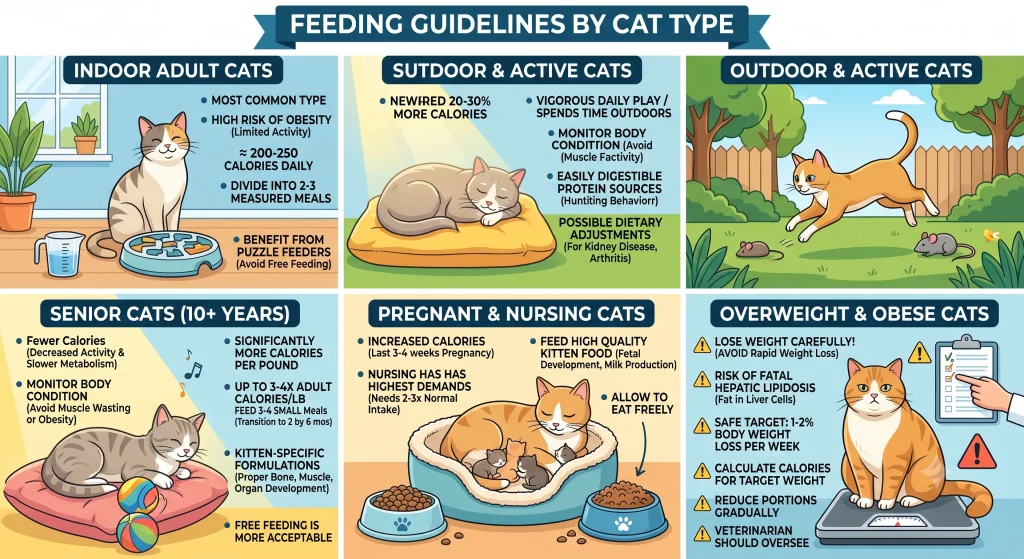
Indoor cats are the most common category and the most prone to obesity due to limited activity and unlimited food access. Most indoor adult cats need approximately two hundred to two hundred fifty calories daily, divided into two to three measured meals. The exact amount depends on weight, age, and activity. Indoor cats benefit from puzzle feeders and measured portions rather than free feeding, because the sedentary lifestyle makes weight gain easy and weight loss difficult.
Outdoor and Active Cats
Cats that spend time outdoors or engage in vigorous daily play typically need twenty to thirty percent more calories than sedentary indoor cats. Outdoor cats also burn calories maintaining body temperature in cold weather and engaging in hunting behavior. However, outdoor cats face other risks including parasites, disease, and accidents, so the increased caloric need comes with other health considerations that require monitoring.
Senior Cats
Senior cats over ten years old often need fewer calories due to decreased activity and slower metabolism. However, some seniors maintain excellent activity levels and need standard portions. Monitor body condition closely in seniors because muscle wasting from inadequate nutrition and obesity from overfeeding both occur frequently. Senior cats also benefit from easily digestible protein sources and may need dietary adjustments for age-related health conditions like kidney disease or arthritis.
Kittens
Kittens need significantly more calories per pound than adults because they are actively growing. Young kittens may need three to four times the calories per pound of an adult cat. Feed kittens three to four small meals daily, gradually transitioning to two meals by six months. Kitten-specific food formulations provide the concentrated nutrition needed for proper bone, muscle, and organ development. Free feeding is more acceptable for growing kittens than for adults, provided the food is kitten-formulated and the kitten maintains appropriate growth rate.
Pregnant and Nursing Cats
Pregnant cats need increased calories as pregnancy progresses, particularly in the last three to four weeks when fetal growth accelerates. Nursing cats have the highest caloric demands of any life stage, sometimes needing two to three times their normal intake depending on litter size. Feed pregnant and nursing cats high quality kitten food, which provides the concentrated nutrition needed for fetal development and milk production. Allow these cats to eat freely rather than restricting portions.
Overweight and Obese Cats
Weight loss in cats must be approached carefully. Cats that lose weight too rapidly develop hepatic lipidosis, a potentially fatal liver condition where fat accumulates in liver cells. Safe weight loss targets one to two percent of body weight per week. This requires calculating calories for the ideal target weight rather than current weight, and sometimes reducing portions gradually over weeks rather than making dramatic cuts. Your veterinarian should oversee any weight loss program to monitor for complications.
Free Feeding vs Measured Meals
The Case Against Free Feeding
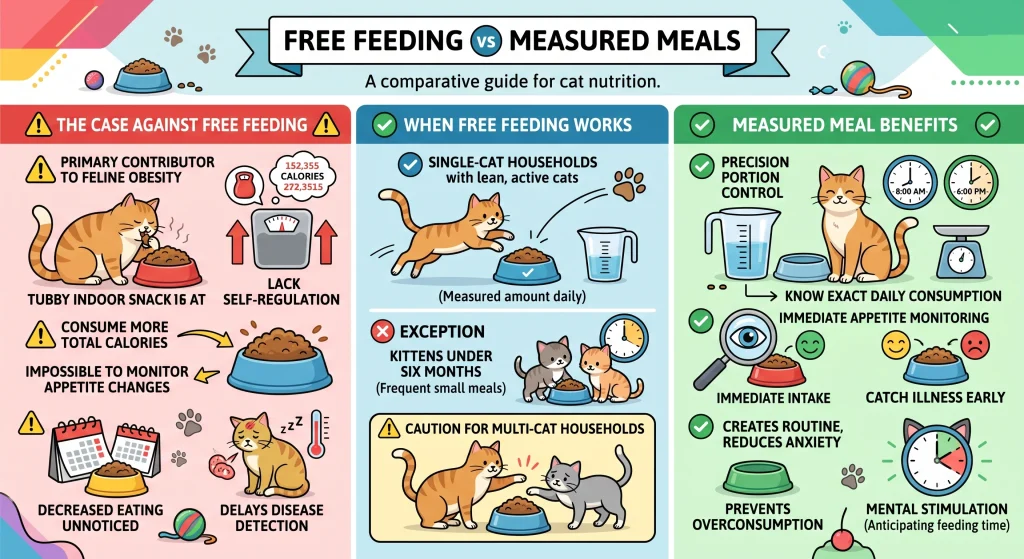
Free feeding, leaving food available at all times, is the most common feeding method for indoor cats and the primary contributor to feline obesity. Most cats lack the self-regulation to eat only what they need when food is constantly available. They snack throughout the day, consuming more total calories than they would in measured meals. Free feeding also makes it impossible to monitor appetite changes, which are often the first indicator of illness. When food is always available, a decrease in eating may go unnoticed for days or weeks, delaying disease detection.
When Free Feeding Works
Free feeding can work in specific situations. Single-cat households with lean, active cats that maintain weight well on available food may do fine with measured free feeding, where you fill the bowl to a specific measured amount once daily. Kittens under six months benefit from frequent small meals that free feeding provides. Multi-cat households make free feeding problematic because dominant cats may eat more than their share while submissive cats eat less, creating weight disparities.
Measured Meal Benefits
Measured meals provide numerous advantages. You know exactly how much your cat eats daily, making portion control precise. You can monitor appetite changes immediately, catching illness early. Measured meals create routine, which reduces anxiety in cats that thrive on predictability. Feeding two to three measured meals daily aligns with cats’ natural grazing instincts while preventing overconsumption. The brief periods between meals also provide mental stimulation as cats anticipate feeding time.
How to Read Cat Food Labels
Understanding Guaranteed Analysis
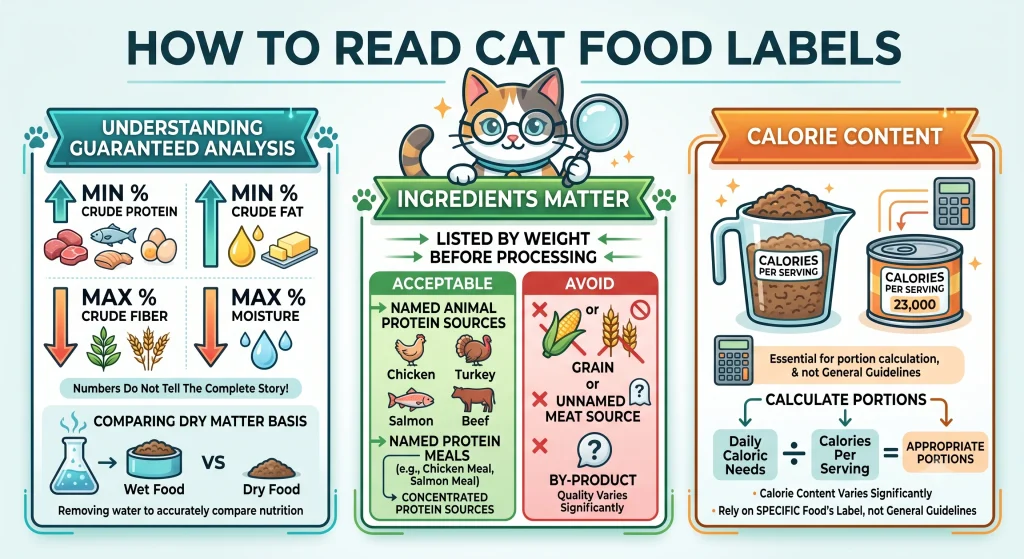
The guaranteed analysis on cat food labels lists minimum percentages of crude protein and crude fat, and maximum percentages of crude fiber and moisture. These numbers help compare foods but do not tell the complete nutritional story. A food with thirty percent protein and ten percent fat sounds different from one with ten percent moisture versus eighty percent moisture. Comparing dry matter basis, removing water content, provides accurate nutritional comparison between wet and dry foods.
Ingredients Matter
Ingredients are listed by weight before processing. The first ingredient should be a named animal protein source like chicken, turkey, salmon, or beef. Avoid foods where the first ingredient is a grain, by-product, or unnamed meat source. Named protein meals, like chicken meal or salmon meal, are concentrated protein sources and are acceptable. By-product meals may contain nutritious organ meats but quality varies significantly between manufacturers.
Calorie Content
Most cat food labels include calorie content per cup for dry food or per can for wet food. This information is essential for calculating appropriate portions. Divide your cat’s daily caloric needs by the calories per serving to determine how much to feed. Remember that calorie content varies significantly between brands and formulations, so relying on the specific food’s label rather than general guidelines produces more accurate portions.
📚 The Complete Cat Care Bundle
Get 3 premium eBooks covering cat training, behavior, nutrition, and health. Instant digital download in one value-packed bundle.
Get the Bundle →Common Feeding Mistakes
- Feeding based on the cat’s requests. Cats learn to beg effectively. Feeding every time a cat meows teaches them that vocalizing produces food, creating a cycle of demanding behavior and overfeeding. Stick to scheduled meals regardless of begging.
- Using the bag’s feeding guide as absolute truth. Feeding guides on food packages are averages. Your cat may need more or less depending on individual factors. Use the guide as a starting point and adjust based on body condition.
- Ignoring treats in daily calorie counts. Treats add calories that accumulate quickly. Treats should constitute no more than ten percent of daily caloric intake. A few commercial treats can add fifty to one hundred calories, significantly exceeding appropriate limits.
- Switching foods abruptly. Changing cat food suddenly causes digestive upset including vomiting and diarrhea. Transition over seven to ten days, gradually increasing the proportion of new food while decreasing the old.
- Feeding only dry food. While high quality dry food can be nutritionally complete, cats on dry-only diets often consume fewer calories from protein and more from carbohydrates. Wet food provides hydration benefits and lower carbohydrate content that better matches feline nutritional needs.
- Not adjusting for life changes. Spaying, neutering, aging, activity level changes, and health conditions all affect caloric needs. Review and adjust feeding amounts at least annually or whenever a significant life change occurs.
- Using inaccurate measuring tools. A coffee mug is not a measuring cup. A handful is not a portion. Invest in proper measuring cups or a kitchen scale for accurate portion control.
- Ignoring body condition. The scale is not the only measure of appropriate weight. Learn to assess body condition by feeling ribs, observing waist definition, and evaluating abdominal fat. Body condition scoring is more informative than weight alone.
Expert Tips From My Practice
The single most impactful change I recommend to cat owners is switching from free feeding to measured meals. In my practice, cats that transition from free feeding to measured meals typically lose excess weight within three to six months without any other dietary changes. Measured meals also make health monitoring dramatically easier because you immediately notice when your cat eats less than usual. That early detection catches diseases weeks to months earlier than if food is always available and appetite changes go unnoticed.
- Weigh your cat monthly. Monthly weigh-ins catch weight trends before they become problems. A gain of one pound on a ten pound cat represents a ten percent increase that demands immediate portion adjustment.
- Adjust portions seasonally. Cats may eat more in winter and less in summer. Monitor body condition and adjust portions accordingly rather than feeding the same amount year-round regardless of seasonal changes.
- Use puzzle feeders for stimulation. Puzzle feeders slow eating, provide mental enrichment, and mimic hunting behavior. They are particularly valuable for overweight cats that eat too quickly.
- Feed high protein when possible. Protein is the most important macronutrient for cats. Choose foods where named animal protein is the first ingredient and protein content is thirty percent or higher on a dry matter basis.
- Consider wet food for hydration. Wet food contains seventy to eighty percent water, helping cats meet hydration needs. Cats on wet food diets often have better urinary tract health and lower obesity rates.
- Do not skip meals to make up for treats. If your cat receives treats, account for those calories in the daily total rather than reducing meal portions to compensate. This maintains consistent nutrition while accommodating treats.
- Consult your vet about specific needs. Cats with health conditions like diabetes, kidney disease, or food allergies need specialized diets. Your veterinarian and a board certified veterinary nutritionist can provide guidance tailored to your cat’s specific health requirements.
- Transition foods gradually. Any diet change should happen over seven to ten days. Start with seventy-five percent old food and twenty-five percent new food, gradually shifting the ratio. This prevents digestive upset and allows your cat to adjust to new flavors and textures.
FAQ
How much should I feed my cat per day?
Most adult indoor cats need approximately two hundred to two hundred fifty calories daily, divided into two to three meals. The exact amount depends on weight, age, activity level, and the specific food you use. Check the calorie content on your food label and adjust portions accordingly.
How many times a day should I feed my cat?
Adult cats do best with two to three measured meals daily. Kittens under six months need three to four small meals. Senior cats may benefit from two smaller meals. Consistent meal times create routine and help with appetite monitoring.
Can I free feed my cat dry food?
Free feeding is generally discouraged because most cats overeat when food is constantly available, leading to obesity. Measured meals with portion control produce healthier body weight and allow you to monitor appetite changes that indicate illness.
How do I know if I am feeding my cat too much?
You cannot feel your cat’s ribs easily, the waist is not visible from above, there is a hanging abdominal fat pad, or the cat has gained weight recently. These signs indicate overfeeding. Reduce portions by ten to fifteen percent and reassess after two weeks.
How much wet food should I feed my cat?
A typical five and a half ounce can of wet food contains approximately one hundred fifty to two hundred calories. Feed one to two cans daily depending on your cat’s caloric needs, adjusting dry food portions if feeding both wet and dry.
Is dry or wet food better for cats?
Both have advantages. Wet food provides hydration and lower carbohydrates. Dry food is convenient and cost effective. Many veterinarians recommend a combination or emphasize wet food for cats prone to obesity, diabetes, or urinary problems.
What if my cat refuses to eat the amount I calculate?
Start with the recommended amount and adjust gradually over one to two weeks. If your cat consistently leaves food, reduce portions. If they seem hungry, increase slightly while monitoring weight. The goal is maintaining ideal body condition.
Do indoor cats need less food than outdoor cats?
Yes, typically. Indoor cats burn fewer calories due to limited activity. Outdoor cats may need twenty to thirty percent more calories. Adjust portions based on your cat’s actual activity level and body condition rather than location alone.
How much should a kitten eat?
Kittens under six months need approximately fifty to sixty calories per pound daily. Kittens six to twelve months need thirty to forty calories per pound. Feed kitten specific food in three to four small meals daily for proper growth.
Should I feed my senior cat differently?
Senior cats may need fewer calories due to decreased activity but higher quality protein. Monitor body condition closely because both obesity and muscle wasting occur frequently in seniors. Adjust portions based on activity level and health status.