

Table of Contents
Cat Hydration Complete Guide to How Much Water Cats Need and How to Make Them Drink
You fill your cat’s water bowl every morning, but you never actually see them drink from it. You wonder if they are getting enough water, if they are dehydrated, or if cats just do not need as much water as other animals. The truth is that cats need water just as much as any living creature, but they have a uniquely low thirst drive that makes them prone to chronic dehydration. In the wild, cats evolved in arid environments and obtained most of their water from the bodies of their prey, which contain approximately seventy to seventy-five percent moisture.
Domestic cats retain this evolutionary programming. They simply do not feel thirsty the way dogs or humans do, and they will not drink enough water to compensate for a dry food diet unless you take active steps to encourage them. Chronic dehydration is a leading contributor to kidney disease, urinary tract problems, and constipation in cats, conditions that are largely preventable with proper hydration management.
As a certified veterinary expert and professional cat behaviorist, I have seen the devastating effects of chronic dehydration in cats whose owners assumed their cat was drinking enough. A cat eating dry food needs to drink significantly more water than a cat eating wet food, and most cats on dry food diets fall short of their hydration needs.
This guide covers exactly how much water your cat needs based on their diet and body weight, the warning signs of dehydration that every owner should recognize, why cats are so finicky about their water sources, the best types of water bowls and fountains to encourage drinking, how wet food contributes to hydration, and practical strategies to increase your cat’s water intake today. Hydration is one of the simplest and most impactful things you can manage for your cat’s health, and small changes make a measurable difference.
📚 Recommended Cat Guides
🐱 The Trainable Cat Book
Learn proven methods to train your cat and stop unwanted behaviors.
View Book →❤️ Complete Cat Care Manual
Your complete guide to cat nutrition, health, grooming, behavior, and daily care.
Get the Manual →How Much Water Does Your Cat Need?
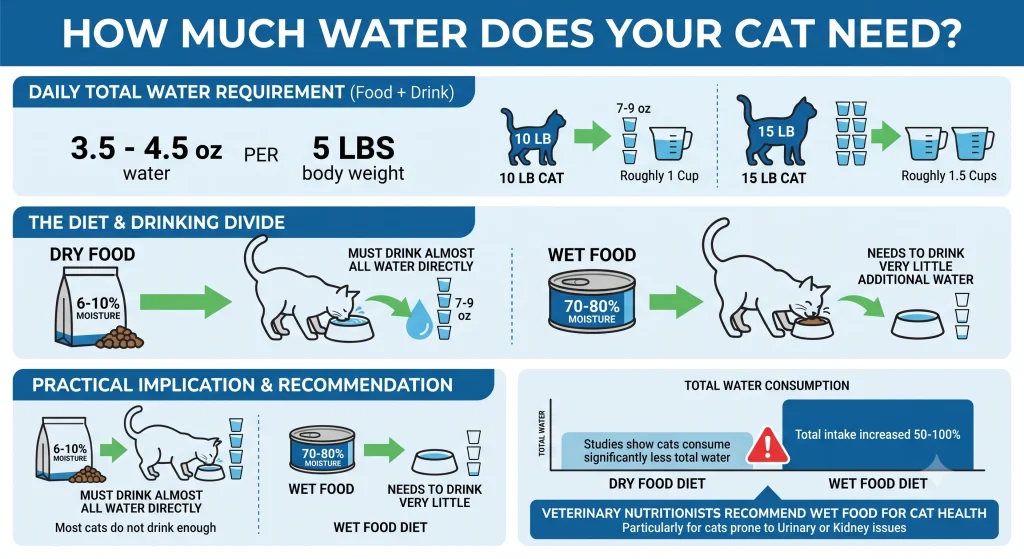
A cat needs approximately three and a half to four and a half ounces of water per five pounds of body weight per day. This means a ten pound cat needs roughly seven to nine ounces of water daily, which is about one cup. A fifteen pound cat needs about ten to fourteen ounces, roughly one and a half cups. These amounts include water from both drinking and food. The critical factor determining how much your cat needs to drink directly is the moisture content of their food.
A cat eating exclusively dry food, which contains only six to ten percent moisture, must obtain almost all of their water through drinking. A cat eating exclusively wet food, which contains seventy to eighty percent moisture, gets most of their water from their meals and needs to drink very little additional water. Cats eating a combination of wet and dry food fall somewhere in between.
The practical implication is significant. A cat eating dry food needs to drink approximately seven to nine ounces of water per day to meet their needs. Most cats simply do not drink that much from a bowl. Studies show that cats on dry food diets consume significantly less total water than cats on wet food diets, even when water is freely available. This is the primary reason veterinary nutritionists recommend wet food as the foundation of a healthy cat diet, particularly for cats prone to urinary or kidney issues. Switching a cat from dry food to wet food can increase their total water intake by fifty to one hundred percent without any effort from the owner.
Signs of Dehydration in Cats
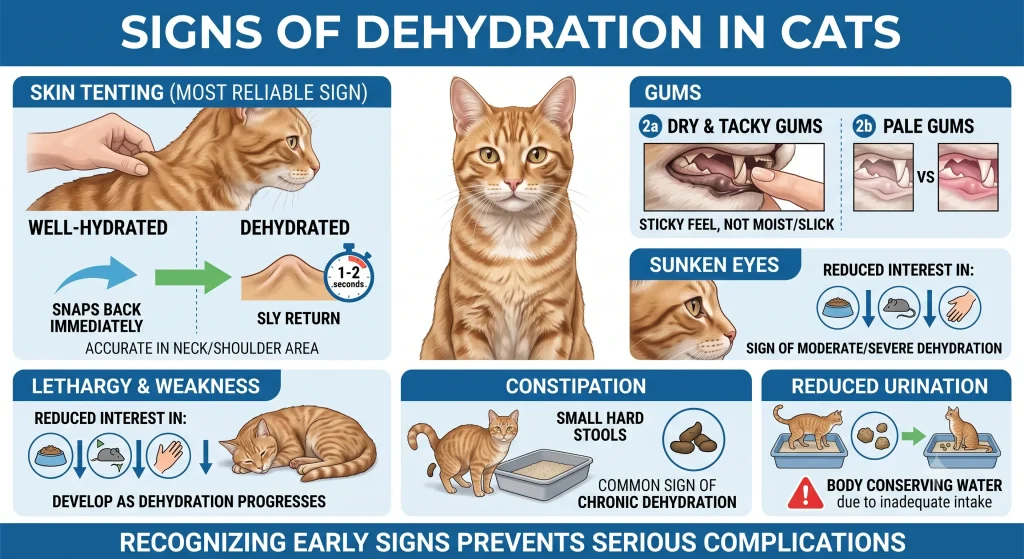
Recognizing dehydration early prevents serious health complications. The most reliable sign is skin tenting. Gently lift the skin between your cat’s shoulder blades and release it. In a well hydrated cat, the skin snaps back into place immediately. In a dehydrated cat, the skin stays tented for one to two seconds before slowly returning. This test is most accurate in the neck or shoulder area. Other signs include dry or tacky gums, where the gum tissue feels sticky rather than moist and slick.
A dehydrated cat’s gums may also appear pale rather than the healthy pink color of well hydrated gums. Sunken eyes are a sign of moderate to severe dehydration. The eyes may appear to sit deeper in the sockets than normal. Lethargy and weakness develop as dehydration progresses, and the cat may show reduced interest in food, play, and interaction. Constipation, with small hard stools passed infrequently, is a common sign of chronic dehydration. Reduced urination, where you notice smaller or fewer litter box clumps, indicates the body is conserving water due to inadequate intake.
Why Cats Are Picky About Water
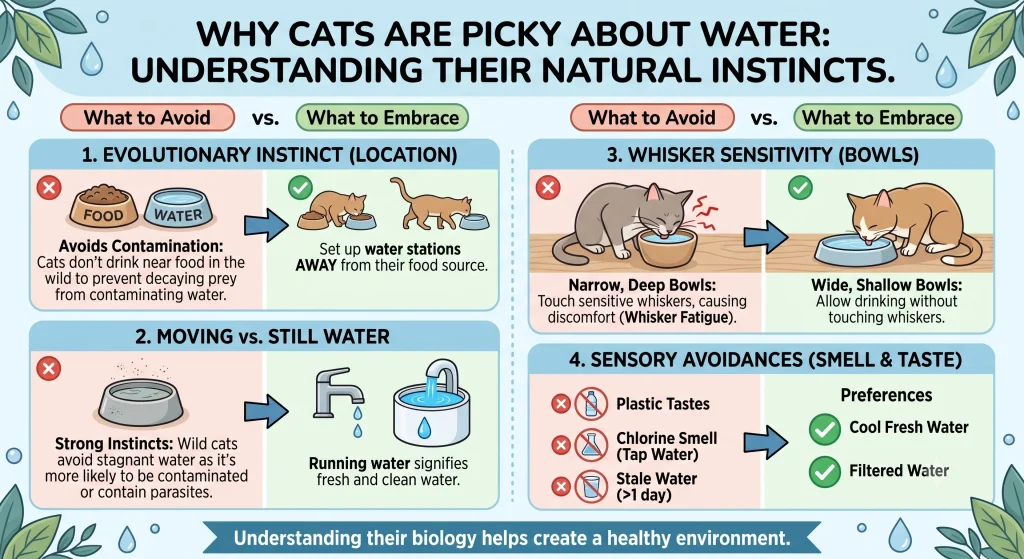
Understanding why cats are particular about their water helps you create an environment that encourages drinking. Cats have a strong instinct to avoid water that might be contaminated. In the wild, cats avoid drinking water near their food source because decaying prey could contaminate the water. This instinct persists in domestic cats, which is why many cats prefer water bowls placed away from their food bowls. Cats also prefer moving water over still water because running water is less likely to be stagnant or contaminated.
This is why many cats are fascinated by faucets and prefer drinking from pet fountains. Cats have sensitive whiskers, and deep narrow bowls that touch their whiskers while drinking are uncomfortable. Wide shallow bowls that do not touch the whiskers are preferred. Cats also have a strong sense of smell and may avoid water that tastes like plastic, chlorine from tap water, or stale water that has sat out for more than a day. The temperature of the water matters too, with many cats preferring cool fresh water over room temperature water that has been sitting out.
Best Ways to Increase Your Cat’s Water Intake
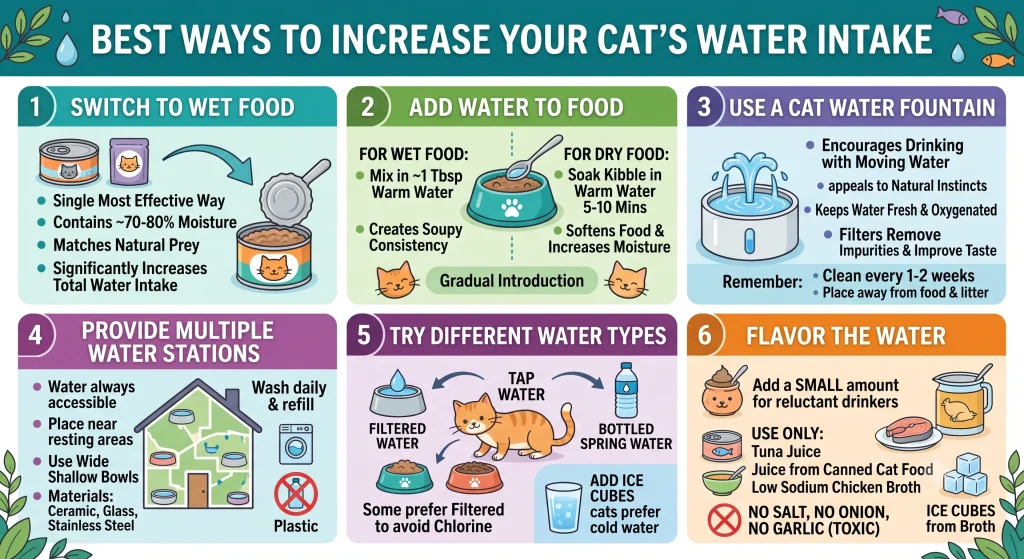
Switch to Wet Food
The single most effective way to increase your cat’s water intake is feeding wet food. Canned or pouched cat food contains approximately seventy to eighty percent moisture, closely matching the water content of a cat’s natural prey. A cat eating wet food gets most of their daily water from meals and needs to drink very little additional water. Even adding one wet meal per day to a primarily dry food diet significantly increases total water intake. For cats with urinary or kidney issues, exclusive wet food feeding is strongly recommended.
Add Water to Food
If your cat already eats wet food, you can increase their water intake further by adding extra water to the food. Start with a tablespoon of warm water mixed into the wet food, creating a soupy consistency. Most cats accept this readily, and some even prefer the texture. For cats that eat dry food, adding warm water to the kibble and letting it soak for five to ten minutes softens the food and increases moisture content significantly. Some cats need gradual introduction to this change.
Use a Cat Water Fountain
Cat water fountains are highly effective at encouraging drinking because they provide moving water that appeals to cats’ natural instincts. The continuous circulation also keeps water fresh and oxygenated, and most fountains include filters that remove impurities and improve taste. Place the fountain away from food bowls and litter boxes. Clean the fountain according to manufacturer instructions, typically every one to two weeks, to prevent bacterial buildup and slime formation.
Provide Multiple Water Stations
Place multiple water bowls throughout your home so water is always accessible. Cats are more likely to drink when water is conveniently located near their resting areas. Use wide shallow bowls made of ceramic, glass, or stainless steel. These materials do not leach flavors or chemicals the way plastic bowls can. Wash bowls daily with hot soapy water and refill with fresh water. Stale water that has been sitting for more than a day loses its appeal to cats.
Try Different Water Types
Some cats prefer filtered water over tap water because it lacks the chlorine taste that tap water often has. Try offering both tap water and filtered water in separate bowls to see which your cat prefers. Some cats prefer bottled spring water. Ice cubes added to water bowls can make the water more appealing for cats that prefer colder water. Ice cubes made from low sodium chicken broth, not containing onion or garlic, can encourage drinking while adding flavor.
Flavor the Water
Adding a small amount of tuna juice, low sodium chicken broth, or juice from canned cat food to the water bowl can encourage reluctant drinkers. Use only unsalted broths without onion or garlic, which are toxic to cats. Start with a small amount and gradually reduce the flavoring over time as your cat develops better drinking habits.
Water Bowl Maintenance
Proper bowl maintenance is essential for encouraging drinking. Wash water bowls daily with hot soapy water and rinse thoroughly to remove soap residue that can affect taste. Replace plastic bowls with ceramic, glass, or stainless steel options because plastic develops scratches that harbor bacteria and can cause chin acne. Refill water bowls with fresh water at least once daily, more often in warm weather. Clean water fountains according to manufacturer instructions and replace filters regularly. Stagnant water in fountains that are not properly maintained can develop bacterial growth that discourages drinking and may cause illness.
Hydration for Senior Cats
Senior cats are at higher risk for dehydration due to age related changes in kidney function, reduced mobility that makes accessing water more difficult, and increased prevalence of medical conditions that affect hydration. Senior cats may also have dental pain that makes drinking uncomfortable. Providing easily accessible water stations on every floor of the home, using low sided bowls that are easy to reach, and feeding primarily wet food are essential for maintaining hydration in older cats. Cats with kidney disease need particularly careful hydration management and may benefit from subcutaneous fluid therapy prescribed by a veterinarian.
Expert Tips From My Practice
If you take only one piece of advice from this guide, let it be this: feed your cat wet food. I have treated countless cats with urinary blockages, kidney disease, and chronic constipation, conditions that are directly linked to chronic dehydration. The single most effective preventive measure is switching from dry food to wet food. The increase in water intake is dramatic and immediate. Cats that have struggled with recurrent urinary problems often stop having issues entirely after switching to wet food. It is not expensive, it is not complicated, and it works better than any fancy water bowl or fountain ever could.
- Wet food is the easiest hydration solution. It provides moisture directly and requires no effort from your cat.
- Place water bowls away from food bowls. Cats instinctively avoid water near food sources.
- Use wide shallow bowls. Deep bowls that touch whiskers are uncomfortable and discourage drinking.
- Change water daily. Stale water loses freshness and cats will reject it.
- Consider a fountain. Moving water appeals to cats natural instincts and encourages drinking.
- Monitor senior cats closely. They are at highest risk for dehydration and need extra support.
- Add water to food. Even wet food can be thinned to increase moisture content.
- Watch for skin tenting. Regular skin elasticity checks catch dehydration before it becomes severe.
FAQ
How much water should a cat drink per day?
A cat needs approximately three and a half to four and a half ounces of water per five pounds of body weight daily. A ten pound cat needs about seven to nine ounces total, including water from food.
Is it normal for cats to not drink much water?
It is common but not ideal. Cats evolved to get water from prey, so they have a low thirst drive. Cats eating dry food often do not drink enough to compensate. Wet food helps close the hydration gap.
How can I tell if my cat is dehydrated?
Check for skin tenting by lifting the skin between the shoulder blades. If it does not snap back immediately, your cat is dehydrated. Other signs include dry gums, sunken eyes, lethargy, and constipation.
Do cats prefer moving water?
Many cats prefer moving water because it is fresher and less likely to be contaminated in their instinctive judgment. Cat water fountains are effective at encouraging increased water intake.
Does wet food count as water intake?
Yes. Wet food contains approximately seventy to eighty percent moisture, which counts toward your cat’s total daily water intake. Cats eating wet food get most of their water from meals.
Why does my cat dip their paw in the water bowl?
Cats dip their paws in water to test the depth, temperature, and freshness before drinking. Some cats also prefer drinking from their paw rather than submerging their face. This is normal behavior.
Can cats drink milk for hydration?
No. Most adult cats are lactose intolerant, and milk causes digestive upset including diarrhea. Milk does not provide proper hydration and can actually worsen dehydration through fluid loss.
What type of water bowl is best for cats?
Wide shallow bowls made of ceramic, glass, or stainless steel are best. These materials do not leach flavors, are easy to clean, and do not cause chin acne. Avoid plastic bowls.
How do I get my cat to drink more water?
Switch to wet food, add water to meals, use a cat water fountain, provide multiple water stations away from food bowls, and try different water types including filtered water.
Can dehydration cause urinary problems in cats?
Yes, dehydration is a primary cause of urinary tract problems in cats. Concentrated urine promotes crystal formation, bladder inflammation, and urinary blockages. Adequate hydration is essential for urinary health.