

Table of Contents
Cat Food Allergies Complete Guide to Symptoms Causes and Treatment
Your cat has been scratching nonstop, losing patches of fur, and vomiting after meals for months. You have tried different foods, switched proteins, and eliminated treats, but nothing seems to help. Your veterinarian suspects a food allergy, and now you are wondering what that actually means, what your cat is allergic to, and how to fix it. Food allergies in cats are more common than most owners realize, and they are one of the most misdiagnosed conditions in feline medicine.
Many cats are treated for flea allergies, environmental allergies, or skin infections for years before someone finally identifies a food allergy as the underlying cause. The reason food allergies are so hard to pin down is that they do not develop overnight. A cat can eat the same protein for years before their immune system suddenly recognizes it as a threat and mounts an inflammatory response. This delayed onset makes it extremely difficult to identify the trigger without a proper elimination diet, which is the only reliable method for diagnosing food allergies in cats.
As a certified veterinary expert and professional cat behaviorist, I have worked with countless cats whose owners were convinced their cat had incurable skin disease, only to discover that a simple food allergy was the root cause.
Once the trigger ingredient was identified and removed, symptoms resolved within weeks. This guide covers the exact symptoms of food allergies in cats, the most common allergenic ingredients, how elimination diets work and why they are the gold standard for diagnosis, the difference between food allergies and food intolerances, how to read cat food labels for hidden allergens, treatment options including hypoallergenic and novel protein diets, and the truth about grain free diets and food allergies. Understanding food allergies gives you the power to resolve your cat’s chronic symptoms and improve their quality of life dramatically.
📚 Recommended Cat Guides
🐱 The Trainable Cat Book
Learn proven methods to train your cat and stop unwanted behaviors.
View Book →❤️ Complete Cat Care Manual
Your complete guide to cat nutrition, health, grooming, behavior, and daily care.
Get the Manual →Symptoms of Food Allergies in Cats
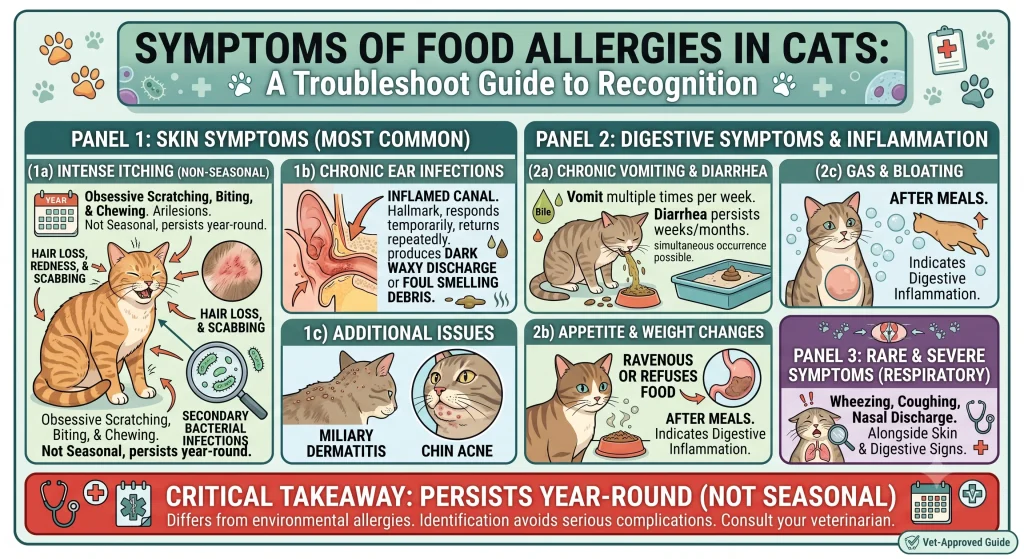
Food allergy symptoms in cats primarily manifest through the skin and digestive system, though respiratory symptoms can occur in severe cases. The most common skin symptoms include intense itching that affects the face, ears, neck, belly, and paws. Cats with food allergies often scratch, bite, and chew at their skin obsessively, leading to hair loss, redness, scabbing, and secondary bacterial infections. The itching is not seasonal like environmental allergies.
It persists year round regardless of weather, pollen counts, or indoor air quality. Ear infections are another hallmark symptom. Cats with food allergies develop chronic ear infections that respond temporarily to treatment but return repeatedly. The ear canal becomes inflamed and may produce dark waxy discharge or foul smelling debris. Some cats develop miliary dermatitis, which presents as small crusty bumps scattered across the skin, particularly along the back and head. Chin acne, where the chin becomes swollen and pimpled, is also associated with food allergies.
Digestive symptoms of food allergies include chronic vomiting, where the cat vomits undigested food or bile multiple times per week without any apparent cause. Chronic diarrhea, with soft or loose stools that persist for weeks or months, is another common sign. Some cats experience both vomiting and diarrhea simultaneously. Appetite changes, where the cat either eats ravenously or refuses food entirely, may occur. Weight loss despite a normal or increased appetite is a red flag for food allergies. Gassiness and bloating after meals indicate digestive inflammation. In rare cases, respiratory symptoms including wheezing, coughing, or nasal discharge occur alongside skin and digestive signs.
Food Allergy Versus Food Intolerance
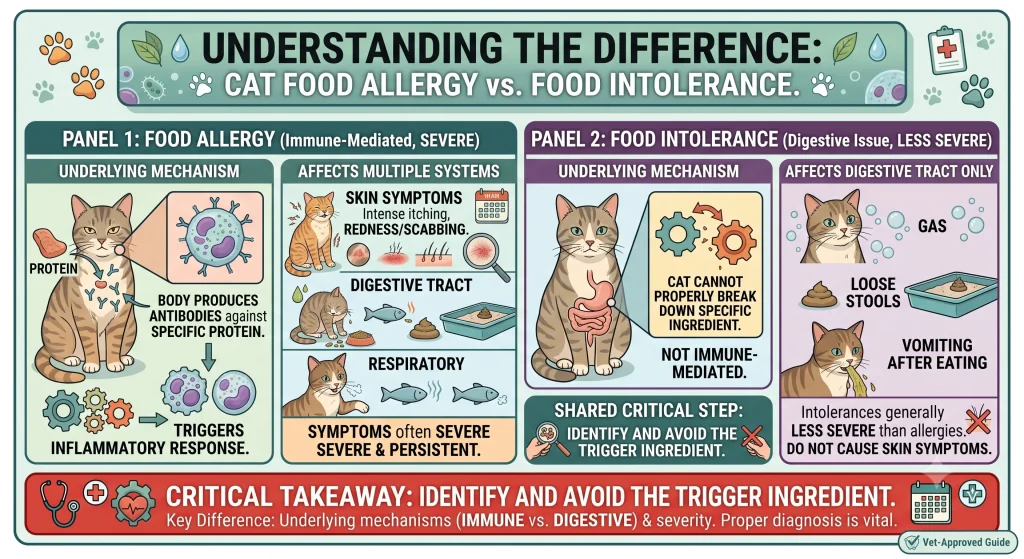
Understanding the difference between a food allergy and a food intolerance is important for proper treatment. A food allergy involves the immune system. The body produces antibodies against a specific protein in the food, triggering an inflammatory response that affects the skin, digestive tract, or respiratory system. Symptoms are often severe and persistent.
A food intolerance does not involve the immune system. It is a digestive issue where the cat cannot properly break down a specific ingredient, leading to gas, loose stools, or vomiting after eating that particular food. Intolerances are generally less severe than allergies and do not cause skin symptoms. Both conditions require identifying and avoiding the trigger ingredient, but the underlying mechanisms and severity differ significantly.
Most Common Allergenic Ingredients in Cat Food
Research shows that the most common food allergens in cats are protein sources rather than grains or carbohydrates. Beef is the number one food allergen in cats, followed by fish, chicken, and dairy products. Eggs, lamb, and soy are less common but still recognized triggers. The surprising fact is that grain allergies are relatively rare in cats, which contradicts the popular belief that grain free diets automatically solve food allergy problems.
Many cats labeled as grain allergic actually have a protein allergy that coincidentally improved when the owner switched to a grain free diet that also contained different protein sources. This leads many owners to mistakenly believe the grain was the problem when the actual allergen was the protein. Wheat gluten, corn, and soy are the most likely grain or plant based allergens, but they affect a much smaller percentage of cats than protein allergens.
How Elimination Diets Work
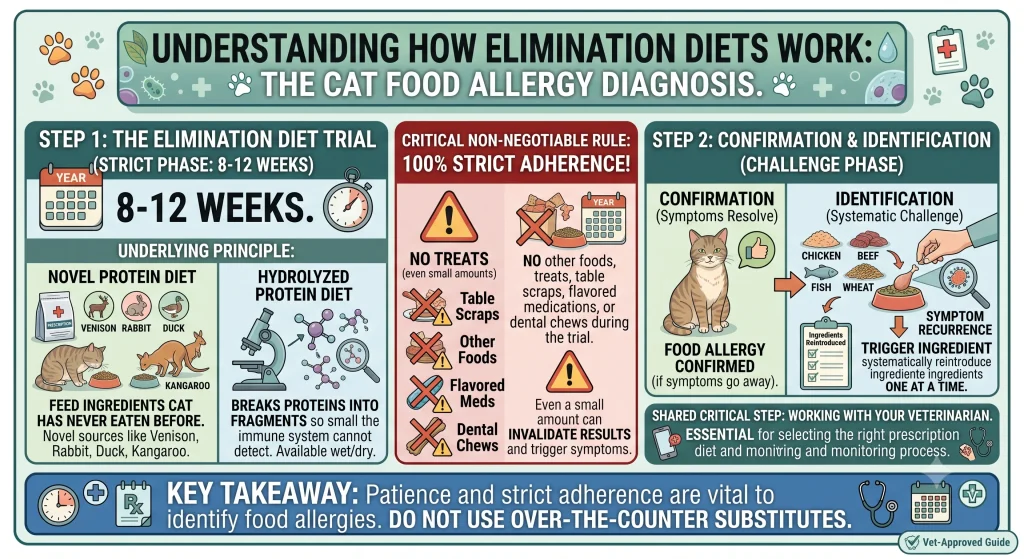
An elimination diet is the only reliable method for diagnosing food allergies in cats. The principle is simple. You feed your cat a diet containing ingredients they have never eaten before, known as a novel protein diet, or a diet where the proteins have been broken down so small that the immune system cannot recognize them, known as a hydrolyzed protein diet. If the cat’s symptoms resolve on the elimination diet, food allergy is confirmed. You then systematically reintroduce ingredients one at a time, watching for symptom recurrence. When symptoms return, you have identified the trigger ingredient.
A proper elimination diet must be followed strictly for eight to twelve weeks. This means no other foods, treats, table scraps, flavored medications, or dental chews during the trial period. Even a small amount of the allergen can trigger symptoms and invalidate the results. Novel protein diets use proteins that the cat has never been exposed to, such as venison, rabbit, duck, or kangaroo. These are available through veterinary prescription diets. Hydrolyzed protein diets break proteins into fragments so small that the immune system cannot detect them. They are available in both wet and dry formulas from veterinary brands. Working with your veterinarian is essential for selecting the right elimination diet and monitoring the process.
Reading Cat Food Labels for Hidden Allergens
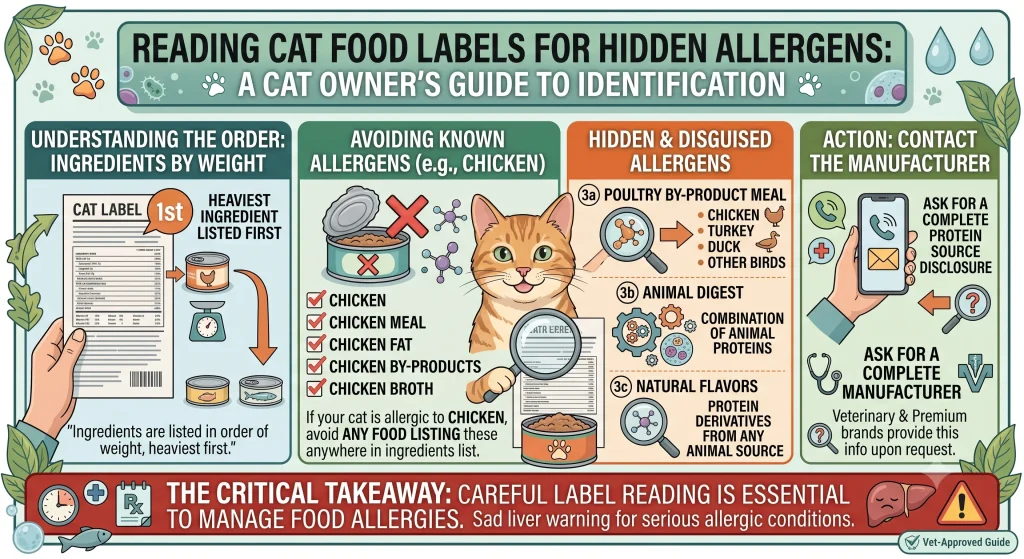
Reading cat food labels carefully is essential for managing food allergies. Ingredients are listed in order of weight, with the heaviest ingredient first. If your cat is allergic to chicken, avoid any food listing chicken, chicken meal, chicken fat, chicken by products, or chicken broth anywhere in the ingredients list. Many commercial cat foods contain multiple protein sources, making it difficult to avoid allergens without careful label reading. Some ingredients are disguised under different names.
Poultry by product meal can contain chicken, turkey, duck, or other birds. Animal digest may contain any combination of animal proteins. Natural flavors can include protein derivatives from any animal source. When in doubt, contact the manufacturer and ask for a complete protein source disclosure. Many veterinary and premium brands provide this information upon request.
Hypoallergenic and Novel Protein Diets
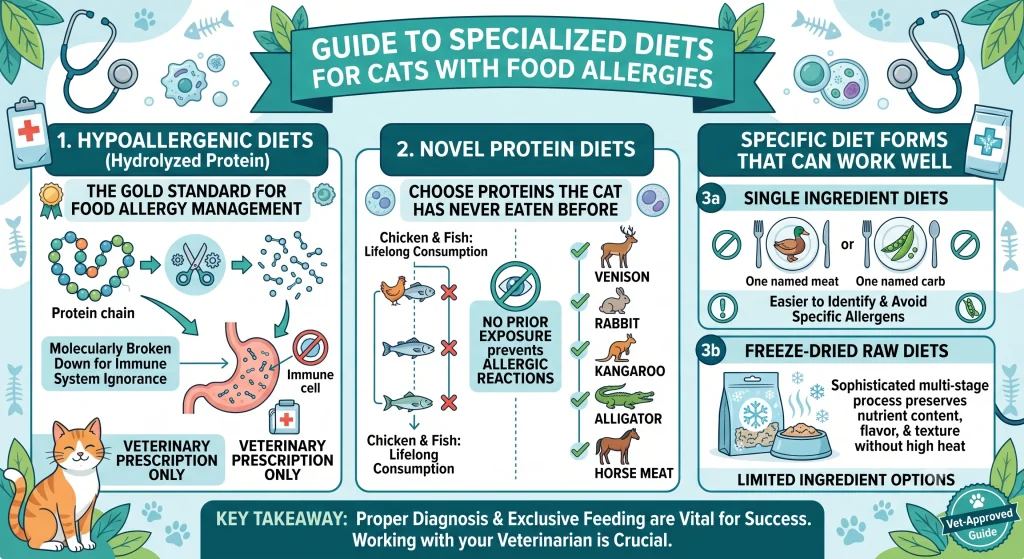
Hypoallergenic diets are specifically formulated to minimize the risk of allergic reactions. Hydrolyzed protein diets break proteins into molecular fragments so small that the immune system does not recognize them as allergenic. These diets are available through veterinary prescription and are the gold standard for food allergy management.
Novel protein diets use protein sources that the cat has never eaten before. If your cat has been eating chicken and fish their entire life, novel options include venison, rabbit, kangaroo, alligator, or horse meat. The key is choosing a protein source that your cat has not been exposed to previously. Single ingredient diets, which contain only one protein source and one carbohydrate source, make it easier to identify and avoid specific allergens. Freeze dried raw diets with limited ingredients can also work well for cats with food allergies.
Can Food Allergies Be Cured?
Food allergies cannot be cured, but they can be managed effectively for life. Once a trigger ingredient is identified, the only treatment is strict avoidance of that ingredient for the rest of the cat’s life. This means reading every food label, avoiding table scraps, and ensuring all family members understand which foods are off limits. Some cats are allergic to multiple ingredients, which complicates dietary management. In these cases, a hydrolyzed protein diet is often the safest long term option because it eliminates the risk of exposure to specific allergens. Cats with food allergies may also benefit from supplements that support skin health, including omega three fatty acids, which reduce inflammation and improve coat quality.
The Grain Free Diet Myth
The grain free diet trend has led many cat owners to believe that grains are the primary cause of food allergies in cats. This is not supported by veterinary research. Studies consistently show that protein sources, not grains, are the most common food allergens in cats. Beef, fish, and chicken cause far more allergic reactions than wheat, corn, or rice.
Many cats labeled as grain allergic actually have protein allergies that coincidentally improved when the owner switched to a grain free diet that also contained different protein sources. This creates a false association between grains and allergies. Unless your cat has been properly diagnosed with a grain allergy through an elimination diet, there is no medical reason to avoid grains. In fact, many grain free diets contain higher levels of legumes, potatoes, or other starches that can be harder for some cats to digest.
Expert Tips From My Practice
The most important thing I tell owners dealing with suspected food allergies is to do the elimination diet properly. I know it is difficult to restrict your cat’s diet for eight to twelve weeks, and I know your cat will beg for treats during that time. But a shortcut elimination diet gives you unreliable results and wastes everyone’s time and money.
If you cheat during the trial, you cannot trust the outcome. Work with your vet, commit to the process, and trust that the investment of time and patience will pay off with a clear diagnosis and a dietary plan that resolves your cat’s symptoms. I have seen cats go from miserable, itchy, hairless messes to healthy, happy companions in a matter of weeks once the correct food allergy was identified and the trigger ingredient was removed.
- Elimination diets are the only reliable diagnosis method. Blood tests and skin tests are not accurate for food allergies in cats.
- Commit to the full eight to twelve weeks. No cheating with treats or table scraps during the trial.
- Proteins are the most common allergens. Not grains, despite what marketing campaigns suggest.
- Read every food label carefully. Hidden allergens appear under many different names.
- Work with your veterinarian. Prescription diets provide the most reliable elimination options.
- Food allergies cannot be cured. But they can be managed effectively for life through strict avoidance.
- Monitor symptoms throughout. Track itching, vomiting, diarrhea, and stool quality during the elimination phase.
- Supplement with omega three fatty acids. They reduce inflammation and support skin health during recovery.
FAQ
What are the most common food allergies in cats?
Beef, fish, chicken, and dairy products are the most common food allergens in cats. Grain allergies are relatively rare compared to protein allergies.
How do I know if my cat has a food allergy?
Chronic itching, hair loss, vomiting, diarrhea, and recurring ear infections are the most common signs. An elimination diet is the only reliable diagnostic method.
Can blood tests detect food allergies in cats?
No. Blood tests and skin tests are not accurate for diagnosing food allergies in cats. Elimination diets remain the gold standard.
How long does an elimination diet take?
A proper elimination diet requires eight to twelve weeks of strict adherence. Symptoms should improve during this period if food allergy is the cause.
Are grain free diets better for cats with allergies?
Not necessarily. Protein sources are the most common allergens, not grains. Unless diagnosed through an elimination diet, grain avoidance is not medically necessary.
Can food allergies develop later in life?
Yes. Cats can develop food allergies at any age, even after eating the same food for years. The immune system can suddenly recognize a previously tolerated protein as a threat.
What is a novel protein diet?
A novel protein diet uses protein sources that the cat has never eaten before, such as venison, rabbit, or kangaroo. These unfamiliar proteins are less likely to trigger an allergic response.
What is a hydrolyzed protein diet?
A hydrolyzed protein diet breaks proteins into molecular fragments so small that the immune system cannot recognize them as allergenic. These are available through veterinary prescription.
Can food allergies be cured?
No. Food allergies cannot be cured, but they can be managed effectively for life by strictly avoiding the trigger ingredient.
How do I read cat food labels for allergens?
Check the ingredients list for your cat’s known allergens. Watch for hidden sources like poultry by product meal, animal digest, and natural flavors that may contain allergenic proteins.