

Table of Contents
Can Cats Eat Tuna Every Day? The Answer Might Surprise You
Your cat hears the can opener. And suddenly they are teleporting from the other room. Meowing. Rubbing against your legs. Looking at you with those eyes. You open the tuna can. And you think. Can I just give them some. They love it. It is fish. Cats love fish. Right.
Here is the thing. Yes. Cats can eat tuna. But every day. Absolutely not. And most people have no idea why. They think tuna is cat food. It is not. Tuna is human food. And feeding it to your cat every single day can actually cause serious health problems. The kind that land you at the vet with a very sick cat.
As a certified veterinary expert and professional cat behaviorist. I have seen tuna-related health problems more times than I can count. Well-meaning owners feed their cats tuna daily. And then wonder why their cat is sick. Let me break this down. Clearly. No fluff. Just the facts.
📚 Recommended Cat Guides
🐱 The Trainable Cat Book
Learn proven methods to train your cat and stop unwanted behaviors.
View Book →❤️ Complete Cat Care Manual
Your complete guide to cat nutrition, health, grooming, behavior, and daily care.
Get the Manual →Can Cats Eat Tuna
Yes. Cats can eat tuna. In small amounts. Occasionally. As a treat. Not as a meal. And definitely not every day.
Cats are obligate carnivores. Their bodies need meat. Specifically. They need animal protein. And taurine. An amino acid found in animal tissue. Tuna has protein. And it has some taurine. But it is not nutritionally complete for cats. It lacks important nutrients cats need. And it has too much of other things cats do not need.
So tuna is okay. Occasionally. In small amounts. As part of a balanced diet. Not as the diet itself.
Why Tuna Is Not Safe for Cats Every Day
Here is why feeding your cat tuna every day is a bad idea. And I mean every day. Not most days. Not several times a week. Every day.
1. Mercury Poisoning
Tuna contains mercury. Small amounts. But they accumulate over time. Mercury is toxic to cats. Just like it is to humans. But cats are smaller. So the effects happen faster. Mercury poisoning causes neurological damage. Kidney problems. And can even be fatal.
According to the FDA. Larger fish like albacore tuna have higher mercury levels than smaller fish. Feeding albacore tuna to your cat daily increases mercury exposure significantly. Over weeks and months. This builds up. And causes real damage.
2. Thiamine Deficiency
This is a big one. And most people have never heard of it. Raw tuna contains an enzyme called thiaminase. This enzyme destroys thiamine. Which is vitamin B1. Cats need thiamine for brain function. Nervous system health. And energy metabolism.
When cats eat too much raw tuna. They develop thiamine deficiency. This causes serious neurological symptoms. Loss of coordination. Seizures. Head tilt. And can be fatal if not treated.
Even canned tuna has low thiamine levels compared to what cats need. Feeding it daily means your cat is not getting enough B1. This leads to deficiency over time.
3. Nutritional Imbalance
Tuna alone does not provide everything cats need. It is low in certain vitamins. Low in calcium. Low in fiber. And the protein balance is not ideal for cats. A cat eating tuna every day will develop nutritional deficiencies. Even if they seem fine at first. These deficiencies take weeks or months to show symptoms. But they are happening.
4. Obesity
Canned tuna in oil or brine has extra calories. And fat. Feeding your cat tuna every day adds significant calories to their diet. This leads to weight gain. And obesity. Which brings its own set of health problems. Diabetes. Joint disease. Heart disease.
5. Sodium Overload
Canned tuna is high in sodium. Cats do not need much sodium. Too much causes dehydration. Kidney strain. And can contribute to high blood pressure. Feeding salty tuna daily is a recipe for kidney problems.
6. Additives and Preservatives
Canned tuna often contains additives. BPA from can linings. Phosphorus additives. Artificial flavors. These are not good for cats. Especially in daily doses.
7. Digestive Upset
Too much tuna causes digestive problems. Vomiting. Diarrhea. Gas. Loose stools. Your cat’s digestive system is not designed for large amounts of fish. Especially not every day.
How Much Tuna Can a Cat Eat
Here are the safe limits. Follow these guidelines.
| Tuna Type | Safe Amount | Frequency |
|---|---|---|
| Canned light tuna in water | 1 tablespoon | 2-3 times per week max |
| Canned albacore tuna in water | 1 tablespoon | 1-2 times per week max |
| Fresh tuna cooked | Small piece (1 oz) | 1-2 times per week max |
| Tuna in oil or brine | Avoid | Not recommended |
| Raw tuna | Avoid | Not recommended |
Always choose tuna packed in water. Not oil. Not brine. Water only. Drain it well before giving it to your cat. And never feed tuna as a replacement for regular cat food.
Is Canned Tuna Safe for Cats
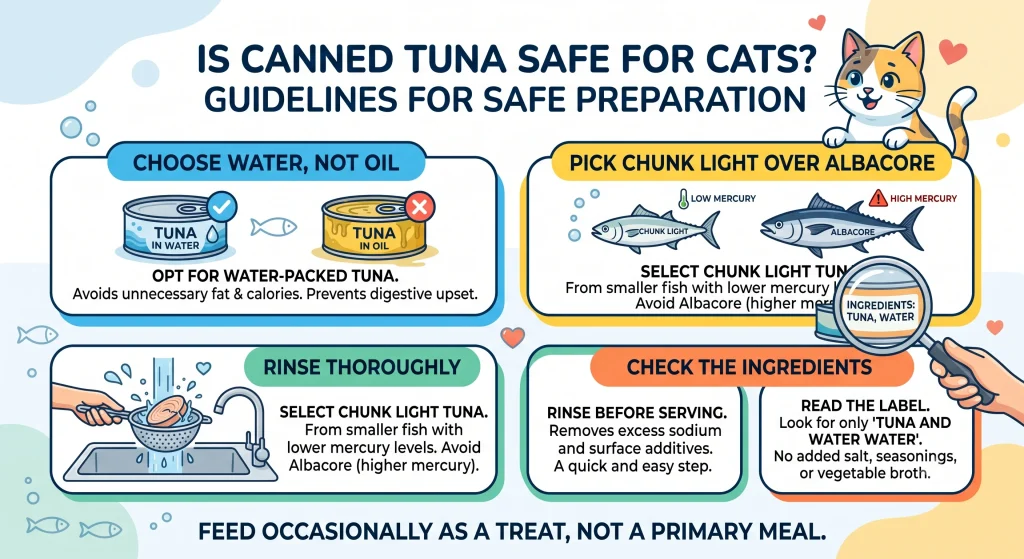
Canned tuna is the most common form of tuna given to cats. Here is what you need to know.
Choose tuna in water. Not oil. Oil adds unnecessary fat and calories. And can cause digestive upset. Water-packed tuna is the safest option.
Choose chunk light tuna over albacore. Chunk light tuna comes from smaller fish. Which means lower mercury levels. Albacore is bigger fish. Higher mercury. Stick with chunk light for cats.
Rinse the tuna before serving. This removes some of the sodium. And any surface additives. It takes two seconds. And makes a difference.
Check the ingredients. The only ingredient should be tuna and water. No salt added. No seasonings. No vegetable broth. Just tuna and water. If you see other ingredients. Put it back on the shelf.
Is Fresh Tuna Safe for Cats
Fresh tuna is different from canned tuna. And it comes with its own risks.
Fresh raw tuna contains thiaminase. The enzyme that destroys vitamin B1. This is dangerous for cats. If you feed fresh tuna. Cook it first. Cooking destroys thiaminase.
Fresh tuna is also more likely to contain parasites. Especially if it is not sushi-grade. Parasites can make your cat very sick. Always cook fresh tuna thoroughly. And source it from reputable suppliers.
Fresh tuna is okay as an occasional treat. In small amounts. Cooked thoroughly. Not raw. Not every day. Not even close.
Can Kittens Eat Tuna
Kittens should not eat tuna regularly. Their growing bodies have specific nutritional needs. And tuna does not meet them. Kittens need complete balanced kitten food. Not human food.
A tiny taste of tuna occasionally will not hurt a kitten. But it should not become a habit. Kittens who learn to love tuna early often become tuna addicts. And that is hard to break. Start them on proper kitten food. And save tuna for rare treats.
Can Senior Cats Eat Tuna
Senior cats are more vulnerable to mercury accumulation. Because their bodies process toxins more slowly. Kidney function declines with age. And the extra sodium in tuna puts additional strain on aging kidneys.
If your senior cat has kidney disease. Tuna is especially dangerous. The sodium content can worsen the condition. Always consult your vet before feeding tuna to senior cats.
Tuna vs Cat Food
Here is a direct comparison. So you can see why tuna is not a suitable replacement for cat food.
| Nutrient | Complete Cat Food | Canned Tuna |
|---|---|---|
| Protein | Complete amino acid profile | High protein but incomplete |
| Taurine | Adequate levels | Low levels |
| Vitamin A | Adequate | Very low |
| Vitamin B1 | Adequate | Low |
| Calcium | Balanced | Very low |
| Phosphorus | Balanced | High |
| Sodium | Controlled | High |
| Mercury | None | Present |
| Fiber | Added for digestion | None |
The difference is clear. Cat food is formulated for cats. Tuna is not. Never replace cat food with tuna. Even if your cat prefers it.
Signs of Tuna Poisoning in Cats
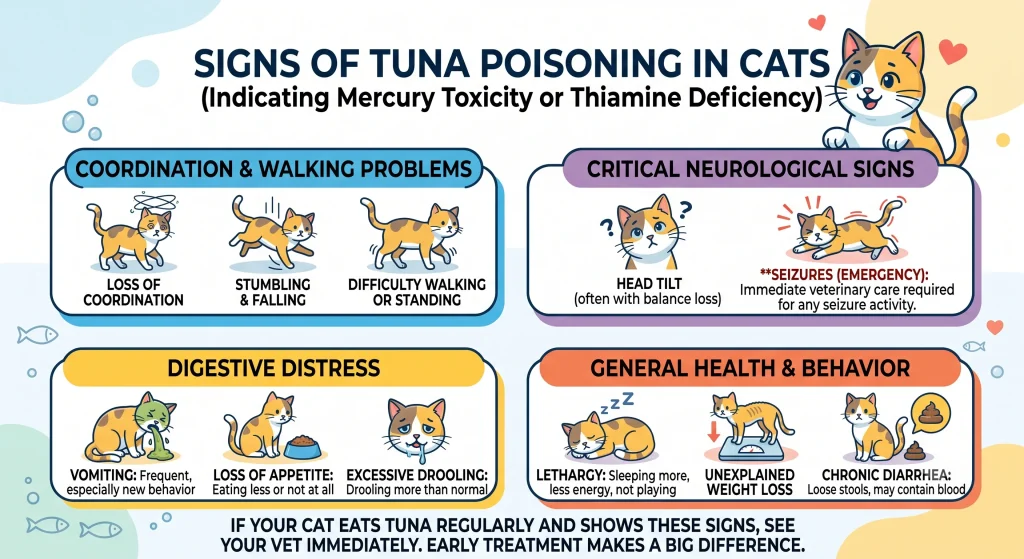
If your cat has been eating too much tuna. Watch for these signs. They could indicate mercury toxicity. Thiamine deficiency. Or other tuna-related health problems.
- Loss of coordination. Stumbling. Falling. Walking like they are drunk.
- Seizures. Any seizure activity is an emergency.
- Head tilt. Head tilting to one side. Often with loss of balance.
- Vomiting. Frequent vomiting. Especially if it is new behavior.
- Loss of appetite. Not eating. Or eating less than usual.
- Lethargy. Sleeping more. Less energy. Not wanting to play.
- Diarrhea. Chronic loose stools. Especially with blood.
- Weight loss. Unexplained weight loss despite eating.
- Excessive drooling. Drooling more than normal.
- Difficulty walking. Weakness in legs. Trouble standing.
If you see any of these signs. And your cat eats tuna regularly. See your vet immediately. Early treatment makes a big difference.
Alternatives to Tuna for Cats
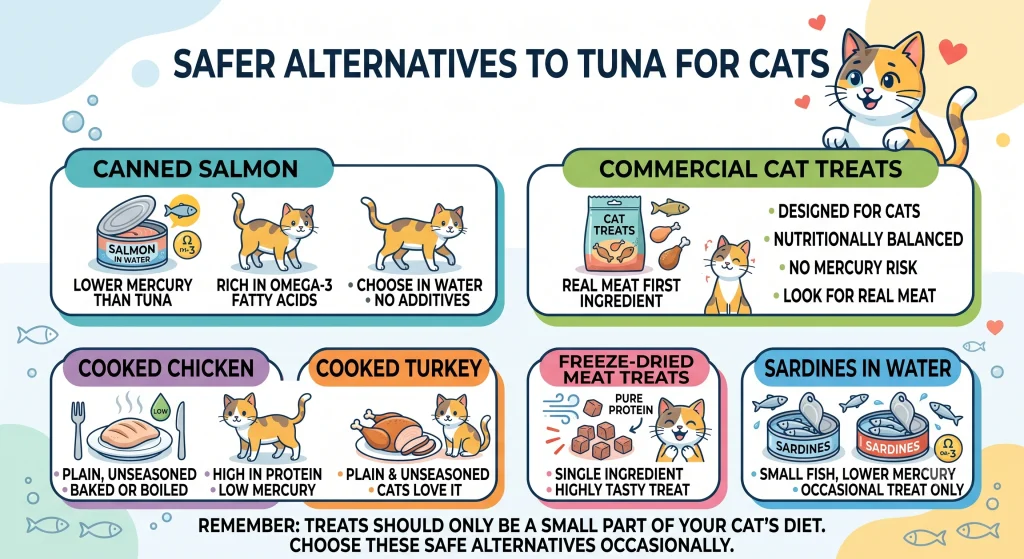
Want to give your cat a fishy treat without the risks. Here are safer alternatives.
- Canned salmon. Lower in mercury than tuna. Rich in omega-3 fatty acids. Choose salmon in water with no additives.
- Cooked chicken. Plain. Unseasoned. Baked or boiled. High in protein. Low in mercury. A classic cat treat.
- Cooked turkey. Similar to chicken. Lean protein. Easy to digest. Cats love it.
- Commercial cat treats. Designed for cats. Nutritionally balanced. No mercury risk. Look for treats with real meat as the first ingredient.
- Freeze-dried meat treats. Single ingredient. Pure protein. No additives. Cats go crazy for these.
- Sardines in water. Small fish. Lower mercury. Rich in omega-3s. Occasional treat only.
How to Safely Give Your Cat Tuna
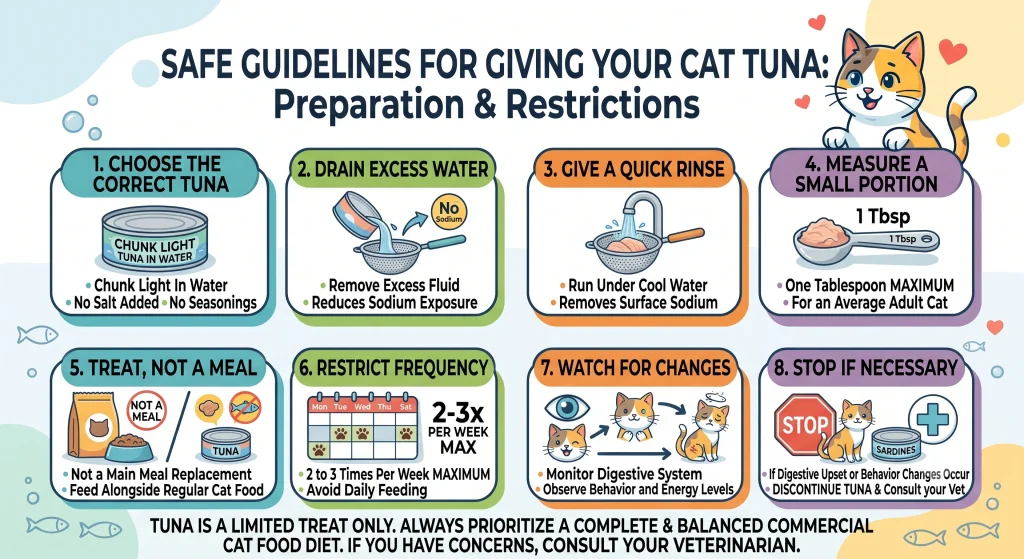
If you want to give your cat tuna. Here is the safe way to do it.
- Choose the right tuna. Chunk light tuna in water. No salt added. No seasonings.
- Drain it well. Remove excess water. This reduces sodium exposure.
- Rinse it. Quick rinse under water removes surface sodium.
- Give a small amount. One tablespoon maximum. For an average adult cat.
- Do not make it a meal. Tuna is a treat. Not a meal. Feed it alongside regular cat food.
- Limit frequency. Two to three times per week maximum. Not daily. Not even close.
- Monitor your cat. Watch for digestive upset. Or any changes in behavior. If problems arise. Stop the tuna.
Expert Tips From My Practice
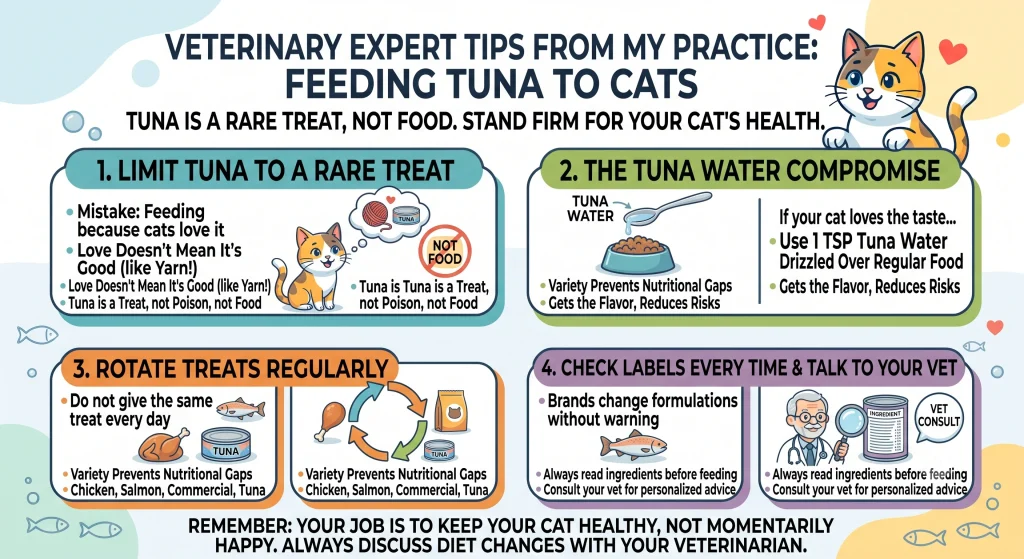
Here is what I tell every cat owner about tuna.
The biggest mistake I see is people feeding tuna because their cat loves it. Just because your cat loves something does not mean it is good for them. Cats love yarn too. And that can kill them. Tuna is not poison. But it is not food either. It is a treat. A rare treat. And that is the key word. Rare.
- Do not cave to begging. Your cat will beg for tuna. They will meow. They will look at you with those eyes. Stand firm. Your job is to keep them healthy. Not to make them happy in the moment.
- Use tuna water as a compromise. If your cat loves the taste. Give them a teaspoon of the tuna water. Drizzled over their regular food. They get the flavor. Without the risks.
- Rotate treats. Do not give the same treat every day. Rotate between chicken. Salmon. Commercial treats. And tuna. Variety prevents nutritional gaps.
- Check labels every time. Tuna brands change formulations. Always read the label. Even brands you trust. Ingredients change without warning.
- Talk to your vet. If you are unsure about feeding tuna. Ask your vet. They know your cat’s health history. And can give personalized advice.
FAQ
Can cats eat tuna every day?
No. Cats should not eat tuna every day. Daily tuna consumption causes mercury poisoning. Thiamine deficiency. Nutritional imbalance. And other health problems. Tuna should be an occasional treat only. Two to three times per week maximum. In small amounts.
Is canned tuna safe for cats?
Canned tuna is safe for cats in small amounts occasionally. Choose chunk light tuna in water. Drain and rinse before serving. Give one tablespoon maximum. Do not feed daily. Avoid tuna in oil or brine. Avoid tuna with added salt or seasonings.
How much tuna can I give my cat?
One tablespoon of chunk light tuna in water. Two to three times per week maximum. This is a treat. Not a meal. Always feed alongside complete cat food. Never replace cat food with tuna.
Why is tuna bad for cats?
Tuna is not bad in small amounts. But daily consumption causes problems. Mercury accumulation. Thiamine deficiency. Nutritional imbalance. Obesity. Sodium overload. And digestive issues. Tuna is a treat. Not a staple food.
Can kittens eat tuna?
Kittens should not eat tuna regularly. Their growing bodies need complete balanced nutrition. Tuna does not provide that. A tiny taste occasionally will not hurt. But it should not become a habit. Kittens need proper kitten food.
Is fresh tuna safe for cats?
Fresh tuna should be cooked before giving to cats. Raw fresh tuna contains thiaminase. Which destroys vitamin B1. Fresh tuna may also contain parasites. Always cook thoroughly. Give in small amounts. Occasionally only.
Can cats eat tuna in oil?
Tuna in oil is not recommended for cats. The oil adds unnecessary fat and calories. And can cause digestive upset. Always choose tuna packed in water. Not oil. Not brine. Water only.
What happens if a cat eats too much tuna?
Too much tuna causes vomiting. Diarrhea. Digestive upset. Long-term daily consumption causes mercury poisoning. Thiamine deficiency. Nutritional imbalances. And weight gain. If your cat eats too much tuna. Stop feeding it. And see your vet.
Can tuna cause mercury poisoning in cats?
Yes. Tuna contains mercury. Daily consumption causes mercury to accumulate in your cat’s body. This leads to mercury poisoning. Symptoms include loss of coordination. Seizures. Head tilt. And neurological damage. Prevention is key. Limit tuna intake.
Is tuna good for cats at all?
Tuna has some benefits. It is high in protein. Rich in omega-3 fatty acids. And cats love the taste. But these benefits come with risks when fed too often. Occasional small amounts are fine. Daily feeding is not.
Can I feed my cat tuna cat food?
Commercial tuna cat food is different from human canned tuna. It is formulated to be nutritionally complete. With added vitamins and minerals. Tuna-flavored cat food is generally safe. As part of a balanced diet. Always check with your vet about specific brands.
Why does my cat love tuna so much?
Cats are attracted to strong-smelling foods. Tuna has a very strong aroma. Which triggers their predatory instincts. The high protein content is also appealing. Cats are hardwired to seek protein-rich foods. Tuna hits both buttons. Smell and protein. That is why they go crazy for it.
Can tuna cause kidney problems in cats?
Yes. The high sodium content in canned tuna strains the kidneys. Daily consumption increases kidney disease risk. Especially in senior cats. Cats with existing kidney problems should avoid tuna entirely. Always consult your vet.