

Table of Contents
Table of Contents
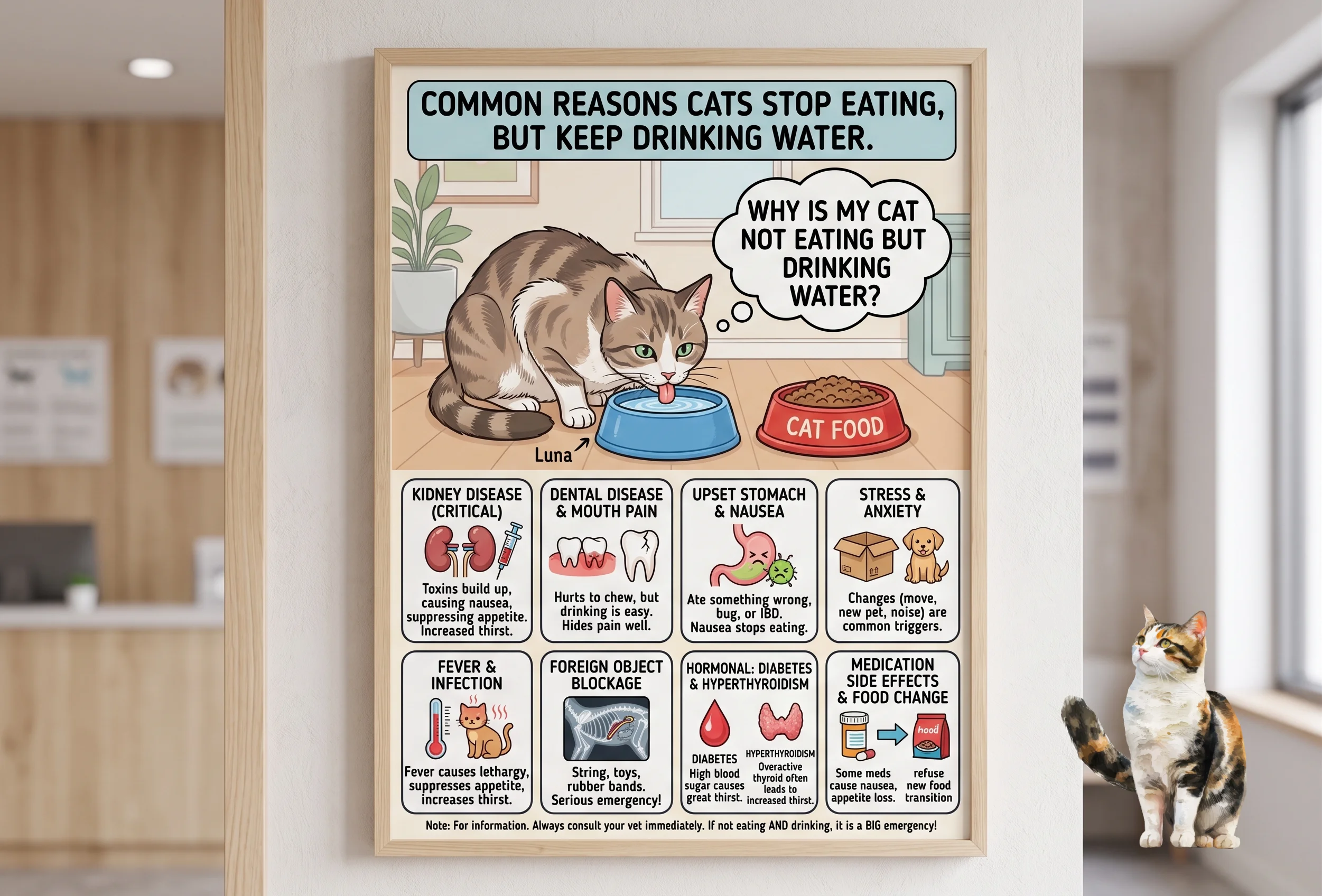
Why Is My Cat Not Eating But Drinking Water? Here Is What Is Really Going On
Okay. So your cat is drinking water but not eating. And you are freaking out. I get it. You are staring at the full food bowl. Your cat is by the water dish. And something feels wrong. Because it is wrong. Cats are not supposed to skip meals like this.
As a certified veterinary expert and professional cat behaviorist. I have seen this exact scenario thousands of times. Some cases are simple. Some are serious. And time matters. A cat who stops eating for more than 24 to 48 hours can develop a dangerous liver condition called hepatic lipidosis. Which is basically fatty liver disease. And it can be life-threatening.
So let me help you figure out what is going on. Why your cat is not eating but still drinking water. And what you need to do about it.
📚 Recommended Cat Guides
🐱 The Trainable Cat Book
Learn proven methods to train your cat and stop unwanted behaviors.
View Book →❤️ Complete Cat Care Manual
Your complete guide to cat nutrition, health, grooming, behavior, and daily care.
Get the Manual →The Most Common Reasons Cats Stop Eating
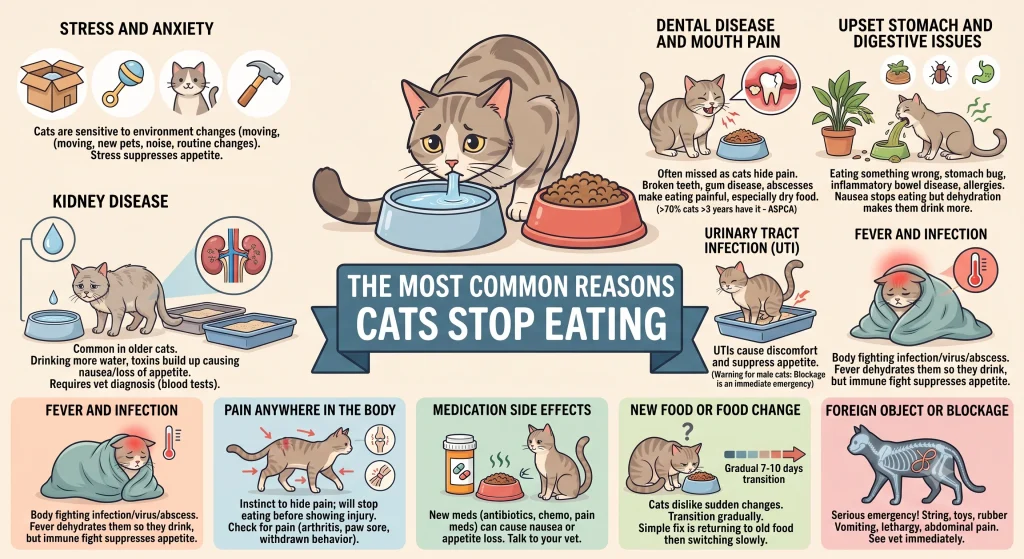
There are a lot of reasons a cat might stop eating while still drinking water. Some are minor. Some are not. Here are the biggest ones.
Stress and Anxiety
Cats are sensitive creatures. The slightest change in their environment can throw them off. A new pet. A new baby. Moved furniture. Construction noise. A change in your schedule. Even a different brand of detergent can stress a cat out enough to stop eating.
Stress is one of the most common reasons cats stop eating. They are drinking water because they are still thirsty. But the stress is suppressing their appetite. If you recently changed something in your home. This might be the answer.
Dental Disease and Mouth Pain
This is a big one. And it is often missed. Cats hide pain incredibly well. They might have a broken tooth. Gum disease. An abscess. Or mouth ulcers. And they will not show you obvious signs. They will just stop eating. Especially dry food. But they will keep drinking water because they are thirsty.
If your cat suddenly stopped eating dry food but still eats wet food. Or stopped eating altogether. Dental disease should be your first thought. According to the ASPCA. Over 70 percent of cats over age three have some form of dental disease. It is extremely common.
Upset Stomach and Digestive Issues
Your cat might have eaten something they should not have. Or they might have a stomach bug. Or they might have inflammatory bowel disease. Or food allergies. All of these cause nausea. And when cats feel nauseous. They do not eat. But they still drink water. Because dehydration makes nausea worse. So they drink to compensate.
Watch for these signs of digestive trouble. Vomiting. Diarrhea. Excessive drooling. Licking lips. Squatting without producing anything. If you see these signs. Your cat is probably dealing with stomach issues.
Kidney Disease
Kidney disease is one of the most common health problems in older cats. And one of the early signs is changes in eating and drinking habits. Cats with kidney disease drink more water. Because their kidneys are not filtering properly. And they often lose their appetite. Because the buildup of toxins in their blood makes them feel sick.
If your senior cat is drinking more water and eating less. Kidney disease should be on your radar. It is not something you can fix at home. Your vet needs to run blood tests to diagnose it.
Urinary Tract Infection
A UTI can make your cat feel miserable. The discomfort and pain can suppress their appetite. But they still need water. So they drink. UTIs are more common in female cats. But male cats can get them too. And in male cats. A urinary blockage is a life-threatening emergency. If your male cat is straining in the litter box. Not producing urine. And not eating. Get to a vet immediately.
Fever and Infection
When your cat has a fever. They do not want to eat. Their body is fighting something. An infection. A virus. An abscess. Whatever it is. Their immune system is working overtime. And appetite is one of the first things to go. But they still drink water. Because fever dehydrates them.
Pain Anywhere in the Body
Cats hide pain. It is a survival instinct. They do not want to appear weak. So they will stop eating before they will show you they hurt. Arthritis. A back injury. A sore paw. An ear infection. Any pain can cause appetite loss. If your cat is not eating and seems quiet or withdrawn. Think about whether they might be in pain.
Medication Side Effects
If your cat recently started a new medication. The medication might be causing nausea or appetite loss. Antibiotics. Chemotherapy drugs. Pain medications. All can cause appetite changes. Talk to your vet if you think medication is the culprit.
New Food or Food Change
Cats are creatures of habit. They do not like sudden changes. If you switched cat food brands or flavors without transitioning. Your cat might be refusing the new food. This is usually a simple fix. Go back to the old food. And transition gradually over 7 to 10 days.
Foreign Object or Blockage
If your cat ate something they should not have. A string. A rubber band. A piece of toy. It could be causing a blockage in their digestive tract. This is a serious emergency. Signs include not eating. Vomiting. Lethargy. And abdominal pain. If you suspect your cat ate a foreign object. See a vet immediately.
Why Is My Cat Drinking Water But Not Eating?
This specific combination. Drinking but not eating. tells us something important. Your cat is still thirsty. Their thirst mechanism is working. But their appetite is suppressed. This points to a few specific possibilities.
First. If your cat is drinking more than usual and not eating. Think kidney disease. Diabetes. Or hyperthyroidism. These conditions increase thirst while decreasing appetite.
Second. If your cat is drinking normal amounts and not eating. Think nausea. Stress. Dental pain. Or mouth problems. They want to eat. But something is preventing them.
Third. If your cat is drinking less than usual and not eating. This is more concerning. Dehydration combined with appetite loss can indicate serious illness. Or that your cat is feeling very unwell.
When to Worry About a Cat Not Eating
Here is the timeline that matters. This is important. Write it down.
| Time Without Eating | Risk Level | Action Needed |
|---|---|---|
| 12-24 hours | Low to Moderate | Monitor closely. Try different food. Check for stress. |
| 24-48 hours | Moderate to High | Call your vet. Schedule an appointment. |
| 48-72 hours | High | See your vet immediately. Risk of liver damage. |
| Over 72 hours | Emergency | Emergency vet visit. Life-threatening risk. |
According to PetMD. A cat who has not eaten for 48 hours or more is at serious risk for hepatic lipidosis. This condition can develop rapidly and requires aggressive veterinary treatment. Do not wait if your cat has stopped eating for more than two days.
What to Do When Your Cat Stops Eating
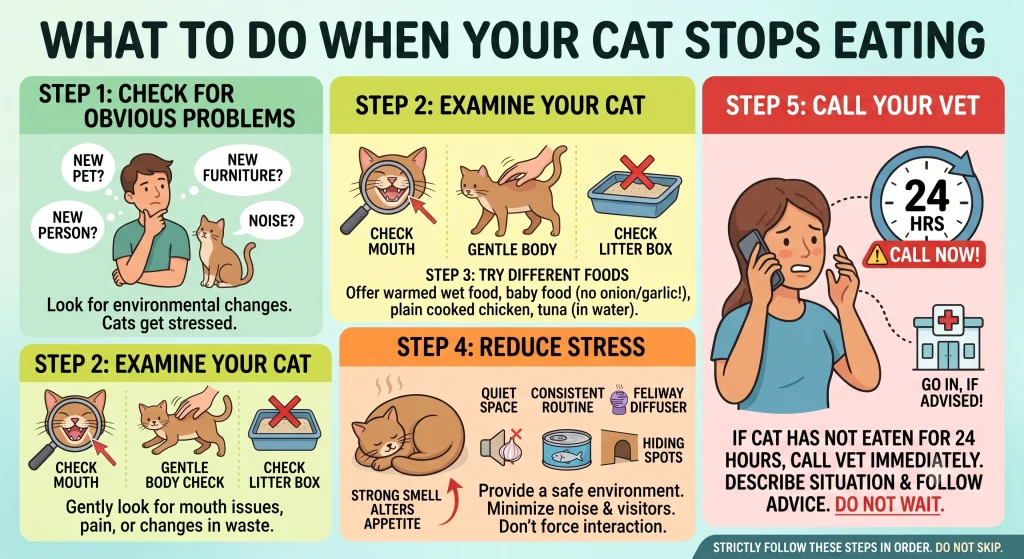
Here is a step-by-step plan. Follow this in order. Do not skip steps.
Step 1: Check for Obvious Problems
Look around. Is something different in the house? New pet? New person? Moved furniture? Construction? Any change can stress a cat. If something changed recently. That might be the answer.
Step 2: Examine Your Cat
Gently check your cat. Look at their mouth. Check for red gums. Bad breath. Drooling. Broken teeth. Look at their body. Any lumps. Any sensitivity when you touch them. Check their litter box. Any changes in urine or stool. Any blood. Any straining.
Step 3: Try Different Foods
Offer different things. Warm up wet food to release the aroma. Try a different flavor. Try baby food with no onion or garlic. Try cooked chicken with no seasoning. Try tuna in water. Sometimes a strong smell is enough to trigger appetite.
Step 4: Reduce Stress
Provide a quiet safe space. Keep routines consistent. Use Feliway diffusers. Give your cat hiding spots. Minimize noise and visitors. Let your cat come to you. Do not force interaction.
Step 5: Call Your Vet
If your cat has not eaten for 24 hours. Call your vet. Describe what is happening. Follow their advice. If they say come in. Go in. Do not wait and see if it gets better on its own. It might not.
How to Get a Sick Cat to Eat
When your cat is not eating. Getting them to take in some calories is critical. Here are tricks that actually work.
- Warm the food. Microwave wet food for 5 seconds. This releases the aroma. Cats eat with their nose first. Stronger smell means more interest.
- Try smelly foods. Sardines in water. Tuna juice. Rotisserie chicken. Strong smelling foods can break through nausea and trigger eating.
- Use a syringe or dropper. If your cat absolutely will not eat. You can syringe water or liquid food into their mouth. But only if your vet instructs you to do this.
- Hand feed. Some cats will eat from your hand when they refuse a bowl. Try offering small bits of food directly from your fingers.
- Try a different bowl. Some cats do not like their whiskers touching the sides of a bowl. Use a wide shallow dish or a plate instead.
- Feed in a quiet location. Away from other pets. Away from noise. In a place where your cat feels safe and undisturbed.
- Add food toppers. Mix in some tuna water. Bone broth for cats. Or a calorie supplement paste. This adds flavor and calories.
- Offer food at room temperature. Cold food from the fridge smells less. Let it sit for a few minutes before serving.
Medical Conditions That Cause Appetite Loss in Cats
Here is a more complete list of medical conditions that can cause your cat to stop eating while still drinking water.
| Condition | Key Symptoms | Urgency |
|---|---|---|
| Kidney Disease | Increased thirst, weight loss, vomiting | See vet within 24 hours |
| Diabetes | Increased thirst, increased urination, weight loss | See vet within 24 hours |
| Hyperthyroidism | Weight loss, increased appetite then loss, restlessness | See vet within 48 hours |
| UTI or Blockage | Straining to urinate, crying in litter box, blood in urine | Emergency immediately |
| Pancreatitis | Vomiting, lethargy, dehydration | See vet within 24 hours |
| Inflammatory Bowel Disease | Chronic vomiting, diarrhea, weight loss | See vet within 48 hours |
| Cancer | Weight loss, lethargy, lumps, appetite changes | See vet within 24 hours |
| Dental Disease | Bad breath, drooling, pawing at mouth | See vet within 48 hours |
| Feline Lower Urinary Tract Disease | Straining, blood in urine, frequent litter box visits | Emergency immediately |
| Foreign Body Blockage | Vomiting, lethargy, abdominal pain | Emergency immediately |
How Long Can a Cat Go Without Eating
This is the question every worried cat owner asks. And the answer is scarier than you think.
A healthy cat can survive without food for about one to two weeks. But. And this is important. Damage starts happening much sooner. After just 24 to 48 hours without food. A cat’s body starts breaking down fat stores. These fat stores flood the liver. And the liver cannot process them fast enough. This leads to hepatic lipidosis. Which can be fatal if untreated.
So while your cat might technically survive days without food. You should never let it get that far. The goal is always to get your cat eating again as soon as possible.
Water is different. A cat can live longer without food than without water. But dehydration is also dangerous. If your cat is not eating and not drinking. That is a much bigger emergency than not eating but still drinking.
Appetite Stimulants for Cats
In some cases. Your vet might prescribe appetite stimulants. These are medications that help trigger hunger in cats who refuse to eat. Here are the most common ones.
- Mirtazapine. This is the most commonly prescribed appetite stimulant for cats. It works well and has few side effects. It also helps with nausea. Available as a pill or transdermal ear gel.
- Cyproheptadine. An antihistamine that also stimulates appetite. Used when mirtazapine is not appropriate. Fewer side effects than some other options.
- Capromorelin.
Never give your cat appetite stimulants without veterinary guidance. These are prescription medications. They need proper dosing and monitoring.
Expert Tips From My Practice
Here is what I have learned from dealing with cats who stop eating.
The biggest mistake cat owners make is waiting too long to seek help. Cats are masters at hiding illness. By the time they show obvious signs. The problem is often advanced. If your cat stops eating. Do not wait. Call your vet. Early intervention saves lives.
- Trust your instincts. If something feels wrong with your cat. It probably is. You know your cat better than anyone. Do not let anyone tell you it is nothing if you are worried.
- Keep a food diary. Track what your cat eats and drinks each day. This helps your vet diagnose problems faster. And it helps you notice small changes before they become big problems.
- Never force food. Forcing food into a cat’s mouth can cause aspiration pneumonia. Which is a serious and potentially fatal complication. If your cat will not eat. Get veterinary help. Do not force it.
- Watch water intake too. If your cat is drinking more than usual and not eating. That combination points to specific conditions like kidney disease or diabetes. Tell your vet about both the eating and drinking changes.
- Consider a second opinion. If your vet cannot find the problem. And your cat is still not eating. Seek a second opinion. Sometimes fresh eyes catch what others miss.
- Join support communities. Other cat owners who have been through similar situations can offer emotional support and practical tips. But always verify advice with your vet.
- Learn about feline nutrition. Understanding what your cat needs helps you recognize problems faster. The Complete Cat Care Manual covers nutrition and health in detail. Find it at mycat-shop.fourthwall.com.
FAQ
Why is my cat not eating but drinking water?
Cats drink water but stop eating for many reasons. Stress. Dental disease. Nausea. Kidney disease. UTI. Fever. Pain. Or medication side effects. The combination of drinking but not eating usually means your cat is still thirsty but something is suppressing their appetite. Always see your vet if this lasts more than 24 hours.
How long can a cat go without eating?
A cat can technically survive one to two weeks without food. But liver damage starts after just 24 to 48 hours. Hepatic lipidosis is a serious and potentially fatal condition that develops when cats do not eat. Never let your cat go more than 48 hours without eating. Seek veterinary help immediately.
Should I be worried if my cat is not eating but drinking water?
Yes. You should be concerned. While drinking water is better than not drinking at all. Appetite loss combined with normal water intake still indicates a problem. It could be stress. Dental pain. Nausea. Or illness. See your vet if it lasts more than 24 hours.
What can I do to get my cat to eat?
Try warming wet food to release aroma. Offer smelly foods like tuna or sardines. Hand feed from your fingers. Use a wide shallow bowl. Feed in a quiet location. Add tuna water or bone broth to food. Try different flavors and textures. If nothing works. See your vet.
Is it normal for cats to skip meals?
Cats are grazers and some naturally eat small amounts throughout the day. But completely skipping meals for more than 12 to 24 hours is not normal. If your cat regularly refuses meals. Talk to your vet to rule out health problems.
What does it mean when a cat drinks a lot of water but does not eat?
Increased thirst combined with appetite loss often points to kidney disease. Diabetes. Hyperthyroidism. Or other metabolic conditions. The increased water intake is the body trying to compensate for a problem. This combination requires veterinary attention within 24 hours.
Can stress cause a cat to stop eating?
Yes. Stress is one of the most common reasons cats stop eating. Changes in the home. New pets. New people. Construction. Schedule changes. And even weather changes can stress cats enough to suppress appetite. Providing a calm routine and safe spaces helps.
My cat is not eating and vomiting. What should I do?
Not eating combined with vomiting is concerning. This could indicate a blockage. Pancreatitis. Poisoning. Or severe illness. See your vet immediately. Do not wait. If your cat vomits blood or has bloody diarrhea. That is an emergency.
Can dental problems cause a cat to stop eating?
Yes. Dental disease is one of the most common causes of appetite loss in cats. Broken teeth. Gum disease. Mouth ulcers. And tooth resorption all cause pain during eating. Your cat may still drink water. But eating becomes too painful. A dental exam is essential.
Should I force my cat to eat?
Never force food into your cat’s mouth. This can cause aspiration pneumonia. Which is serious and potentially fatal. If your cat will not eat. Try appealing foods first. If those fail. Get veterinary help. They can prescribe appetite stimulants or provide supportive care.
What is hepatic lipidosis in cats?
Hepatic lipidosis or fatty liver disease happens when a cat does not eat for an extended period. The body breaks down fat stores. These flood the liver. The liver cannot process them. This causes liver failure. It is life-threatening. It requires immediate veterinary treatment. Prevention is always better than treatment.
When should I take my cat to the vet for not eating?
Take your cat to the vet if they have not eaten for 24 hours or more. Immediately if they also have vomiting. Diarrhea. Lethargy. Straining in the litter box. Or other symptoms. Time matters with appetite loss in cats.
Can a urinary blockage cause a cat to stop eating?
Yes. A urinary blockage is a life-threatening emergency. Male cats are especially at risk. If your cat is straining in the litter box. Not producing urine. Vocalizing. And not eating. Get to an emergency vet immediately. A blockage can be fatal within 24 to 48 hours.
How can I tell if my cat is in pain?
Cats hide pain well. Signs include hiding. Decreased activity. Not eating. Squinting eyes. Flattened ears. Growling when touched. Limping. Or changes in grooming habits. If your cat shows any of these signs. They may be in pain and need veterinary evaluation.