

Table of Contents
How to Tell if Your Cat Is Sick
Your cat is acting differently. Something is off, but you cannot quite put your finger on it. They are eating less or more, sleeping more or less, hiding when they usually seek attention, or becoming unusually clingy. You know something is wrong, but what?
Cats are masters at hiding illness. It is a survival instinct inherited from their wild ancestors. A sick cat is a vulnerable cat, so they instinctively mask signs of illness until they no longer can. By the time you notice obvious symptoms, the condition may already be advanced. That is why recognizing the early warning signs is critical for every cat owner.
📚 Best-Selling Cat eBooks
Trusted by cat lovers worldwide. Practical, easy-to-follow guides to help you raise a happier, healthier cat.
🐱 The Trainable Cat Book
Stop unwanted behaviors using gentle, science-based training methods.
- ✔ Litter box solutions
- ✔ Stop scratching furniture
- ✔ Easy step-by-step training
- ✔ Suitable for all ages
🧠 Cat Behavior Decoded
Understand exactly what your cat is trying to tell you.
- ✔ Decode body language
- ✔ Reduce anxiety & stress
- ✔ Improve bonding
- ✔ Fix common behavior issues
❤️ Complete Cat Care Manual
The ultimate handbook covering everything your cat needs from kitten to senior years.
- ✔ Nutrition & feeding
- ✔ Health & illness prevention
- ✔ Grooming guide
- ✔ Daily care routines
Trusted practical guides written for every cat owner.
As a certified veterinary expert and professional cat behaviorist, I have diagnosed countless cats that were hiding serious medical conditions until it was almost too late. Early detection saves lives. This guide teaches you how to recognize your cat’s subtle signals, identify the changes that matter, and understand which symptoms require immediate attention. By the end, you will know exactly how to tell if your cat is sick and when it is time to seek veterinary care.
Why Cats Hide Illness
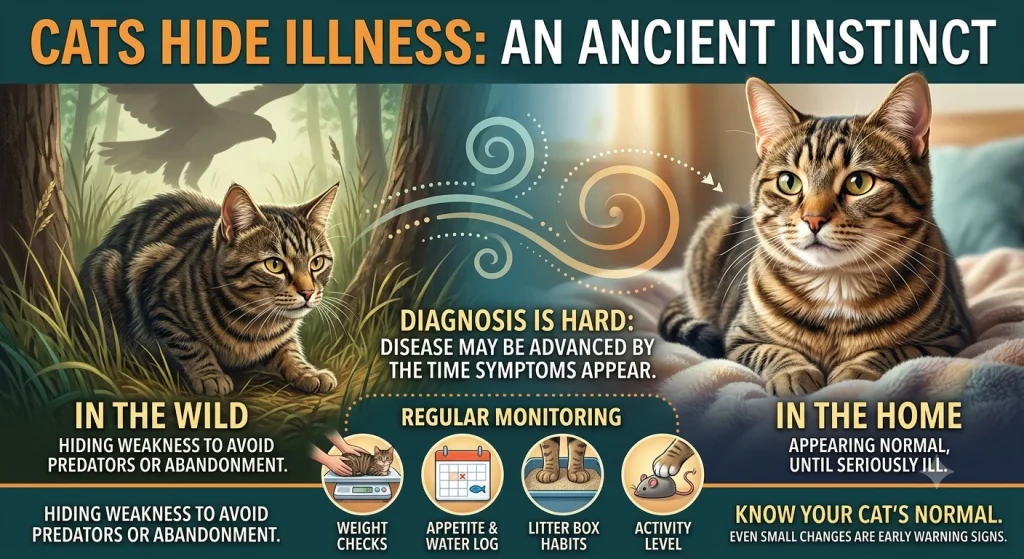
Cats hide illness because, in the wild, showing weakness makes them vulnerable to predators or abandonment. Domestic cats still retain this instinct. They often appear normal until they become seriously ill, making diagnosis more difficult. By the time obvious symptoms appear, the disease may already be advanced.
📚 The Complete Cat Care Bundle
Get 3 premium eBooks covering cat training, behavior, nutrition, and health. Instant digital download in one value-packed bundle.
Get the Bundle →This is why regular monitoring is so important. You need to know what is normal for your cat so you can recognize when something changes. Even small changes can be early warning signs that something is wrong.
15 Warning Signs Your Cat Is Sick
1. Changes in Appetite
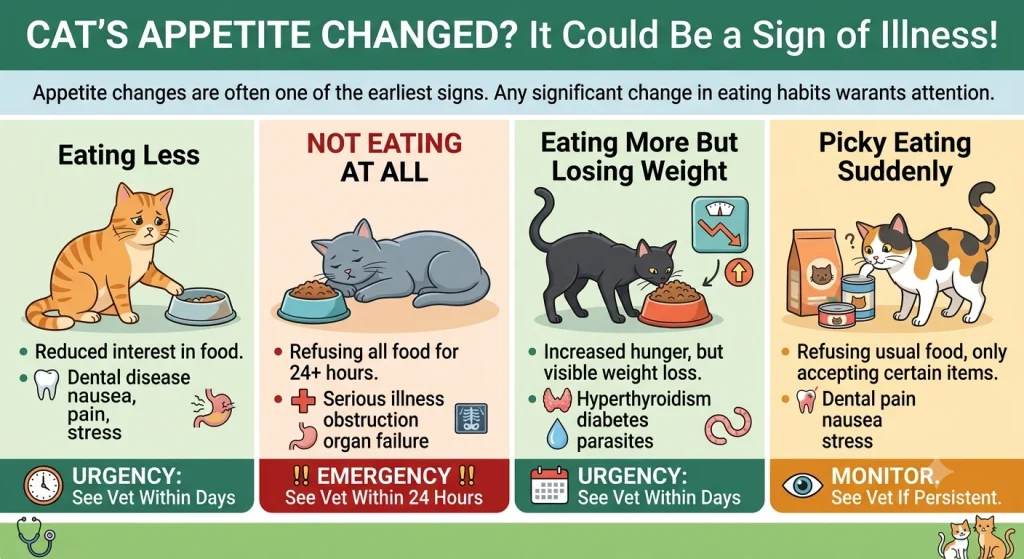
Appetite changes are one of the earliest signs. A sick cat eats less, or stops eating entirely, or eats more and still loses weight. Any significant change in eating habits warrants attention.
| Appetite Change | Possible Cause | Urgency |
|---|---|---|
| Eating less | Dental disease, nausea, pain, stress | See vet within days |
| Not eating at all | Serious illness, obstruction, organ failure | See vet within 24 hours |
| Eating more but losing weight | Hyperthyroidism, diabetes, parasites | See vet within days |
| Picky eating suddenly | Dental pain, nausea, stress | Monitor. See vet if persistent |
2. Changes in Water Intake
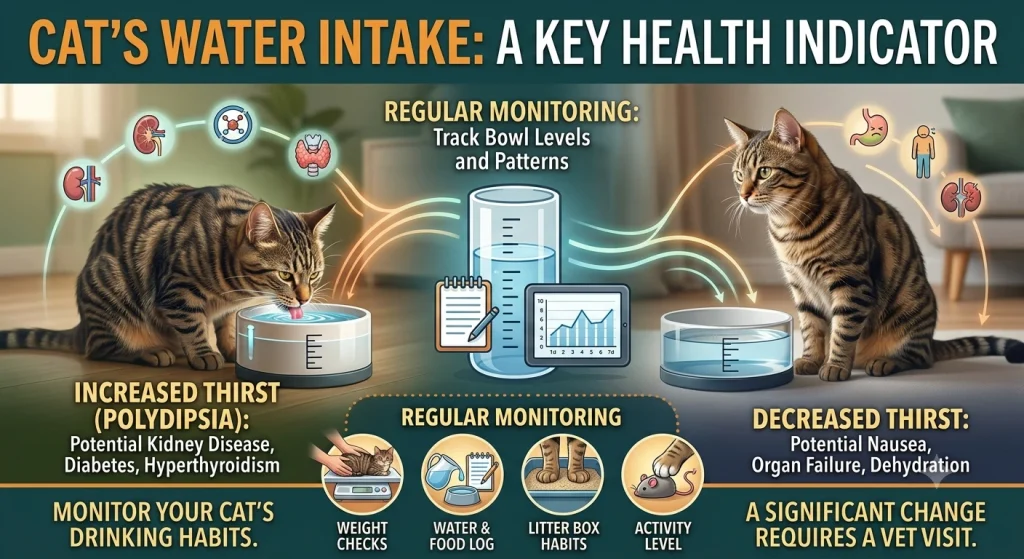
Drinking more or less than usual is a red flag. Increased thirst, called polydipsia, can indicate kidney disease, diabetes, hyperthyroidism, or liver disease. Decreased thirst can indicate nausea, organ failure, or dehydration. Monitor water bowl levels and track changes.
3. Weight Changes
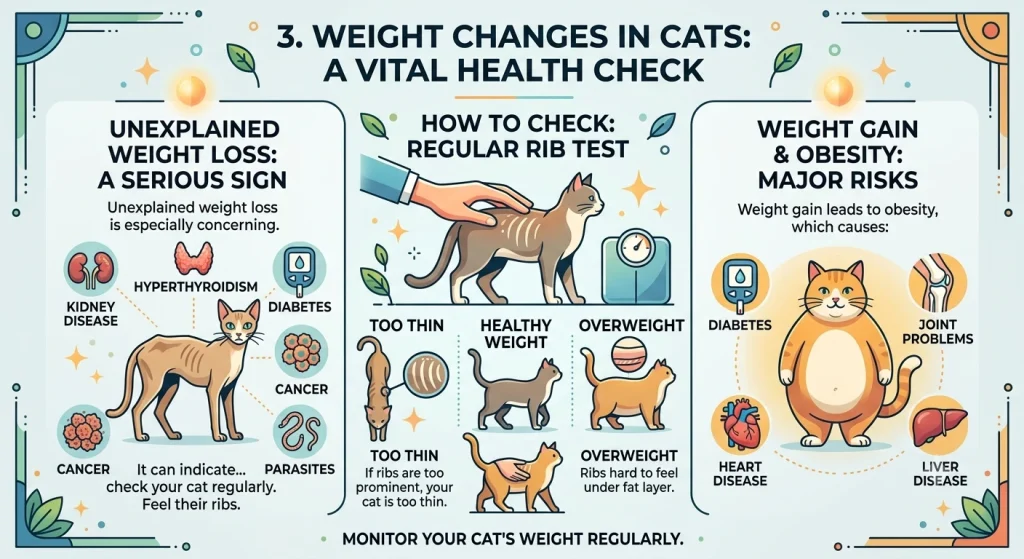
Weight changes are significant, both loss and gain. Unexplained weight loss is especially concerning. It can indicate kidney disease, hyperthyroidism, diabetes, cancer, or parasites. Check your cat regularly. Feel their ribs. You should feel them without pressing hard. If ribs are too prominent, your cat is too thin.
Weight gain leads to obesity, which causes diabetes, joint problems, heart disease, and liver disease.
4. Lethargy
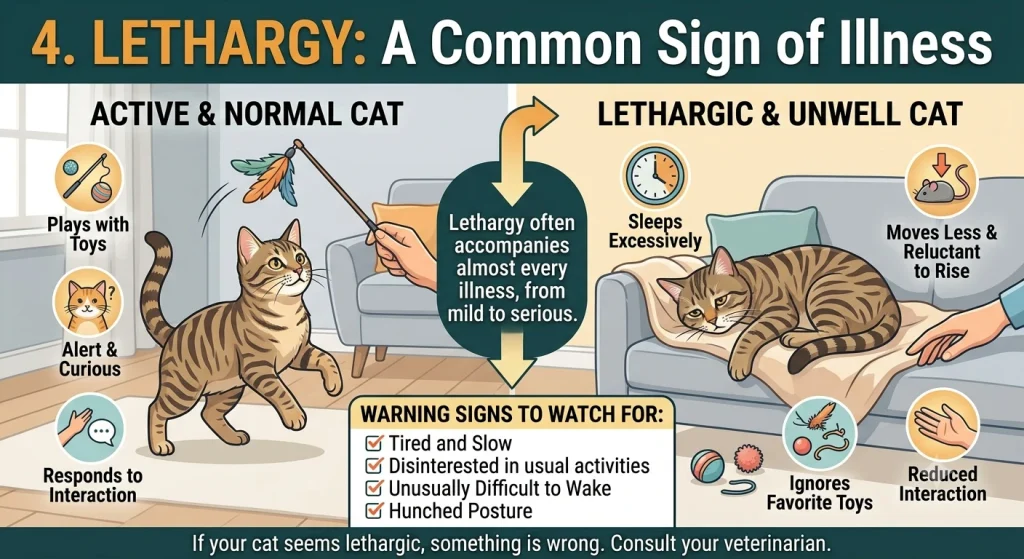
Lethargy is one of the most common signs of illness. A sick cat sleeps more, moves less, plays less, responds less to interaction. If your cat seems tired, disinterested, or slow, something is wrong. Lethargy accompanies almost every illness, from mild to serious.
📚 The Complete Cat Care Bundle
Get 3 premium eBooks covering cat training, behavior, nutrition, and health. Instant digital download in one value-packed bundle.
Get the Bundle →5. Hiding
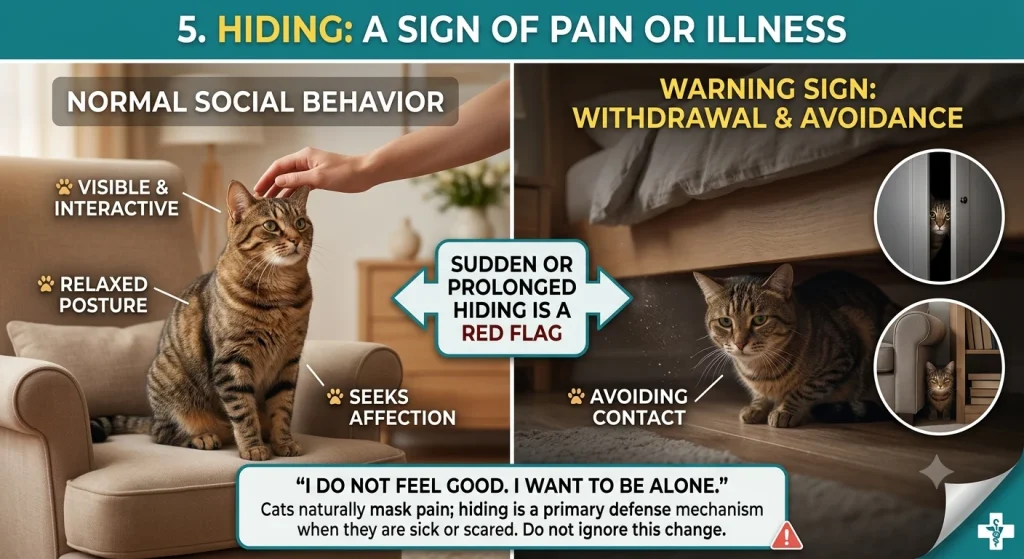
Cats hide when they are sick, scared, or in pain. If your normally social cat starts hiding under beds, in closets, behind furniture, it is a warning sign. Hiding means “I do not feel good. I want to be alone.” Do not ignore this, especially if it is sudden or prolonged.
6. Changes in Grooming
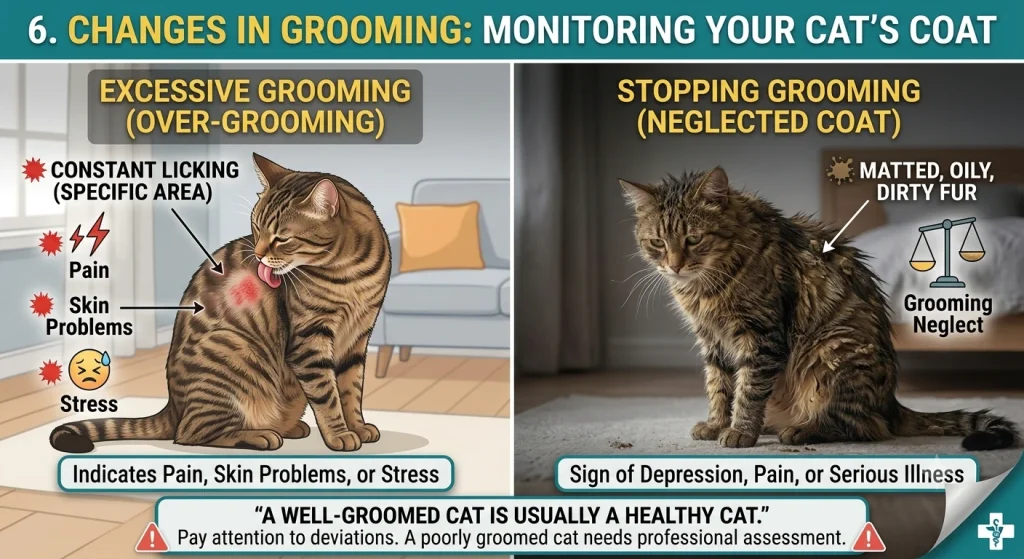
Sick cats groom differently. They may groom excessively, licking one area constantly. This can indicate pain, skin problems, or stress. They may stop grooming entirely, leading to a matted, oily, dirty coat. This is a sign of depression, pain, or serious illness. A well-groomed cat is usually a healthy cat. A poorly groomed cat needs attention.
📚 The Complete Cat Care Bundle
Get 3 premium eBooks covering cat training, behavior, nutrition, and health. Instant digital download in one value-packed bundle.
Get the Bundle →7. Litter Box Changes
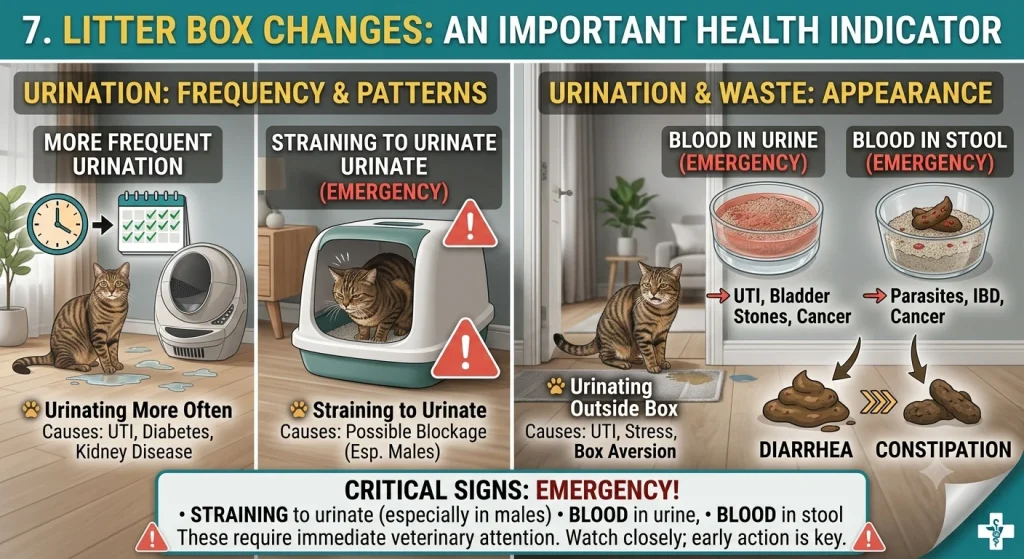
Litter box habits tell you a lot. Watch for changes in frequency, appearance, and behavior:
- Urinating more often. Possible UTI, diabetes, kidney disease.
- Straining to urinate. Possible blockage. Emergency, especially in males.
- Urinating outside the box. Possible UTI, stress, litter box aversion.
- Diarrhea. Possible dietary issue, parasites, IBD. Many causes.
- Constipation. Possible dehydration, blockage, megacolon.
- Blood in urine. Possible UTI, bladder stones, cancer. Emergency.
- Blood in stool. Possible parasites, IBD, cancer. Emergency.
8. Vomiting
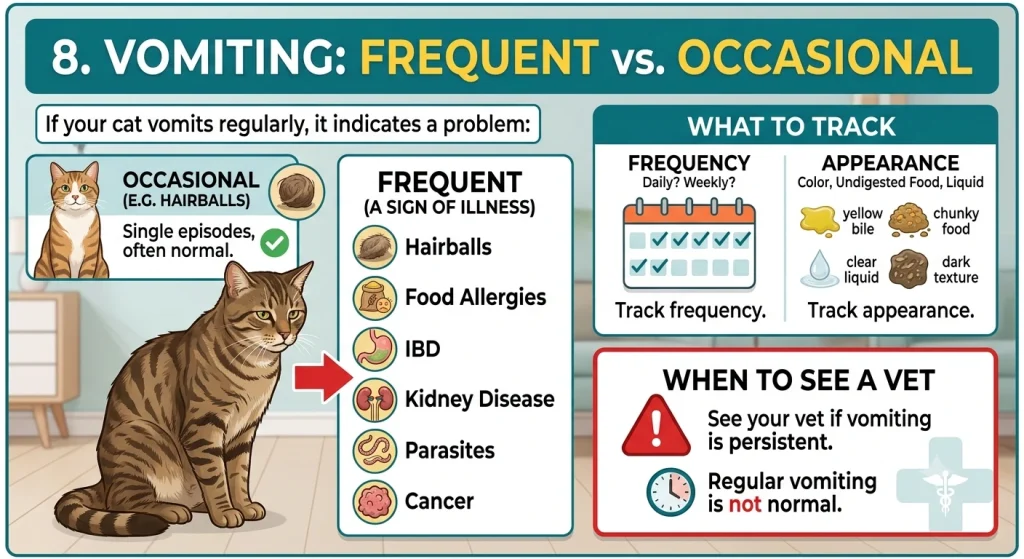
Occasional vomiting is normal. Frequent vomiting is not. If your cat vomits regularly, it indicates a problem: hairballs, food allergies, IBD, kidney disease, parasites, cancer. Track frequency, track appearance. See your vet if vomiting is persistent.
📚 The Complete Cat Care Bundle
Get 3 premium eBooks covering cat training, behavior, nutrition, and health. Instant digital download in one value-packed bundle.
Get the Bundle →9. Breathing Changes
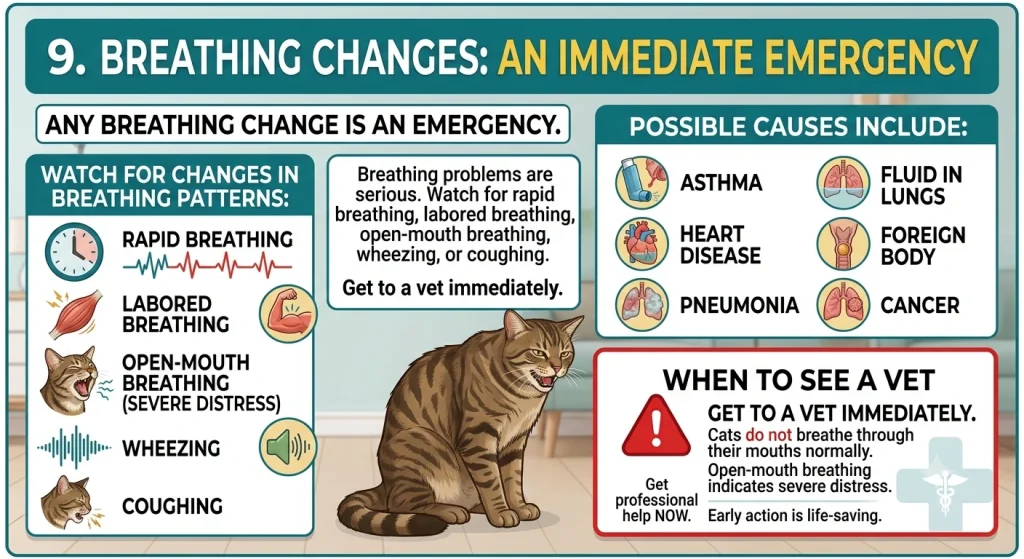
Breathing problems are serious. Watch for rapid breathing, labored breathing, open-mouth breathing, wheezing, or coughing. Any breathing change is an emergency. Cats do not breathe through their mouths normally. Open-mouth breathing indicates severe distress. Get to a vet immediately. Possible causes include asthma, heart disease, pneumonia, fluid in lungs, foreign body, and cancer.
10. Eye Changes
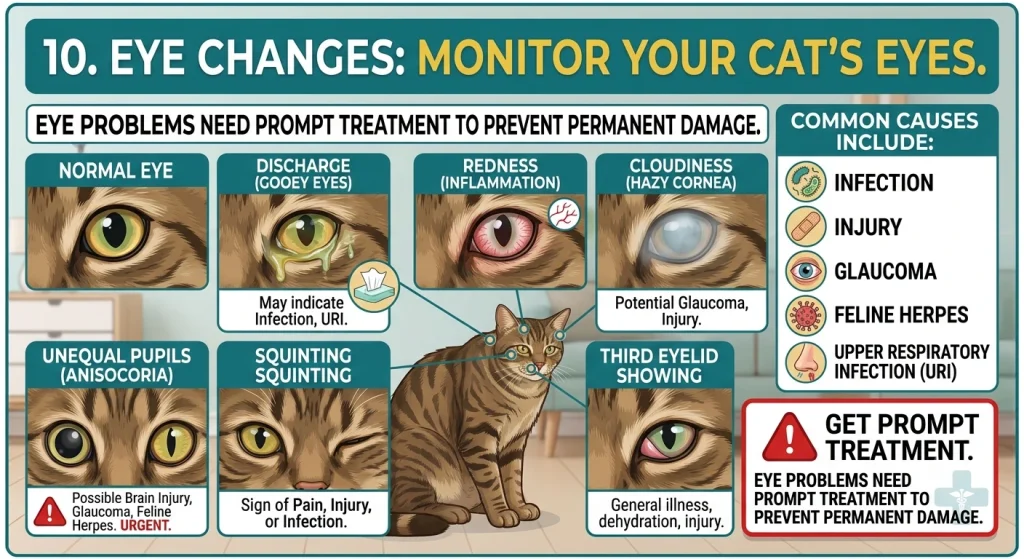
Eyes tell you a lot. Watch for discharge, redness, cloudiness, unequal pupils, squinting, or third eyelid showing. These can indicate infection, injury, glaucoma, feline herpes, or upper respiratory infection. Eye problems need prompt treatment to prevent permanent damage.
11. Ear Changes
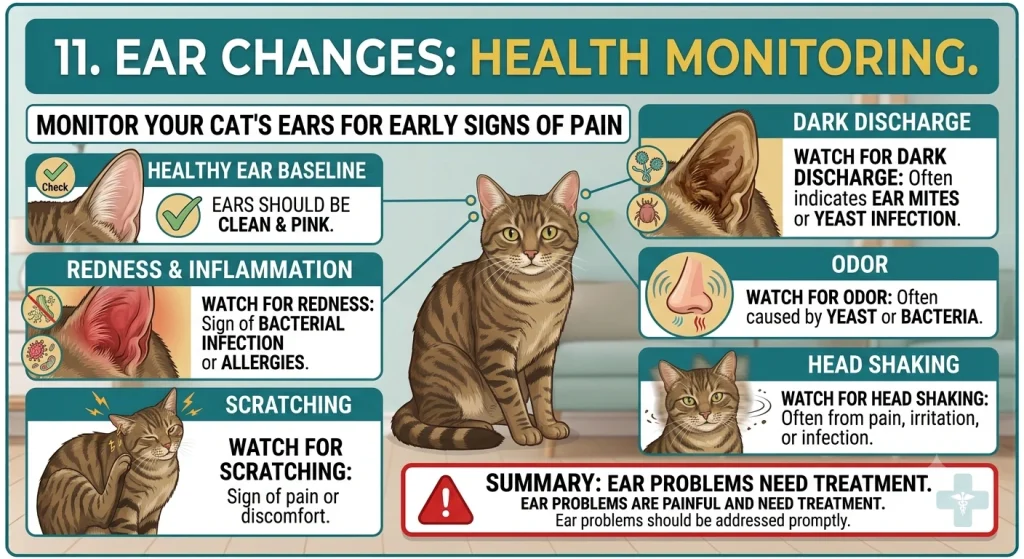
Ears should be clean and pink. Watch for dark discharge, redness, odor, scratching, or head shaking. These can indicate ear mites, yeast infection, bacterial infection, or allergies. Ear problems are painful and need treatment.
12. Bad Breath
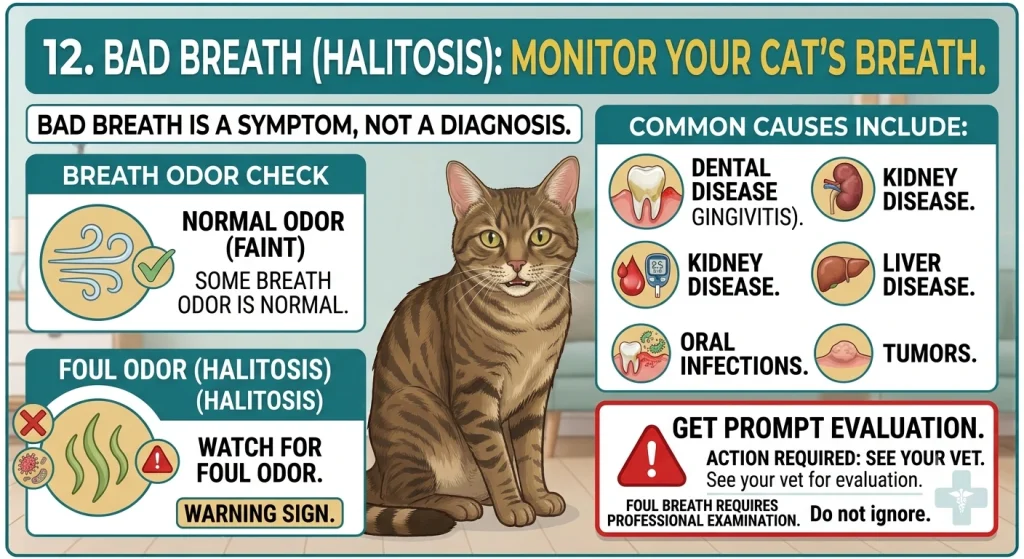
Some breath odor is normal. Foul breath is not. Halitosis can indicate dental disease, kidney disease, diabetes, liver disease, oral infections, or tumors. Bad breath is a symptom, not a diagnosis. See your vet for evaluation.
13. Behavior Changes
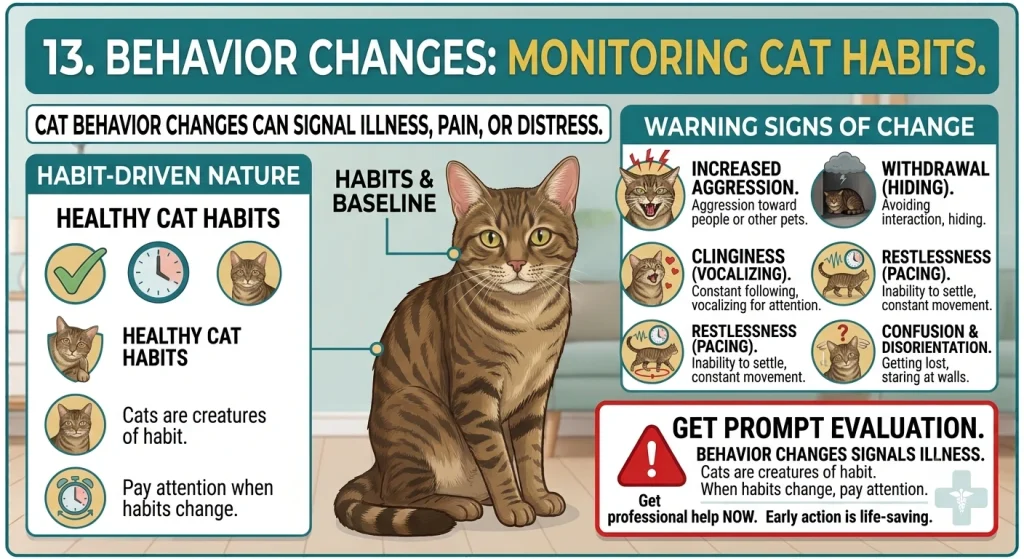
Any behavior change matters. Increased aggression, withdrawal, clinginess, restlessness, confusion, disorientation. These all indicate something is wrong. Cats are creatures of habit. When habits change, pay attention.
14. Pain Signs
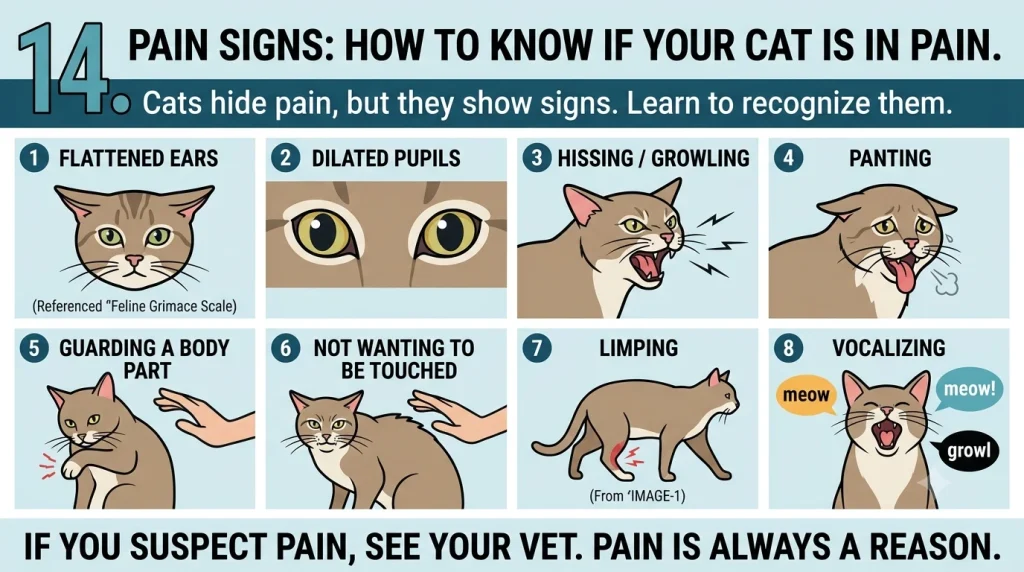
Cats hide pain, but they show signs if you know what to look for. Signs of pain include flattened ears, dilated pupils, hissing, growling, panting, guarding a body part, not wanting to be touched, limping, and vocalizing. If you suspect pain, see your vet. Pain is always a reason.
15. Vomiting and Diarrhea Together
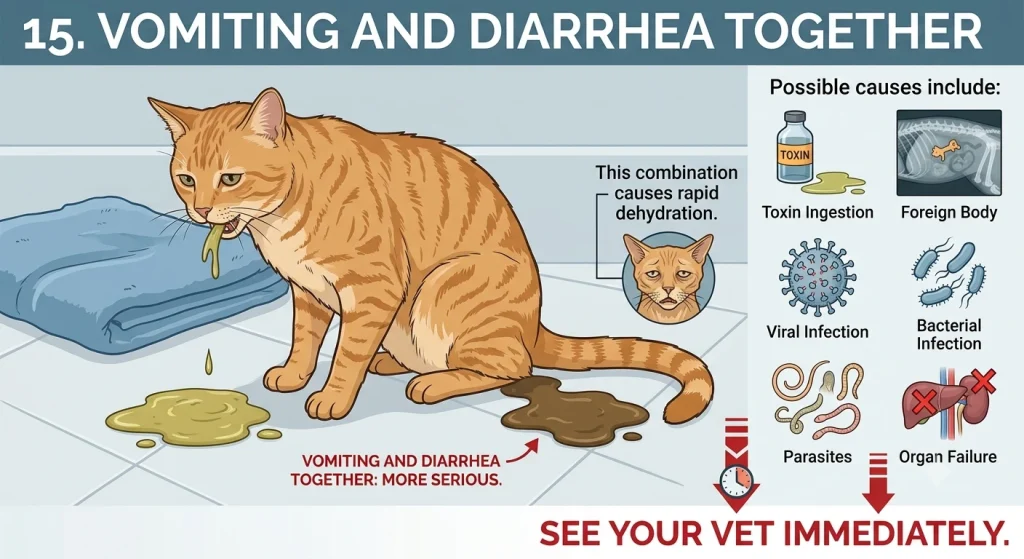
When vomiting and diarrhea happen together, it is more serious. Possible causes include toxin ingestion, foreign body, viral infection, bacterial infection, parasites, and organ failure. This combination causes rapid dehydration. See your vet immediately.
📚 The Complete Cat Care Bundle
Get 3 premium eBooks covering cat training, behavior, nutrition, and health. Instant digital download in one value-packed bundle.
Get the Bundle →Senior Cat Warning Signs
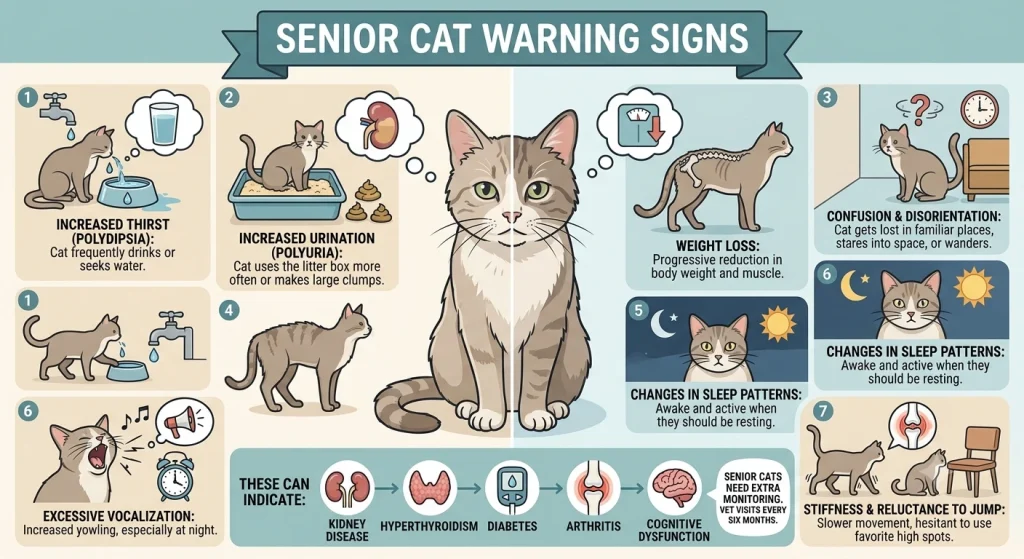
Senior cats need extra monitoring. They are more prone to disease. Warning signs specific to seniors include increased thirst, increased urination, weight loss, confusion, disorientation, excessive vocalization, changes in sleep patterns, stiffness, and reluctance to jump. These can indicate kidney disease, hyperthyroidism, diabetes, arthritis, and cognitive dysfunction. Senior cats should see the vet every six months.
How to Monitor Your Cat’s Health
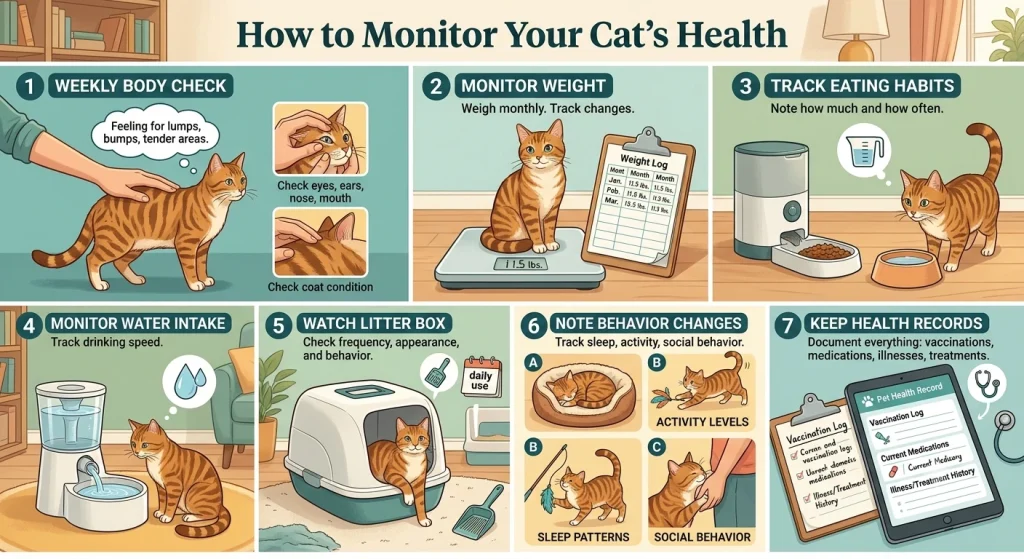
- Weekly body check. Feel your cat’s body. Check for lumps, bumps, tender areas. Check eyes, ears, nose, mouth. Check coat condition.
- Monitor weight. Weigh your cat monthly. Track changes. Unexplained weight loss is a red flag.
- Track eating habits. Note how much and how often your cat eats. Changes are significant.
- Monitor water intake. Fill the bowl. Track how fast it empties. Increased or decreased drinking both matter.
- Watch litter box. Check frequency, appearance, and behavior. Litter boxes tell you a lot.
- Note behavior changes. Track sleep patterns, activity levels, social behavior. Any change matters.
- Keep health records. Document everything: vaccinations, medications, illnesses, treatments. Your vet will thank you.
Expert Tips From My Practice
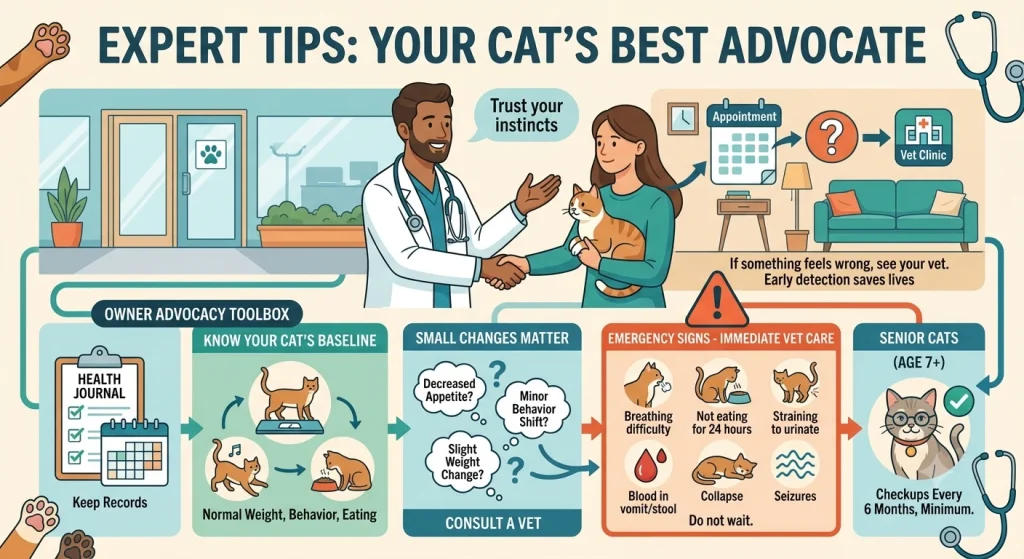
The most important thing I tell cat owners about detecting illness is this: you are your cat’s best advocate. You know them better than anyone. Trust your instincts. If something feels wrong, it probably is. Do not wait, do not assume, see your vet. Early detection saves lives, every single time.
Know your cat’s baseline. What is normal for YOUR cat. Normal weight, normal behavior, normal eating. Then you can spot changes.
Cats are stoic. They hide illness until they cannot. By the time symptoms are obvious, disease may be advanced. Regular checkups catch what you miss.
Small changes matter. A slight decrease in appetite, a small weight change, a minor behavior shift. These early signals are easy to miss, but they matter.
Do not self-diagnose. Symptoms have many causes. Only a vet can determine what is wrong. Do not assume. Get a professional opinion.
Emergency signs: breathing difficulty, not eating for 24 hours, straining to urinate, blood in vomit or stool, collapse, seizures. These need immediate care. Do not wait.
Senior cats need more checkups. Every six months, minimum. Early detection of age-related diseases improves outcomes significantly.
Keep records. Document weight, eating, behavior, medications. This information helps your vet diagnose faster.
FAQ
How do I know if my cat is sick?
Watch for changes in appetite, water intake, weight, behavior, grooming, and litter box habits. Any significant change from your cat’s normal warrants attention. When in doubt, see your vet. Cats hide illness, so trust your instincts.
What are the signs of a sick cat?
Key signs include loss of appetite, lethargy, hiding, weight loss, vomiting, diarrhea, breathing changes, litter box changes, and behavior changes. Any of these warrant veterinary attention. Multiple signs together are more urgent.
When should I take my cat to the vet?
Take your cat to the vet if not eating for 24 hours, breathing difficulty, straining to urinate, blood in vomit or stool, persistent vomiting, persistent diarrhea, sudden behavior change, weight loss, or pain signs. When in doubt, always go.
Why is my cat hiding and not eating?
Hiding and not eating are classic signs of illness. Possible causes include pain, infection, organ disease, stress, and cancer. This combination needs prompt veterinary attention. Do not wait. See your vet immediately.
Can I tell if my cat has a fever at home?
You can check ear temperature with a pet thermometer. Normal is 100 to 102.5 degrees Fahrenheit. Ears that feel hot may indicate fever. But ear temperature is not always accurate. Rectal temperature is more reliable, but best left to your vet.
Why is my cat sleeping more than usual?
Increased sleep is a common sign of illness. Possible causes include pain, infection, organ disease, depression, and anemia. If your cat sleeps significantly more than normal, see your vet, especially if accompanied by other symptoms.
How can I tell if my cat is in pain?
Pain signs include flattened ears, dilated pupils, hissing, growling, panting, guarding a body part, not wanting to be touched, limping, and vocalizing. Cats hide pain, so subtle changes may be all you see. See your vet if you suspect pain.
What does it mean when a cat stops grooming?
Stopping grooming is a sign of illness. Possible causes include pain, depression, arthritis, obesity, and dental disease. A cat that stops grooming needs veterinary attention to determine the cause.
Why is my cat drinking more water than usual?
Increased thirst can indicate kidney disease, diabetes, hyperthyroidism, liver disease, or urinary tract infection. Monitor water intake. See your vet if it continues. Blood tests can identify the cause.
Is my cat sick or just old?
Senior cats change, but illness is not normal aging. Weight loss, increased thirst, behavior changes. These are not just aging. They indicate disease. Senior cats need regular checkups every six months to catch problems early.
Can cats hide illness for a long time?
Yes. Cats can hide illness for weeks or months. This is why regular monitoring is so important. You need to know what is normal to spot what is not. Regular vet checkups catch what you miss.
What are emergency signs in cats?
Emergency signs include breathing difficulty, not eating for 24 hours, straining to urinate, blood in vomit or stool, collapse, seizures, open-mouth breathing, and extreme lethargy. These need immediate care. Go to the vet immediately.