

Table of Contents
Cat Heart Disease Complete Guide to Symptoms Diagnosis and Life Expectancy
Your cat seems perfectly healthy. They eat well, play occasionally, and spend most of their day napping in sunny spots, which is exactly what cats do. Then one morning you notice they are breathing faster than usual while resting, and by afternoon they are open mouth breathing and lethargic. You rush them to the emergency vet and learn your cat has heart disease, a condition that has been developing silently for months or even years. This scenario plays out in veterinary hospitals every single day.
Heart disease in cats is one of the most dangerous conditions precisely because it shows almost no visible symptoms until the disease is advanced or a catastrophic event occurs. Unlike dogs, who may cough, tire easily, or show obvious exercise intolerance with heart problems, cats often appear completely normal until they suddenly are not. Hypertrophic cardiomyopathy, the most common form of heart disease in cats, causes the walls of the heart to thicken progressively, reducing the heart’s ability to pump blood efficiently. This thickening happens gradually over months or years, and the cat compensates so effectively that owners notice nothing wrong.
📚 Recommended Cat Guides
🐱 The Trainable Cat Book
Learn proven methods to train your cat and stop unwanted behaviors.
View Book →❤️ Complete Cat Care Manual
Your complete guide to cat nutrition, health, grooming, behavior, and daily care.
Get the Manual →As a certified veterinary expert and professional cat behaviorist, I have diagnosed heart disease in cats that had no symptoms whatsoever during routine examinations. The owner brought the cat in for a wellness check or a dental cleaning, and the veterinarian detected a heart murmur or abnormal rhythm that led to further testing and a diagnosis that shocked the owner.
This guide covers the types of heart disease that affect cats, the subtle symptoms that most owners miss, diagnostic tests that confirm heart disease, treatment options that extend life expectancy and quality of life, emergency signs that require immediate veterinary attention, and how to manage a cat with heart disease at home. Early detection is the single most important factor in extending your cat’s life with heart disease, and understanding the signs can mean the difference between years of quality life and a sudden fatal event.
Types of Heart Disease in Cats
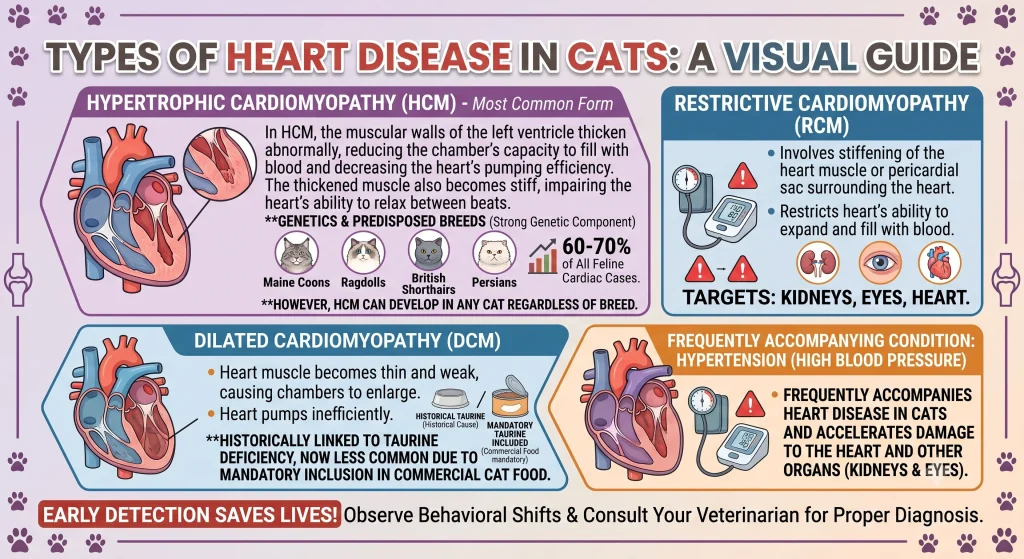
Hypertrophic cardiomyopathy is the most common form of heart disease in cats, accounting for approximately sixty to seventy percent of all feline cardiac cases. In HCM, the muscular walls of the left ventricle thicken abnormally, reducing the chamber’s capacity to fill with blood and decreasing the heart’s pumping efficiency. The thickened muscle also becomes stiff, impairing the heart’s ability to relax between beats. HCM has a strong genetic component, with certain breeds including Maine Coons, Ragdolls, British Shorthairs, and Persians being predisposed.
However, HCM can develop in any cat regardless of breed. Dilated cardiomyopathy occurs when the heart muscle becomes thin and weak, causing the chambers to enlarge and the heart to pump inefficiently. DCM was historically linked to taurine deficiency, but since taurine became a mandatory ingredient in commercial cat food, DCM has become less common. Restrictive cardiomyopathy involves stiffening of the heart muscle or the pericardial sac surrounding the heart, restricting the heart’s ability to expand and fill with blood. Hypertension, which is high blood pressure, frequently accompanies heart disease in cats and accelerates damage to the heart and other organs including the kidneys and eyes.
Hidden Symptoms of Heart Disease in Cats
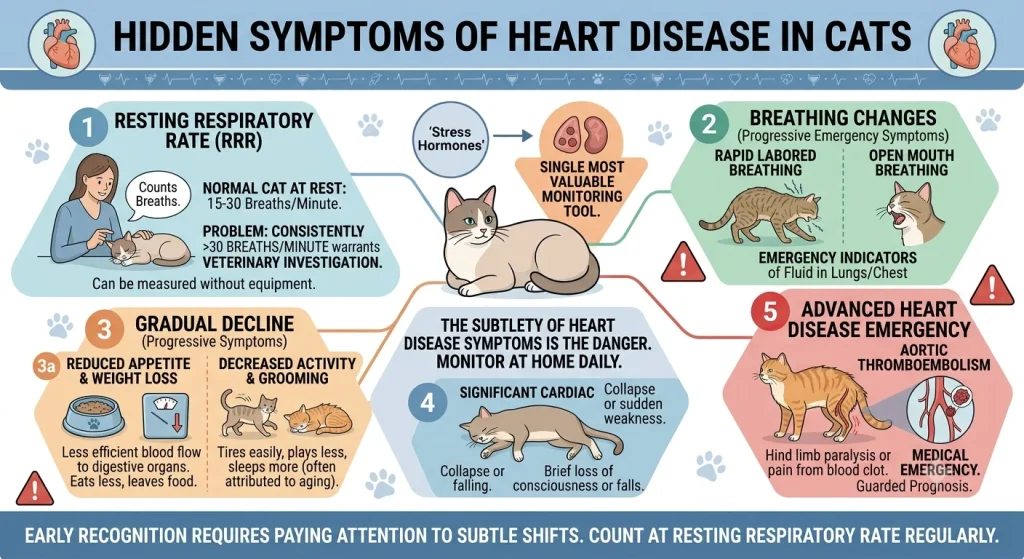
The subtlety of heart disease symptoms in cats is what makes this condition so dangerous. The most commonly missed symptom is increased respiratory rate while resting. A normal cat at rest breathes approximately fifteen to thirty breaths per minute. If you count your cat’s breaths while they are sleeping or quietly resting and the number consistently exceeds thirty, this warrants veterinary investigation. Resting respiratory rate is the single most valuable monitoring tool for cat owners because it can be measured at home without any equipment.
Many cats with heart disease show no other respiratory signs until fluid accumulates in the lungs or chest cavity, which causes rapid labored breathing and open mouth breathing. These are emergency symptoms indicating decompensation.
Reduced appetite and weight loss occur gradually as heart disease progresses and blood flow to the digestive organs becomes less efficient. The cat may eat less than usual, leave food in the bowl, or show interest in food but eat very little. Decreased activity and exercise intolerance are common but frequently attributed to normal aging.
The cat sleeps more than usual, plays less, and tires quickly during activities they used to enjoy. Grooming decline leads to an unkempt coat, particularly along the back and hindquarters, because the cat does not feel well enough to maintain their usual grooming routine. Collapse or sudden weakness episodes, where the cat briefly loses consciousness or falls over, indicate significant cardiac compromise. Hind limb paralysis or pain caused by a blood clot lodged in the arteries of the legs is a dramatic and terrifying sign of advanced heart disease called aortic thromboembolism. This is a medical emergency with a guarded prognosis.
Diagnostic Tests for Heart Disease
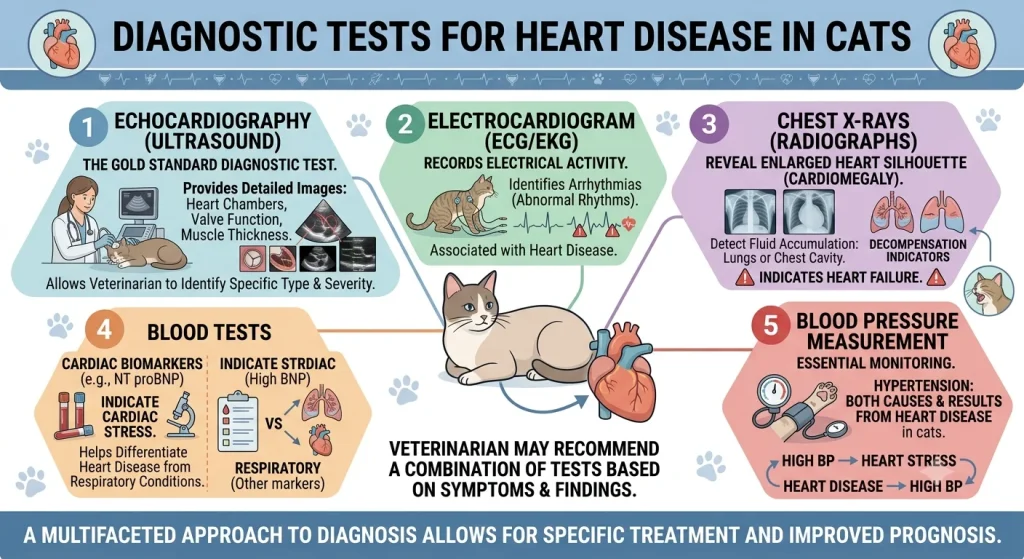
Echocardiography is the gold standard diagnostic test for heart disease in cats. This ultrasound of the heart provides detailed images of the heart chambers, valve function, and muscle thickness, allowing the veterinarian to identify the specific type and severity of heart disease. An electrocardiogram records the electrical activity of the heart and can identify arrhythmias, which are abnormal heart rhythms associated with heart disease.
Chest x rays reveal an enlarged heart silhouette and can detect fluid accumulation in the lungs or chest cavity, which indicates heart failure. Blood tests, including cardiac biomarkers like NT proBNP, can indicate cardiac stress and help differentiate heart disease from respiratory conditions that cause similar symptoms. Blood pressure measurement is essential because hypertension both causes and results from heart disease in cats. Your veterinarian may recommend a combination of these tests based on your cat’s symptoms and examination findings.
Treatment Options for Heart Disease
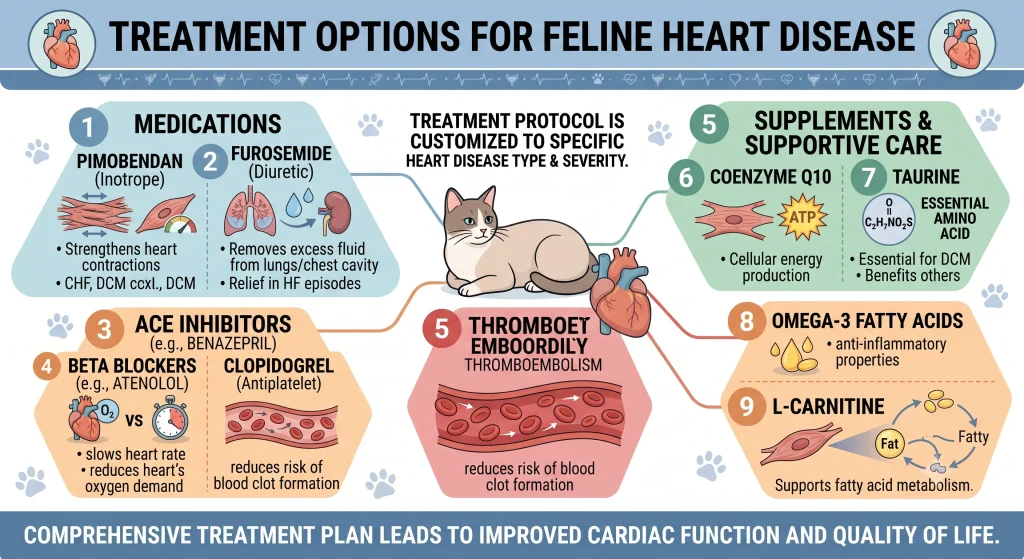
Medications
Pimobendan is an inotrope that strengthens the heart’s contractions and improves pumping efficiency. It is commonly prescribed for cats with congestive heart failure or dilated cardiomyopathy. Furosemide is a diuretic that removes excess fluid from the lungs and chest cavity, providing critical relief during heart failure episodes.
ACE inhibitors like benazepril reduce the workload on the heart by lowering blood pressure and decreasing fluid retention. Beta blockers like atenolol slow the heart rate and reduce the heart’s oxygen demand, which is particularly beneficial for cats with hypertrophic cardiomyopathy. Clopidogrel is an antiplatelet medication that reduces the risk of blood clot formation, which is a serious complication of heart disease in cats. Your veterinarian will determine the appropriate medication protocol based on the specific type and severity of your cat’s heart disease.
Supplements and Supportive Care
Coenzyme Q10 supports cellular energy production in heart muscle cells and may improve cardiac function. Taurine supplementation is essential for cats with dilated cardiomyopathy and may benefit other forms of heart disease as well. Omega three fatty acids have anti inflammatory properties that support cardiovascular health. L carnitine supports fatty acid metabolism in heart muscle cells. These supplements complement pharmaceutical treatment and support overall cardiac health.
Emergency Signs Requiring Immediate Veterinary Care
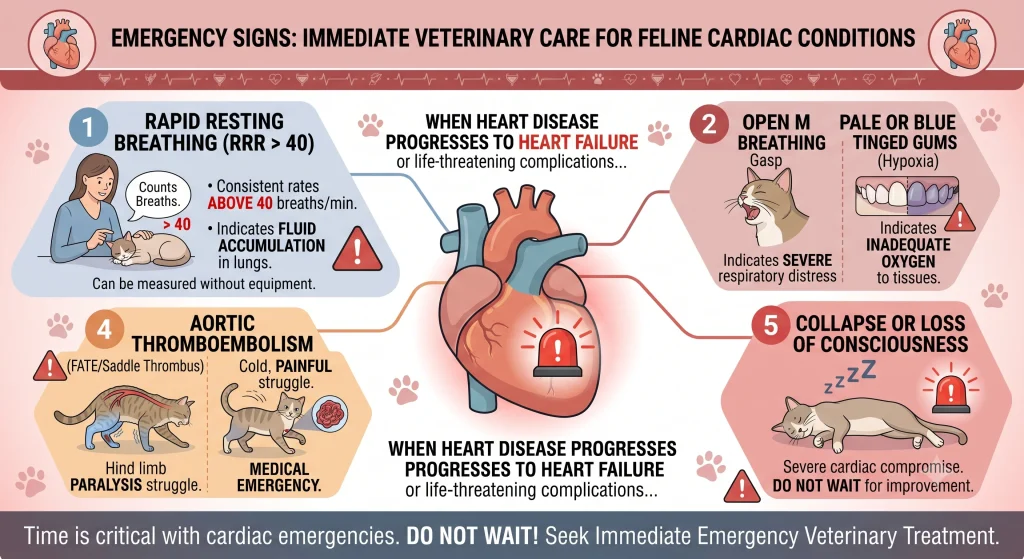
Certain signs indicate that heart disease has progressed to heart failure or another life threatening complication. Rapid breathing at rest, with respiratory rates consistently above forty breaths per minute, indicates fluid accumulation in the lungs. Open mouth breathing is never normal in cats and indicates severe respiratory distress. Pale or blue tinged gums indicate inadequate oxygen delivery to tissues. Hind limb paralysis or cold painful legs indicate aortic thromboembolism, where a blood clot has blocked blood flow to the limbs. Collapse or loss of consciousness indicates severe cardiac compromise. Any of these signs requires immediate emergency veterinary treatment. Do not wait to see if the symptoms improve. Time is critical with cardiac emergencies.
Managing Heart Disease at Home
Daily respiratory rate monitoring at home is the most valuable tool for tracking heart disease progression. Count your cat’s breaths for one minute while they are sleeping or resting quietly, and record the number. Track trends over time. A consistent increase above the baseline rate may indicate developing heart failure before other symptoms appear. Maintain a calm stress free environment because stress increases heart rate and cardiac workload.
Keep routine feeding and play schedules to minimize anxiety. Administer medications exactly as prescribed, at the same times each day, and never skip doses even if your cat appears to be doing well. Schedule regular veterinary recheck appointments as recommended, typically every three to six months, even when your cat seems stable. Heart disease is progressive, and treatment adjustments are often needed as the condition evolves.
Life Expectancy With Heart Disease
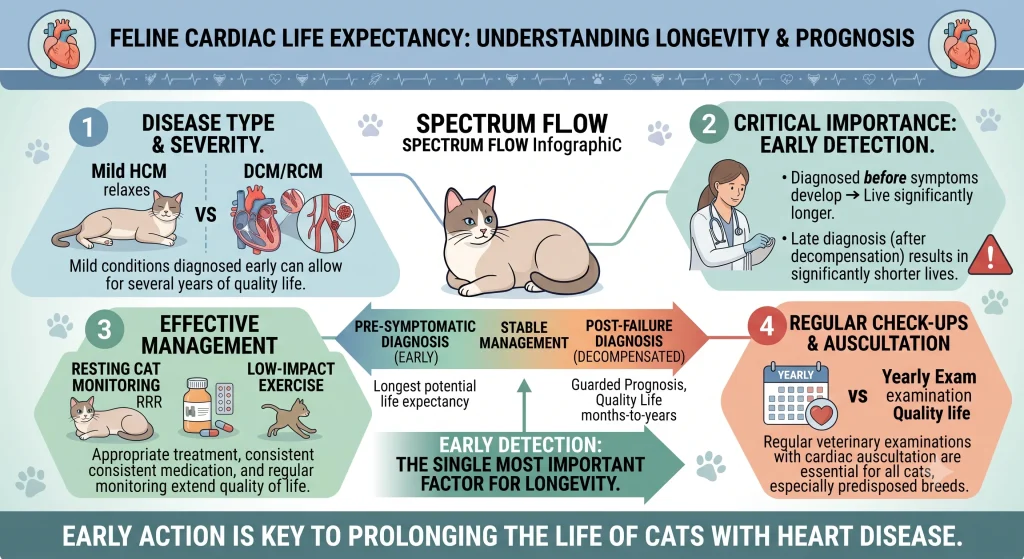
Life expectancy with heart disease varies significantly depending on the type and severity of the condition, how early it is detected, and how well it is managed. Cats with mild hypertrophic cardiomyopathy detected early can live for several years with appropriate treatment and monitoring. Cats diagnosed during heart failure have a more guarded prognosis but can still enjoy quality life for months to years with proper medication management.
The single most important factor in life expectancy is early detection. Cats diagnosed before symptoms develop live significantly longer than cats diagnosed after decompensation occurs. This is why regular veterinary examinations with cardiac auscultation are so important for all cats, particularly breeds predisposed to heart disease.
Expert Tips From My Practice
I cannot stress enough how important resting respiratory rate monitoring is for cat owners. I recommend that every cat owner, especially those with cats over five years old or predisposed breeds, count their cat’s sleeping breaths once a week and keep a simple log. This three minute exercise can catch heart failure before it becomes an emergency.
I have had owners bring their cats in for a routine checkup because they noticed the sleeping respiratory rate had crept up over the past few weeks, and we were able to start treatment before any fluid accumulated in the lungs. Those cats did dramatically better than the cats who came in breathing sixty breaths per minute in respiratory distress. A simple breath count at home is genuinely lifesaving.
- Heart disease shows few symptoms until advanced. Cats compensate so well that owners notice nothing wrong.
- Resting respiratory rate is your best monitoring tool. Count breaths weekly while your cat sleeps.
- Echocardiography is the gold standard diagnosis. It provides detailed images of heart structure and function.
- Early detection dramatically extends life expectancy. Regular veterinary exams catch heart disease before symptoms develop.
- Open mouth breathing is an emergency. Never ignore rapid or labored breathing in cats.
- Medications work well when given consistently. Never skip doses even when your cat seems fine.
- Stress worsens heart disease. Maintain a calm routine environment for your cardiac cat.
- Breed predispositions matter. Maine Coons, Ragdolls, and Persians need regular cardiac screening.
FAQ
What is the most common heart disease in cats?
Hypertrophic cardiomyopathy is the most common form, accounting for sixty to seventy percent of feline cardiac cases. It causes the heart muscle walls to thicken and stiffen.
How do I know if my cat has heart disease?
Most cats show no obvious symptoms until advanced disease. Increased resting respiratory rate, reduced appetite, decreased activity, and grooming decline are the most common signs.
Can heart disease be cured in cats?
No. Heart disease is a chronic progressive condition that cannot be cured. However, it can be managed effectively with medications and supportive care to extend life and quality of life.
What breeds are prone to heart disease?
Maine Coons, Ragdolls, British Shorthairs, and Persians have genetic predispositions to hypertrophic cardiomyopathy. However, any cat can develop heart disease regardless of breed.
How long can cats live with heart disease?
Life expectancy varies by type and severity. Cats diagnosed early with mild disease can live several years with treatment. Early detection is the most important factor in extending lifespan.
What is a heart murmur in cats?
A heart murmur is an abnormal sound heard during cardiac auscultation caused by turbulent blood flow through the heart. It may indicate heart disease but some cats have innocent murmurs with no cardiac disease.
What is aortic thromboembolism?
A blood clot forms in the heart and lodges in the arteries of the hind legs, cutting off blood flow. It causes sudden painful paralysis of the affected legs and is a life threatening emergency.
How do I monitor my cat’s breathing at home?
Count the number of breaths your cat takes in one minute while sleeping or resting quietly. A normal rate is fifteen to thirty breaths per minute. Rates above thirty warrant veterinary investigation.
Should I restrict my cat’s activity with heart disease?
Moderate activity is generally fine. Avoid forcing exercise or creating stressful situations. Let your cat activity level guide the intensity of play and interaction.
How often should my cardiac cat see the vet?
Most cats with heart disease need recheck examinations every three to six months, even when stable. More frequent visits may be needed during medication adjustments or if symptoms change.