

Table of Contents
Cat Purring Meaning
Your cat is sitting on your lap. Purring like a little engine. You assume they are happy. Most people do. But here is what most cat owners do not realize. Purring does not always mean happy. Sometimes it means the exact opposite. And if you do not know the difference. You might miss something important.
As a certified veterinary expert and professional cat behaviorist. I have studied purring behavior for years. And I can tell you. This behavior is way more complex than people think. Cats purr when they are happy. Yes. But they also purr when they are scared. When they are in pain. When they are dying. Yes. Really. Understanding the context of purring is crucial. Because the same sound can mean completely different things.
This guide breaks down every reason cats purr. From contentment to crisis. By the end. You will know exactly what your cat is telling you when that little motor starts running.
📚 Recommended Cat Guides
🐱 The Trainable Cat Book
Learn proven methods to train your cat and stop unwanted behaviors.
View Book →❤️ Complete Cat Care Manual
Your complete guide to cat nutrition, health, grooming, behavior, and daily care.
Get the Manual →What Is Purring
Purring is a continuous vibration that cats produce. It happens during both inhaling and exhaling. Which is different from most other cat sounds. Meowing. Hissing. Growling. Those only happen on exhale. Purring happens on both. That is what makes it continuous.
The sound comes from the muscles in the larynx. The voice box. These muscles twitch at a rapid rate. About 25 to 150 vibrations per second. This creates the vibration. And the characteristic purring sound.
All cats can purr. Big cats. Small cats. Kittens. Seniors. Even wild cats. The only big cats that cannot purr are those that can roar. Like lions. Tigers. Leopards. And jaguars. They can roar but not purr. Domestic cats can purr but not roar. Nature picked one or the other.
Why Do Cats Purr
There are many reasons cats purr. Here is every one of them. From the most common to the least.
1. Contentment and Happiness
This is the most common reason. And the one most people know. When your cat purrs while being petted. While kneading. While resting in a sunny spot. They are content. Happy. Comfortable. This is the good purr. The one that makes your heart melt.
According to veterinary behaviorists. Contentment purring is usually accompanied by relaxed body language. Soft eyes. Forward ears. Loose posture. Kneading. Slow blinking. If your cat shows these signs while purring. They are happy. Enjoy it.
2. Self-Soothing and Stress Relief
Cats also purr when they are stressed. Scared. Or anxious. This is called self-soothing purring. The vibration of purring releases endorphins. Natural feel-good chemicals. This helps calm them down. It is like a cat version of deep breathing.
You might hear your cat purring at the vet. During car rides. During thunderstorms. Or when new people visit. This is not a happy purr. It is a coping mechanism. Your cat is trying to calm themselves down.
3. Pain Relief and Healing
This is one of the most fascinating discoveries about purring. The frequency of purring. Between 25 and 50 Hertz. Promotes healing. Studies have shown that these frequencies can. Heal bones. Repair tissues. Reduce pain. And decrease swelling.
Cats instinctively purr when they are injured or sick. Their body is literally trying to heal itself. The vibration stimulates bone density. Promotes tissue repair. And provides natural pain relief. It is self-medication. Through sound.
According to research published in the Journal of the Acoustical Society of America. Purring frequencies fall within the range that promotes bone healing. This is why cats recover from fractures faster than many other animals.
4. Communication with Mother
Kittens purr from just a few days old. They purr to tell their mother they are okay. They are fed. They are warm. They are safe. It is a survival signal. Mother cats also purr to their kittens. To comfort them. To guide them to nurse. To let them know she is there.
This communication purring continues into adulthood. Cats purr to communicate with their owners. It is a way of saying. I am here. I am okay. You are okay. We are good.
5. Solicitation Purring
This is the one that trips people up. Cats sometimes purr to get something they want. Usually food. This is called solicitation purring. And it has a special quality. It includes a high-frequency cry embedded within the purr. Similar to a baby crying.
Humans are hardwired to respond to baby cries. Cats have evolved to exploit this. Their solicitation purr triggers your caregiving instinct. You feel compelled to feed them. Or give them attention. Smart. Very smart.
This is the purr you hear when your cat is sitting by the food bowl. Looking at you. Purring loudly. They want food. And they know exactly how to ask for it.
6. Greeting
Some cats purr when they greet you. You walk in the door. Your cat runs up. Rubs against your legs. And purrs. This is a greeting purr. Your cat is saying. Welcome home. I missed you. I am glad you are back.
This is a positive social signal. Your cat associates your arrival with good things. And they express that through purring.
7. During Mating
Female cats purr during mating. This is a communication signal. It may indicate receptivity. Or it may be a calming mechanism. Male cats may also purr during courtship. It is part of the feline mating behavior.
8. While Nursing
Mother cats purr while nursing. This guides kittens to the milk. And comforts them. Kittens purr while nursing too. It signals they are feeding well. And content. This is one of the earliest forms of purring behavior.
Happy Purring vs Stress Purring
How do you tell the difference. Here is a quick guide.
| Happy Purr | Stress Purr |
|---|---|
| Relaxed body | Tense body |
| Soft eyes or slow blinks | Wide eyes or squinting |
| Forward ears | Flat or rotated ears |
| Kneading | Hiding |
| Rubbing against you | Pulling away |
| Normal breathing | Fast breathing |
| Ambient setting | Stressful setting like vet |
The context is everything. Same sound. Different meaning. Always look at the whole picture. Not just the purr.
Why Do Cats Purr When They Are Sick
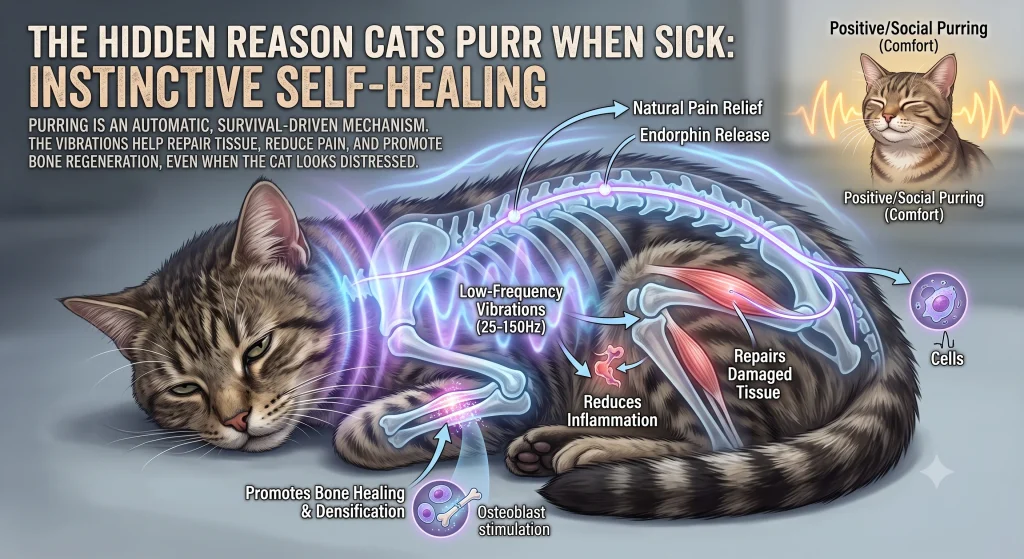
This is the one that surprises people most. Cats purr when they are sick. Or injured. Or dying. Why.
Because purring promotes healing. The vibration frequency helps repair tissue. Reduce pain. And promote bone healing. When a cat is sick. Their body purrs to heal itself. It is instinctive. Automatic. Survival-driven.
Sick cats may purr more than usual. Or purr in unusual situations. If your cat is purring more than normal. And they seem unwell. They might be in pain. Or feeling sick. The purring is their body’s way of coping.
Never dismiss purring as always being positive. If your cat is purring. But also hiding. Not eating. Lethargic. Or showing other signs of illness. See your vet. The purring might be masking a health problem.
Why Do Cats Purr When You Pet Them
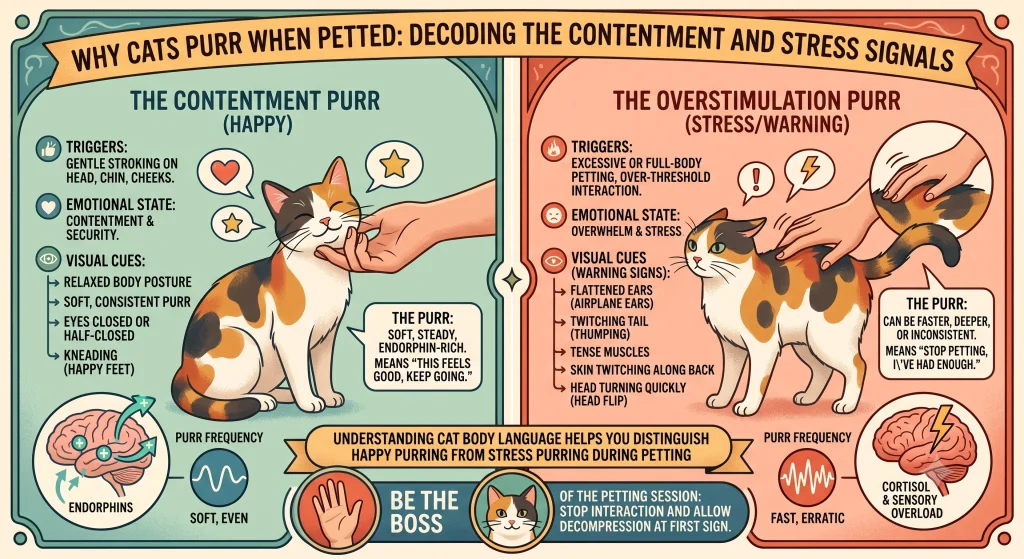
This is the happy purr. The one everyone loves. When you pet your cat. And they start purring. They are telling you. This feels good. I like this. Keep going.
Petting triggers contentment. Which triggers purring. The physical contact. The warmth. The bonding. All contribute to a positive emotional state. And purring is the expression of that state.
But remember. Some cats purr when petted because they are overstimulated. Not happy. If your cat is purring. But also twitching their tail. Flattening their ears. Or showing other stress signals. Stop petting. They might be approaching their threshold.
Understanding cat body language helps you distinguish happy purring from stress purring during petting.
Why Do Cats Purr When They Eat
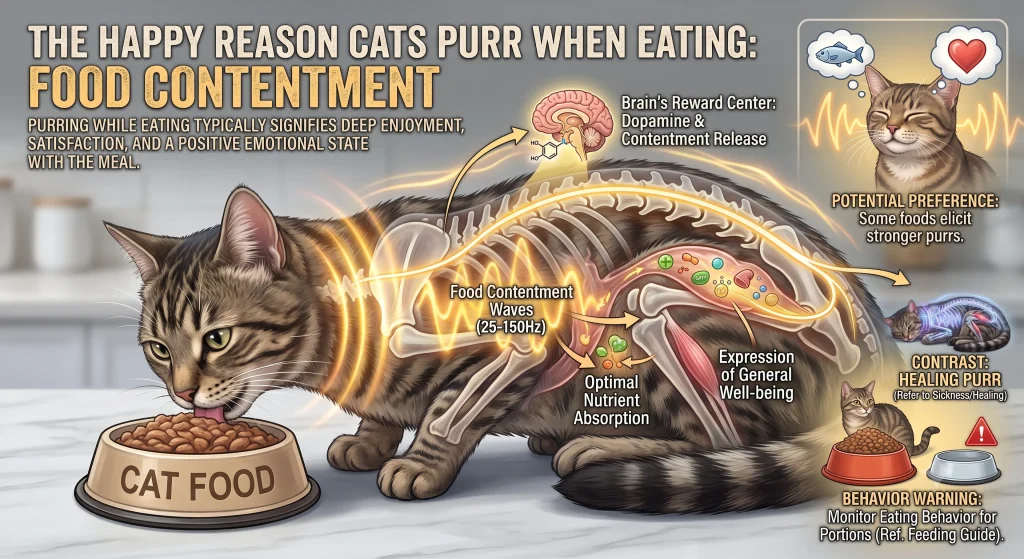
Cats sometimes purr while eating. This usually means they are enjoying the food. And feeling content. It is the food version of the happy purr.
Some cats purr more with certain foods. Which might indicate preference. Or it might just be a coincidence. Not all eating purring is meaningful. Some cats just purr during meals because they are happy to be eating.
If your cat purrs while eating. But also seems to be eating excessively. Or not enough. Pay attention to the eating behavior. Not just the purring. Our complete feeding guide covers proper portions for every cat.
Why Do Cats Purr at Night
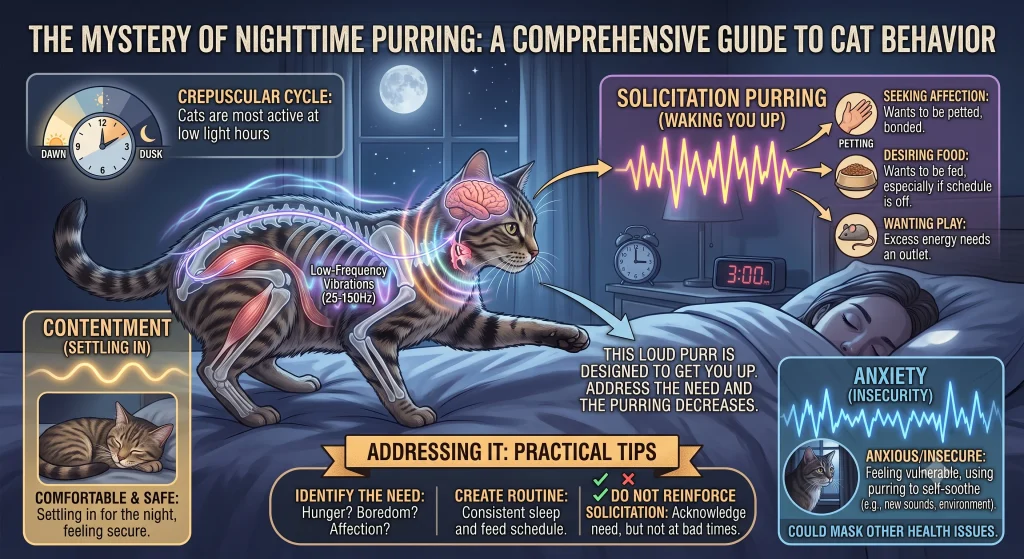
Cats are more active at night. They are crepuscular. Most active at dawn and dusk. Purring at night can mean several things.
It might be contentment. Your cat is comfortable. Safe. And settling in for the night. It might be seeking attention. Your cat wants to be petted. Or fed. It might be anxiety. Some cats purr at night when they feel insecure.
If your cat purrs loudly at night and it wakes you up. It is probably solicitation purring. Your cat wants something. Food. Attention. Or play. Address the need. And the nighttime purring usually decreases.
Why Do Kittens Purr
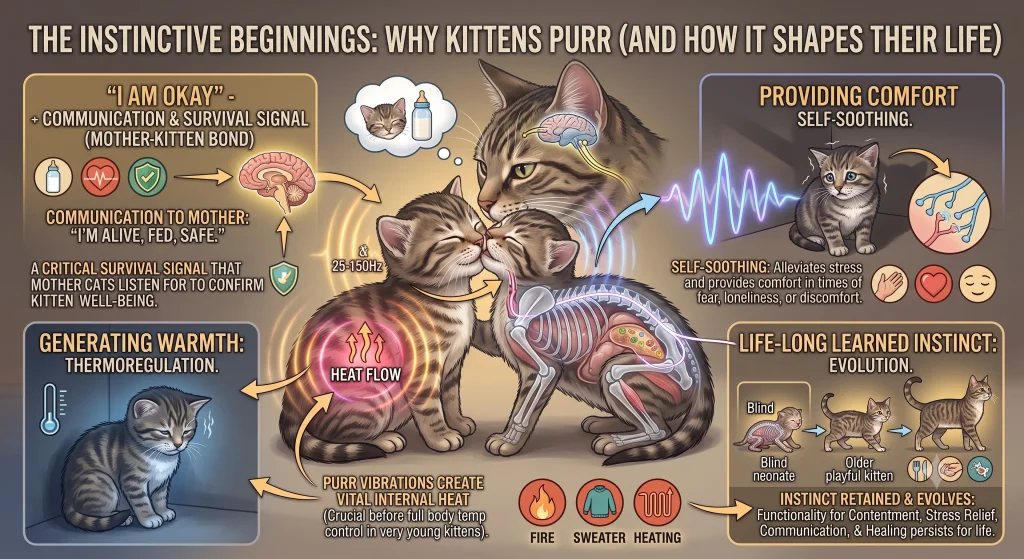
Kittens purr from just a few days old. Even before their eyes open. This is one of the first forms of communication.
Kittens purr to tell their mother. I am okay. I am alive. I am fed. It is a survival signal. Mother cats listen for kitten purrs. To know their babies are doing well.
Kittens also purr when they are cold. Or scared. The vibration generates warmth. And provides comfort. It is a multi-purpose tool for tiny kittens.
As kittens grow. They continue purring. For the same reasons adult cats do. Contentment. Stress relief. Communication. The behavior stays with them for life.
Can Cats Purr Too Much
Technically. No. There is no such thing as too much purring. If your cat purrs a lot. They are probably just a vocal cat. Some cats are louder than others. Some purr more than others. It is personality.
But if purring increases suddenly. And is accompanied by other changes. Like not eating. Hiding. Lethargy. Or behavior changes. It could indicate a health problem. The increased purring might be self-soothing. Because they are in pain. Or sick.
Trust your instincts. If something feels off. It probably is. See your vet. Especially if the purring increase is sudden. And unexplained.
Do All Cats Purr
Most cats purr. But not all. Some cats rarely purr. Others purr constantly. It varies by individual.
Cats who were orphaned early. Or separated from their mother young. May purr less. Because they did not learn the behavior through nursing. But they can still develop purring later in life.
Some breeds purr more than others. Siamese cats are known to be very vocal. Including purring. Maine Coons often purr loudly. But breed is not a guarantee. Individual personality matters more.
Expert Tips From My Practice
Here is what I have learned about purring from decades of working with cats.
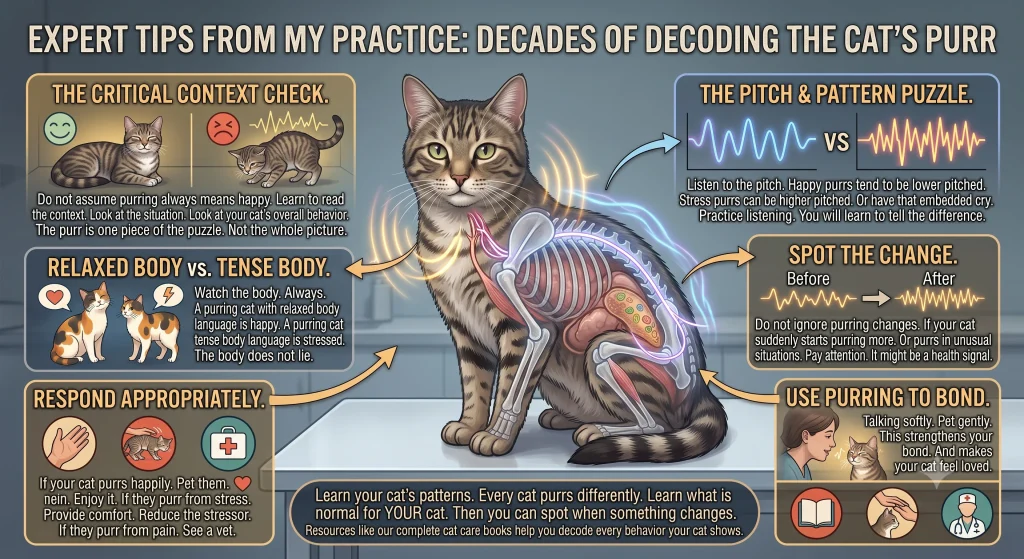
The most important thing I tell cat owners is this. Do not assume purring always means happy. Learn to read the context. Look at the body language. Look at the situation. Look at your cat’s overall behavior. The purr is one piece of the puzzle. Not the whole picture.
- Listen to the pitch. Happy purrs tend to be lower pitched. Stress purrs can be higher pitched. Or have that embedded cry. Practice listening. You will learn to tell the difference.
- Watch the body. Always. A purring cat with relaxed body language is happy. A purring cat with tense body language is stressed. The body does not lie.
- Consider the situation. Where is your cat. What is happening. Who is around. These context clues tell you more than the purr alone.
- Respond appropriately. If your cat purrs happily. Pet them. Enjoy it. If they purr from stress. Provide comfort. Reduce the stressor. If they purr from pain. See a vet.
- Do not ignore purring changes. If your cat suddenly starts purring more. Or purrs in unusual situations. Pay attention. It might be a health signal.
- Use purring to bond. When your cat purrs happily with you. Talk softly. Pet gently. This strengthens your bond. And makes your cat feel loved.
- Learn your cat’s patterns. Every cat purrs differently. Learn what is normal for YOUR cat. Then you can spot when something changes. Understanding your cat is the key to great care. Resources like our complete cat care books help you decode every behavior your cat shows.
FAQ
What does it mean when a cat purrs?
Cats purr for many reasons. Contentment. Stress relief. Pain management. Communication. And self-soothing. The most common reason is happiness. But purring also happens when cats are scared. Sick. Or injured. Always look at body language and context to understand the meaning.
Do cats purr when they are happy?
Yes. Most purring indicates happiness and contentment. When your cat purrs while being petted. Kneading. Or resting. They are usually happy. Look for relaxed body language. Soft eyes. Forward ears. To confirm they are truly content.
Can cats purr when they are in pain?
Yes. Cats purr when they are in pain. The vibration frequency promotes healing. Reduces pain. And repairs tissue. This is called healing purring. If your cat purrs but seems unwell. They might be in pain. See your vet.
Why does my cat purr so loudly?
Some cats are naturally louder purrers. It is personality. Loud purring usually means deep contentment. Or strong solicitation. If the loud purring is new. And accompanied by other changes. Pay attention. Otherwise. Loud purring is usually a good thing.
Why does my cat purr and drool?
Purring and drooling together usually means extreme contentment. The cat is so relaxed that their mouth muscles loosen. Causing drool. This is normal. And actually a sign of deep happiness. Enjoy these moments.
Do kittens purr?
Yes. Kittens purr from just a few days old. They purr to communicate with their mother. To signal they are okay. Warm. And fed. Kittens continue purring throughout their lives.
Why does my cat purr when I pet her?
Your cat purrs when you pet her because it feels good. Petting triggers contentment. Which triggers purring. Your cat is saying. This is nice. I like this. Keep going. This is one of the most rewarding parts of cat ownership.
Can purring mean a cat is stressed?
Yes. Cats purr when stressed as a self-soothing mechanism. The vibration releases endorphins. Which helps calm them. You might hear stress purring at the vet. During car rides. Or during thunderstorms. Look for tense body language to confirm.
Why does my cat purr when she eats?
Cats sometimes purr while eating because they enjoy the food. And feel content. It is the food version of the happy purr. Some cats purr more with certain foods. Which might indicate preference.
Is purring always a sign of contentment?
No. Purring does not always mean happy. Cats also purr when stressed. In pain. Sick. or dying. The vibration promotes healing and provides comfort. Always consider the context. Body language. And situation when interpreting a purr.
Why does my cat purr at night?
Cats purr at night for several reasons. Contentment before sleep. Seeking attention. Anxiety. Or solicitation for food. If nighttime purring is loud and disruptive. Your cat probably wants something. Address the need.
Do all cats purr?
Most cats purr. But not all. Some cats rarely purr. Others purr constantly. It varies by individual personality. Cats who were separated from their mother early may purr less. But can still develop the behavior later.
Can purring help heal a cat?
Yes. Research shows that purring frequencies between 25 and 50 Hertz promote healing. They can repair bones. Fix tissues. Reduce pain. And decrease swelling. Cats instinctively purr when injured to speed recovery. It is self-medication.