

Table of Contents
Stop Cat Scratching Furniture Complete Training Guide to Protect Your Couch and Belongings
You walk into the living room and see your cat stretched out on the arm of your brand new sofa, claws buried deep in the fabric, pulling with satisfaction as long strips of material peel away. You clap your hands, your cat startles, and they bolt under the bed. You think you have solved the problem. Two hours later, you find fresh scratch marks on the other arm of the couch. Scratching is one of the most important natural behaviors for cats, and it is also one of the most destructive from an owner perspective.
The impulse to stop your cat from scratching entirely is understandable, but it is also impossible and counterproductive. Cats scratch to sharpen their claws, stretch their muscles, mark their territory with scent glands in their paws, and relieve stress. Denying a cat the ability to scratch entirely leads to frustration, behavioral problems, and often makes the scratching worse. The solution is not to stop scratching. It is to redirect scratching to appropriate surfaces while making furniture less appealing and providing alternatives that your cat genuinely prefers.
As a certified veterinary expert and professional cat behaviorist, I have helped countless owners save their furniture while keeping their cats happy and healthy. The approach works because it respects your cat’s need to scratch while protecting your belongings through a combination of environmental management, positive reinforcement, and strategic deterrents.
This guide covers why cats scratch, how to choose scratching posts that your cat will actually use, placement strategies that make the right spots more appealing, training techniques that teach your cat where to scratch, deterrent methods that protect furniture without harming your cat, and how to repair existing damage. Scratching problems are completely solvable, and the solution makes both you and your cat happier.
📚 Recommended Cat Guides
🐱 The Trainable Cat Book
Learn proven methods to train your cat and stop unwanted behaviors.
View Book →❤️ Complete Cat Care Manual
Your complete guide to cat nutrition, health, grooming, behavior, and daily care.
Get the Manual →Why Cats Scratch
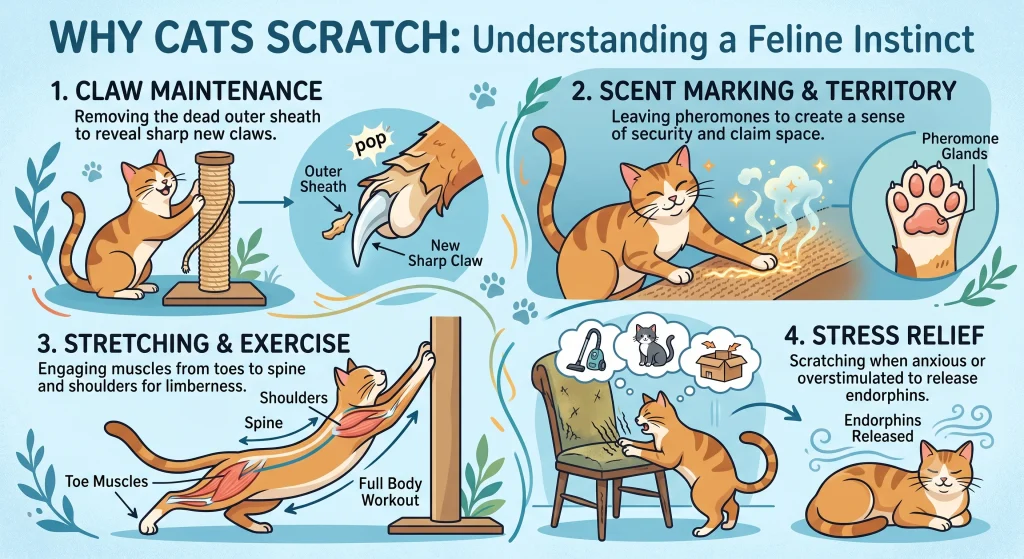
Understanding why cats scratch eliminates the frustration and helps you work with your cat’s instincts rather than against them. Claw maintenance is the primary reason. Cats have retractable claws that grow continuously. Scratching removes the outer dead sheath of the claw, revealing the sharp new claw underneath. Without scratching, claws become dull, overgrown, and can curl into the paw pads causing pain and infection. This is a biological need, not a choice.
Scent marking is another critical reason. Cats have scent glands in their paw pads that deposit pheromones onto the scratched surface. This marks the area as their territory and provides a sense of security. You may notice your cat returning to scratch the same spots repeatedly because they are reinforcing their scent marks.
Stretching and exercise are important too. The full body stretch that accompanies scratching engages muscles from the toes to the spine and shoulders. It feels good and keeps muscles limber. Stress relief plays a role as well. Cats often scratch more when they are anxious, overstimulated, or adjusting to changes in their environment. Scratching releases endorphins that help them cope.
Choosing the Right Scratching Posts
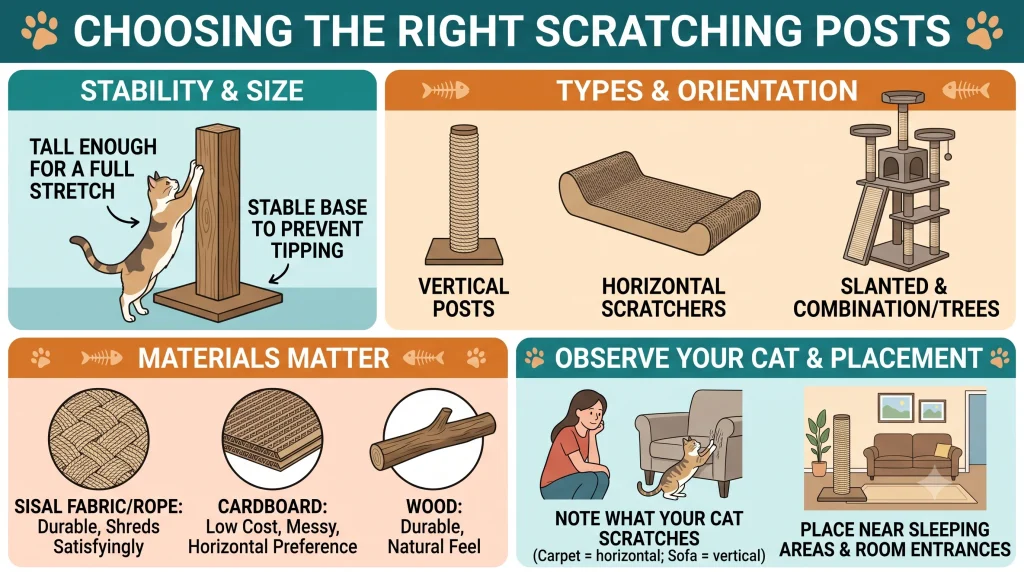
The scratching post you buy must meet your cat’s preferences, or they will ignore it and continue using your furniture. Material matters enormously. Most cats prefer sisal rope or sisal fabric because it provides satisfying resistance and shreds in a way that feels productive to the cat. Corrugated cardboard is another popular option that many cats love. Carpet covered posts are popular with cats but can confuse them because they resemble the carpet in your home.
Avoid carpet covered posts if you want your cat to stop scratching carpet. Wood and bark surfaces appeal to cats who prefer natural textures. Post height is critical. The post must be tall enough for your cat to fully stretch while scratching, which for most adult cats means at least thirty two inches tall. Kittens can use shorter posts, but always buy a post they can grow into. Stability is non negotiable. A wobbly post will terrify your cat and they will never use it again.
The post must be heavy enough or wide enough at the base to remain completely stable when your cat scratches vigorously. Multiple scratching options throughout the home increase the likelihood that your cat will use them. Provide at least one scratching option per room plus one extra. Different cats prefer different materials and orientations, so offering variety ensures you find what your individual cat likes.
Placement Strategies
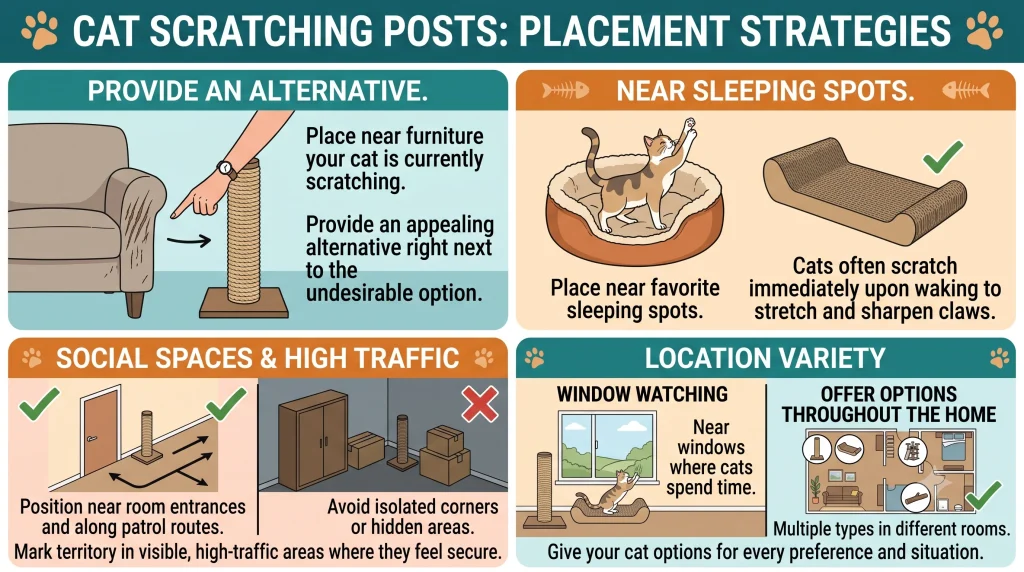
Where you put the scratching post matters as much as the post itself. Place scratching posts near the furniture your cat is currently scratching. You are providing an appealing alternative right next to the undesirable option. Place posts near your cat’s favorite sleeping spots because cats often scratch immediately upon waking to stretch and sharpen claws. Position posts near room entrances and along common patrol routes because cats scratch to mark territory in high traffic areas.
Avoid placing posts in isolated corners or hidden areas because cats scratch in social spaces where they feel secure and visible. The post should be in the same room where your cat naturally scratches, not in a different room. Place scratching posts near windows where cats spend time watching outdoor activity. Vertical scratchers, horizontal scratchers, and angled scratchers placed in different locations throughout the home give your cat options for every preference and situation.
Training Your Cat to Use Scratching Posts
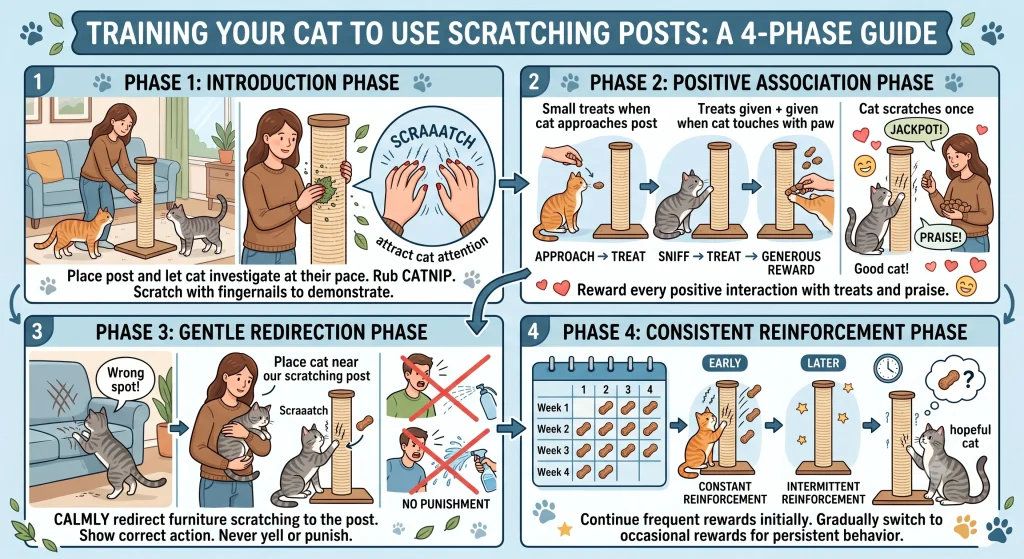
Introduction Phase
When you bring home a new scratching post, place it in the desired location and let your cat investigate it at their own pace. Rub catnip on the post to make it more attractive. Scratch the post yourself with your fingernails to demonstrate the action and create sound that attracts your cat’s attention. Some cats take to new posts immediately while others need several days of exposure before showing interest.
Positive Association Phase
When your cat approaches the post, reward them with a treat. When they sniff the post, treat. When they touch the post with a paw, treat generously. When they scratch the post even once, give a jackpot of multiple treats and enthusiastic verbal praise. The goal is to create such strong positive associations with the post that your cat chooses it over furniture naturally.
Gentle Redirection Phase
If you catch your cat scratching furniture, calmly pick them up and place them near the scratching post. Scratch the post yourself to attract their attention. When they scratch the post, reward immediately. Never yell, spray water, or punish your cat for scratching furniture. Punishment creates fear and anxiety that increases scratching rather than reducing it. It also damages your relationship with your cat and makes them less likely to cooperate with training.
Consistent Reinforcement Phase
Continue rewarding your cat every time they use the scratching post for the first several weeks. Gradually reduce to intermittent reinforcement, rewarding occasionally rather than every time. Intermittent reinforcement actually makes behaviors more persistent than constant reinforcement because the cat never knows which scratch will earn a reward, so they keep scratching the post hoping for the next treat.
Furniture Deterrent Methods
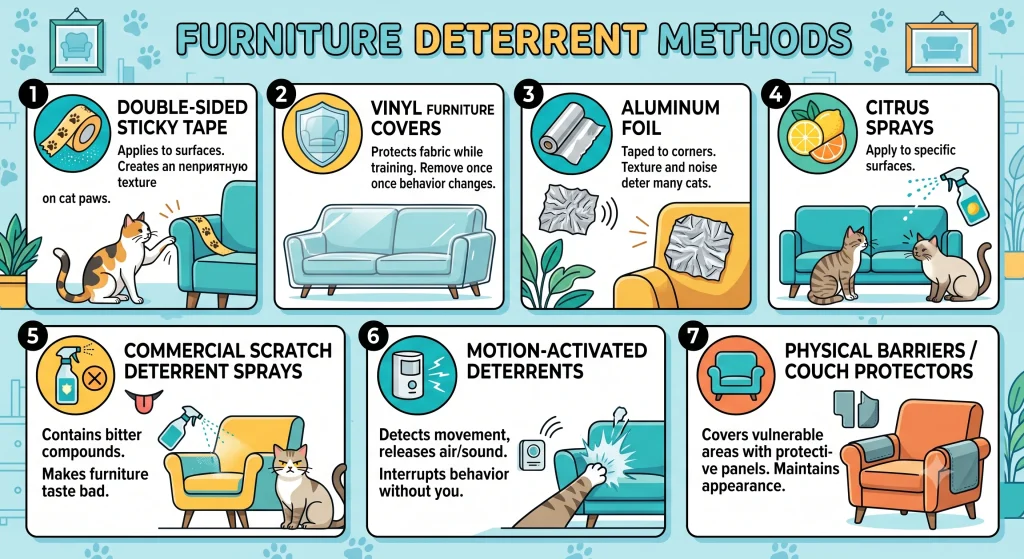
Double sided sticky tape applied to furniture surfaces creates an unpleasant texture that cats dislike. When they touch it with their paws, they pull back and seek a different surface. Vinyl furniture covers protect fabric while you are training and can be removed once the behavior changes. Aluminum foil taped to furniture arms and corners deters many cats because of the texture and sound.
Citrus sprays applied to furniture create a scent that most cats find unpleasant. Commercial scratch deterrent sprays containing bitter compounds make furniture taste bad when cats mouth or scratch it. Motion activated deterrents that release a burst of air or sound when scratching is detected can interrupt the behavior without your presence. Physical barriers like couch protectors designed specifically for cat scratch prevention cover the most vulnerable areas while maintaining furniture appearance.
Repairing Existing Damage
Fabric repair kits can patch small scratches and tears in upholstered furniture. For carpet damage, trim loose loops rather than pulling them, which worsens the damage. Scratched wood can be repaired with wood filler, sanding, and refinishing for deeper damage, or with furniture markers for superficial marks. Once you have repaired the damage and implemented deterrent measures, continue the training process to prevent recurrence.
Expert Tips From My Practice
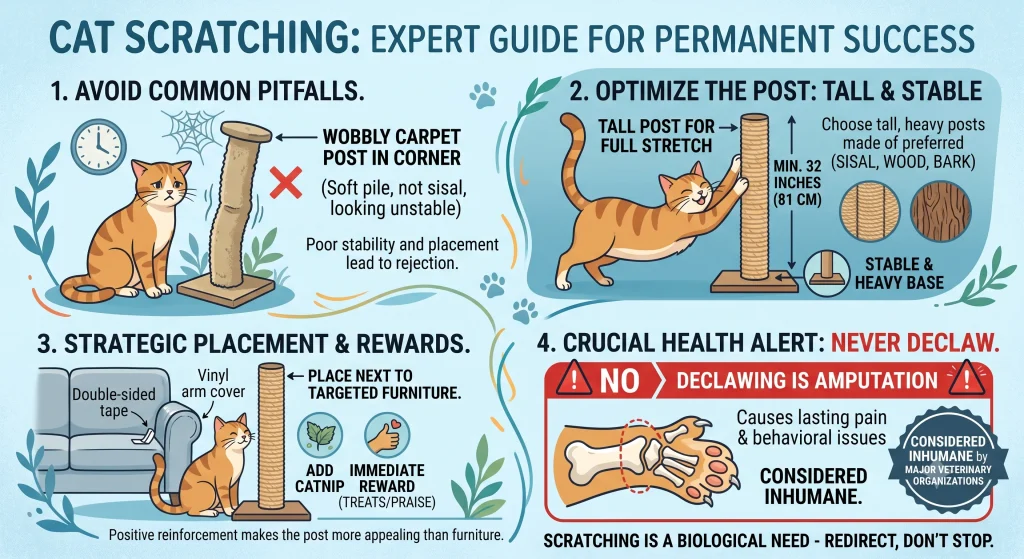
The biggest mistake I see is owners buying a cheap carpet covered post that wobbles when the cat scratches it, placing it in a corner where the cat never goes, and then wondering why the cat prefers the couch.
The scratching post must be tall enough for a full stretch, stable enough to not move, made of material your cat prefers, and placed where your cat naturally scratches. If your cat ignores a post, it is almost always because one of these criteria is not met. Invest in a quality post, place it strategically, add catnip, and reward your cat for using it. Within a few weeks most cats switch their scratching preference to the new post. I have seen this work hundreds of times.
- Never declaw your cat. Declawing is amputation that causes lasting pain, behavioral problems, and is considered inhumane by most veterinary organizations.
- Scratching is a biological need. You cannot stop it entirely, but you can redirect it to appropriate surfaces.
- Post height matters. At least thirty two inches tall for most adult cats to fully stretch.
- Stability is essential. A wobbly post will be rejected permanently.
- Place posts where cats scratch. Right next to the furniture they are currently targeting.
- Reward post scratching immediately. Positive reinforcement makes the post more appealing than furniture.
- Use deterrents on furniture. Double sided tape and vinyl covers protect surfaces during training.
- Provide multiple options. At least one scratching option per room plus one extra.
FAQ
Why does my cat scratch my furniture?
Cats scratch to sharpen claws, stretch muscles, mark territory with scent glands, and relieve stress. It is a biological need, not a behavioral problem.
Can I stop my cat from scratching entirely?
No. Scratching is essential for claw health and psychological wellbeing. The goal is redirecting scratching to appropriate surfaces, not eliminating it.
What type of scratching post do cats prefer?
Most cats prefer tall, stable posts covered in sisal rope or fabric. Corrugated cardboard is another popular option. Avoid carpet covered posts if possible.
How tall should a scratching post be?
At least thirty two inches for most adult cats. The post must allow your cat to fully stretch their body while scratching.
Where should I place scratching posts?
Near furniture your cat currently scratches, near sleeping spots, near room entrances, and along patrol routes. Never hide posts in isolated corners.
Should I punish my cat for scratching furniture?
No. Punishment creates fear and anxiety that increases scratching. It also damages your relationship. Redirect and reward appropriate scratching instead.
Does catnip help attract cats to scratching posts?
Yes. Rubbing catnip on new posts makes them more appealing and encourages investigation. Many cats respond strongly to catnip scent.
How do I repair scratched furniture?
Fabric repair kits, vinyl covers, wood filler, and furniture markers can repair existing damage. Deterrents prevent further scratching during training.
Will my cat eventually stop scratching furniture?
With consistent training and attractive alternatives, most cats significantly reduce furniture scratching within a few weeks. Some management is always needed.
Is declawing a solution to scratching?
No. Declawing is surgical amputation that causes chronic pain, litter box problems, and increased biting. It is banned in many countries and opposed by most veterinary organizations.