

Table of Contents
Cat Cancer Complete Guide to Early Signs Types and Treatment Options
You feel a lump on your cat’s side while petting them one evening. It was not there last week, or maybe it was and you just did not notice. Your mind races with worst case scenarios, and you schedule a veterinary appointment the next morning. The vet examines the lump, takes a needle sample, and tells you it needs to be biopsied. You spend the next week terrified, Googling cat cancer survival rates at two in the morning, imagining the worst. Then the results come back, and it is a benign fatty tumor called a lipoma, completely harmless.
Or maybe the results come back as something more serious, and now you face decisions about surgery, chemotherapy, and your cat’s quality of life. Cancer in cats is not as common as it is in dogs, but it is still one of the leading causes of death in cats over ten years old. The difference between a good outcome and a devastating one often comes down to early detection and understanding which lumps, bumps, and behavioral changes warrant immediate investigation.
📚 Recommended Cat Guides
🐱 The Trainable Cat Book
Learn proven methods to train your cat and stop unwanted behaviors.
View Book →❤️ Complete Cat Care Manual
Your complete guide to cat nutrition, health, grooming, behavior, and daily care.
Get the Manual →As a certified veterinary expert and professional cat behaviorist, I have guided countless owners through the cancer diagnosis journey, from the initial panic of finding a lump to making informed treatment decisions. Some of those cats were treated successfully and went on to live years of quality life. Others had aggressive cancers where the focus shifted to comfort and palliative care.
This guide covers the most common types of cancer in cats, the early warning signs that every owner should know, how veterinarians diagnose and stage cancer, treatment options including surgery, chemotherapy, and radiation, palliative care for advanced cases, and how to support your cat through treatment. Knowledge is power when it comes to cancer. Understanding the signs and knowing your options transforms fear into action and gives your cat the best possible chance at a positive outcome.
Most Common Types of Cancer in Cats
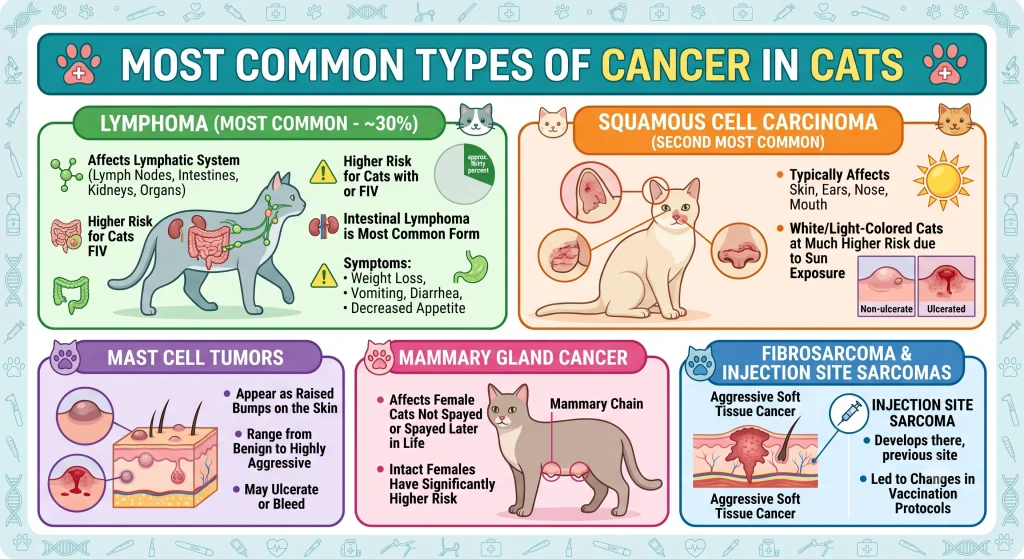
Lymphoma is the most common cancer in cats, accounting for approximately thirty percent of all feline cancers. Lymphoma affects the lymphatic system and can develop in the lymph nodes, intestines, kidneys, or other organs. Cats with feline leukemia virus or feline immunodeficiency virus are at significantly higher risk for lymphoma. Intestinal lymphoma is the most common form, presenting with weight loss, vomiting, diarrhea, and decreased appetite. Squamous cell carcinoma is the second most common cancer in cats and typically affects the skin, ears, nose, and mouth.
White cats and cats with light colored ears and noses are at much higher risk due to sun exposure. Mast cell tumors are common skin tumors in cats that can range from benign to highly aggressive. They often appear as raised bumps on the skin that may ulcerate or bleed.
Mammary gland cancer affects female cats that were not spayed or were spayed later in life. Intact females have a significantly higher risk. Fibrosarcoma is an aggressive soft tissue cancer that develops under the skin and can invade surrounding tissues. Injection site sarcomas, which develop at previous vaccination or injection sites, are a specific subtype that has led to changes in vaccination protocols.
Early Warning Signs of Cancer in Cats
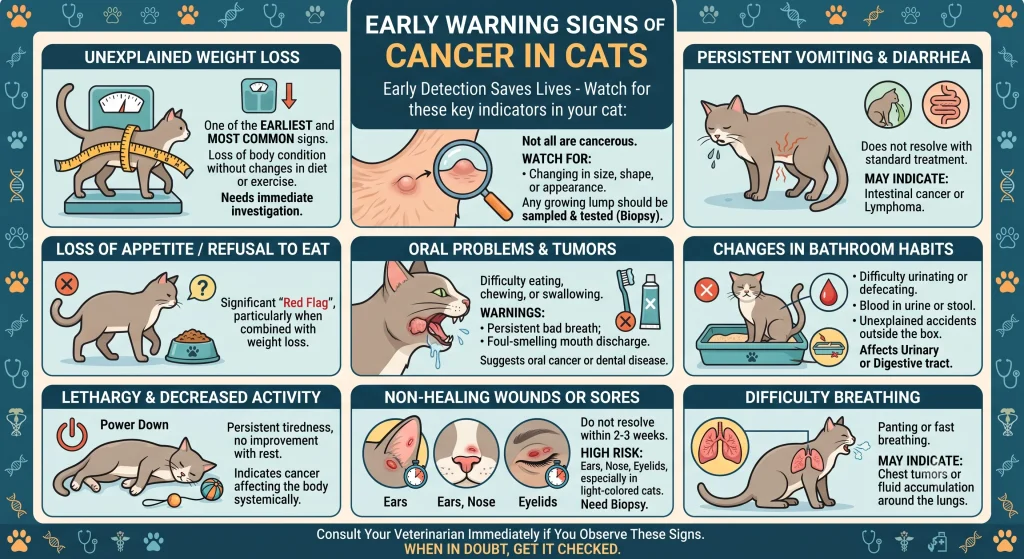
Unexplained weight loss is one of the earliest and most common signs of cancer in cats. If your cat is losing weight without a change in diet or exercise, veterinary investigation is warranted. Lumps and bumps that change in size, shape, or appearance over time need evaluation. Not all lumps are cancerous, but any new lump or one that is growing should be sampled and tested. Persistent vomiting or diarrhea that does not resolve with standard treatment may indicate intestinal cancer or lymphoma. Loss of appetite or refusal to eat, particularly combined with weight loss, is a significant red flag. Difficulty eating, chewing, or swallowing may indicate oral tumors.
Persistent bad breath or foul smelling discharge from the mouth suggests dental disease or oral cancer. Changes in bathroom habits, including difficulty urinating or defecating, blood in urine or stool, or unexplained accidents outside the box, may indicate tumors affecting the urinary or digestive tract. Lethargy and decreased activity levels that do not improve with rest may indicate cancer affecting the body systemically. Non healing wounds or sores that do not resolve within two to three weeks need biopsy, particularly on the ears, nose, or eyelids of light colored cats. Difficulty breathing or increased respiratory rate may indicate chest tumors or fluid accumulation around the lungs.
How Veterinarians Diagnose Cancer
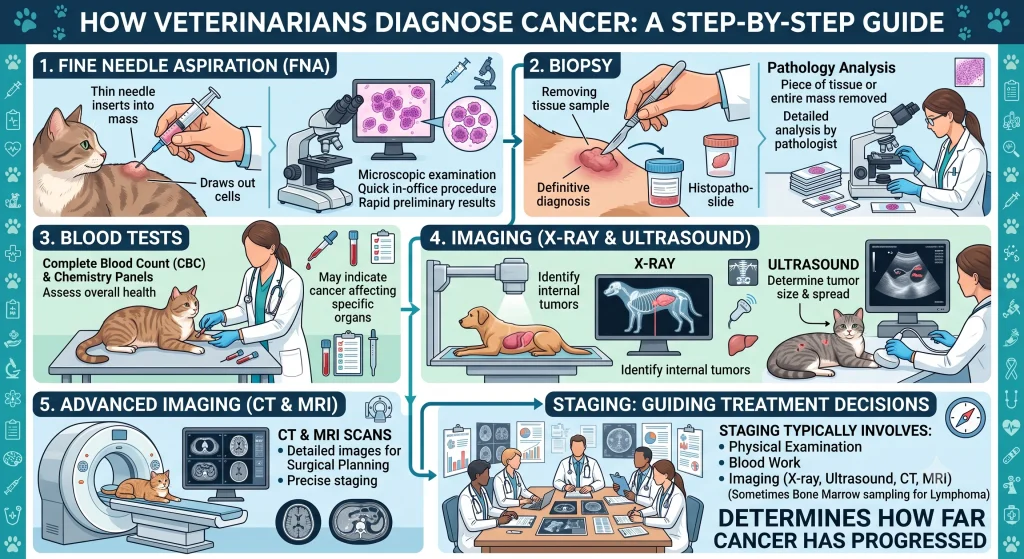
Fine needle aspiration is the first step in diagnosing most lumps and bumps. The veterinarian inserts a thin needle into the mass and draws out cells for microscopic examination. This quick in office procedure provides rapid preliminary results. A definitive diagnosis requires a biopsy, where a piece of the tissue or the entire mass is removed and sent to a veterinary pathologist for detailed analysis.
Blood tests, including complete blood count and chemistry panels, assess overall health and may indicate cancer affecting specific organs. Imaging, including x rays and ultrasound, identifies internal tumors and determines whether cancer has spread to other organs. CT scans and MRIs provide detailed images for surgical planning and staging. Staging determines how far the cancer has progressed and guides treatment decisions. Staging typically involves physical examination, blood work, imaging, and sometimes bone marrow sampling for lymphoma cases.
Treatment Options for Cancer in Cats
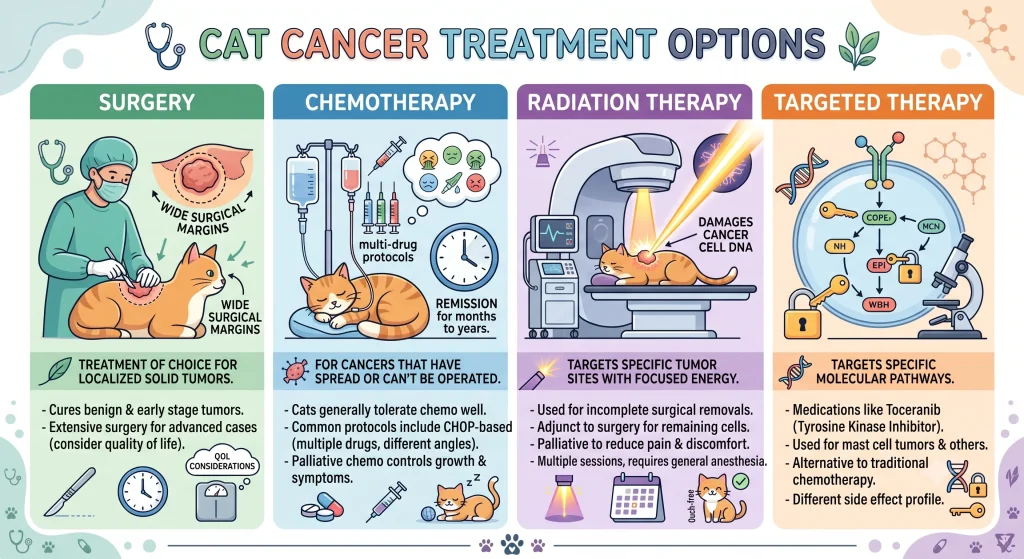
Surgery
Surgical removal is the treatment of choice for most solid tumors that have not spread. Wide surgical margins, meaning removal of the tumor along with a surrounding margin of healthy tissue, reduce the likelihood of recurrence. Benign tumors and early stage malignant tumors are often cured with surgery alone. Advanced tumors may require extensive surgery that impacts quality of life, which must be carefully considered.
Chemotherapy
Chemotherapy is used for cancers that have spread or are not amenable to surgical removal. Lymphoma responds well to multi drug chemotherapy protocols, with many cats achieving remission for months to years. Cats generally tolerate chemotherapy better than humans, with fewer and less severe side effects. Common protocols include CHOP based treatments that combine multiple drugs to target cancer cells from different angles. Palliative chemotherapy, which is lower dose treatment aimed at controlling growth and symptoms rather than achieving cure, is appropriate for advanced cases where quality of life is the priority.
Radiation Therapy
Radiation therapy targets specific tumor sites with focused energy that damages cancer cell DNA. It is used for tumors that cannot be completely removed surgically, as an adjunct to surgery to kill remaining cancer cells, and for palliative treatment to reduce pain and discomfort from advanced tumors. Radiation typically requires multiple treatment sessions under general anesthesia.
Targeted Therapy
Tyrosine kinase inhibitors like toceranib target specific molecular pathways involved in cancer cell growth. These medications are used for mast cell tumors and some other tumor types. They offer an alternative to traditional chemotherapy with a different side effect profile.
Palliative Care for Advanced Cancer
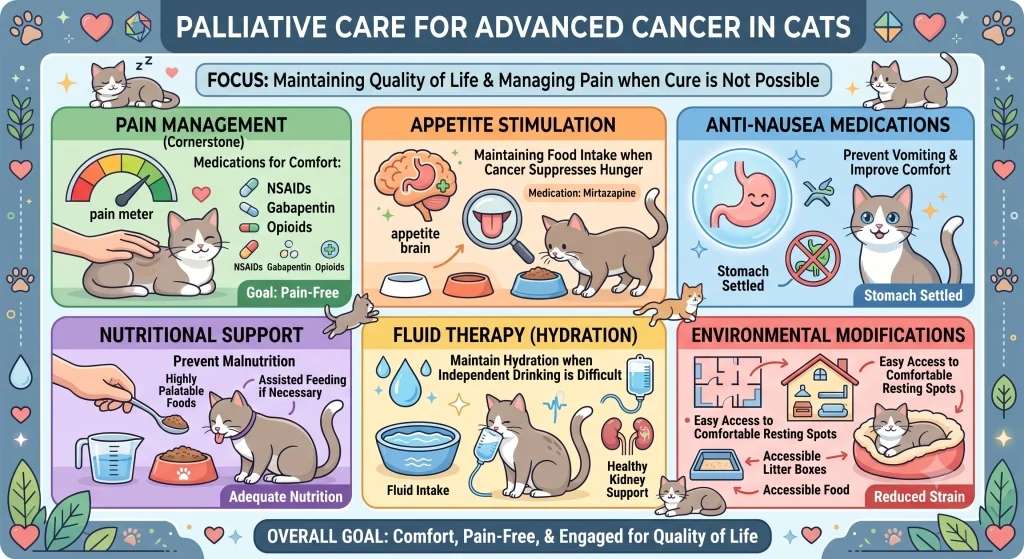
When cure is not achievable, palliative care focuses on maintaining quality of life and managing pain. Pain management is the cornerstone of palliative care, with medications including NSAIDs, gabapentin, and opioids as needed to keep the cat comfortable. Appetite stimulants like mirtazapine help maintain food intake when cancer suppresses hunger.
Anti nausea medications prevent vomiting and improve comfort. Nutritional support, including highly palatable foods and assisted feeding if necessary, prevents malnutrition. Fluid therapy maintains hydration when the cat cannot drink enough independently. Environmental modifications, including easy access to comfortable resting spots, litter boxes, and food, reduce physical stress. The goal of palliative care is to keep your cat comfortable, pain free, and engaged with their family for as long as their quality of life remains acceptable.
Supporting Your Cat Through Cancer Treatment
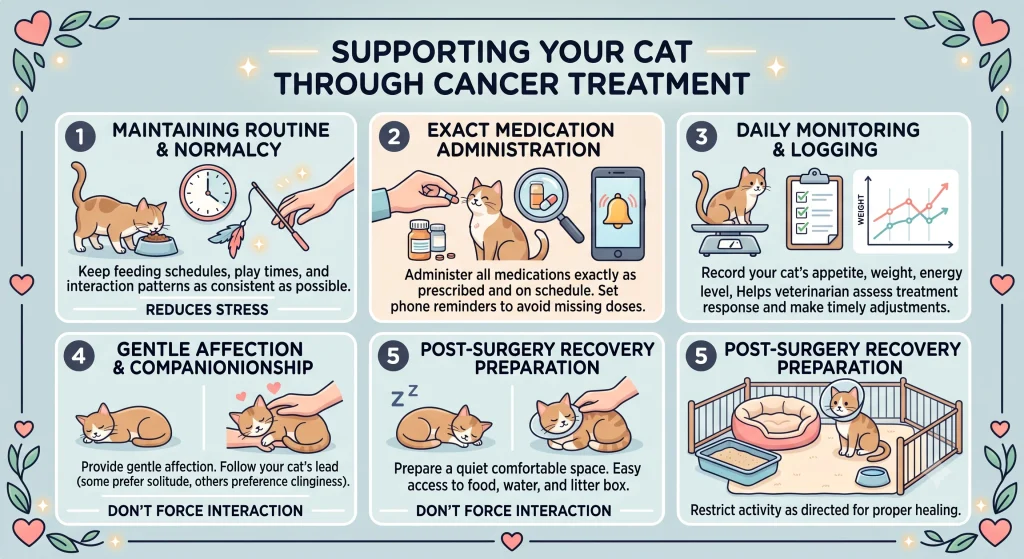
Maintaining routine and normalcy reduces stress during treatment. Keep feeding schedules, play times, and interaction patterns as consistent as possible. Administer all medications exactly as prescribed and on schedule. Set phone reminders if needed to ensure no doses are missed. Monitor and record your cat’s appetite, weight, energy level, and symptoms daily.
This log helps your veterinarian assess treatment response and make timely adjustments. Provide gentle affection and companionship without forcing interaction. Some cats become more clingy during illness while others prefer solitude. Follow your cat’s lead. Prepare for recovery after surgery by setting up a quiet comfortable space with easy access to food, water, and a litter box. Restrict activity as directed by your veterinarian to allow proper healing.
Expert Tips From My Practice
The most important thing I tell owners facing a cancer diagnosis is to gather information before making decisions. Cancer is scary, and the initial fear can drive impulsive choices that may not be in your cat’s best interest. Take a breath, ask your veterinarian questions, understand the specific type and stage of cancer, learn about the realistic treatment options and their outcomes, and then make an informed decision based on your cat’s quality of life and your family’s circumstances.
Not every cancer needs aggressive treatment, and not every cancer is untreatable. Some cats live wonderful lives with managed cancer, and some cats are better served by focusing on comfort rather than cure. There is no wrong answer when the decision is made with your cat’s best interest at the center.
- Early detection saves lives. Check your cat regularly for new lumps, bumps, and changes.
- Not all lumps are cancerous. But any new or growing lump needs veterinary evaluation.
- Cats tolerate chemotherapy better than humans. Side effects are generally mild and manageable.
- Lymphoma responds well to treatment. Many cats achieve remission for months to years.
- White cats need sun protection. Squamous cell carcinoma risk is much higher in light colored cats.
- Palliative care is not giving up. It is a compassionate choice focused on comfort and quality of life.
- Keep a symptom log. Daily records help your vet assess treatment response accurately.
- Make informed decisions. Gather information before choosing treatment paths.
FAQ
What are the most common cancers in cats?
Lymphoma is the most common, followed by squamous cell carcinoma, mast cell tumors, mammary cancer, and fibrosarcoma. Lymphoma accounts for approximately thirty percent of feline cancers.
How do I know if a lump on my cat is cancerous?
Only a biopsy can definitively determine whether a lump is cancerous. Any new lump or one that is changing should be aspirated or biopsied by your veterinarian.
Can cancer in cats be cured?
Some cancers, particularly those detected early and removed completely with surgery, can be cured. Advanced or metastatic cancers are managed rather than cured, with focus on quality of life.
Do cats lose their hair during chemotherapy?
Cats generally do not lose their fur during chemotherapy the way humans do. Some cats may experience minor thinning, but significant hair loss is uncommon in feline chemotherapy.
Is chemotherapy worth it for cats?
Many cats tolerate chemotherapy well with minimal side effects and achieve significant quality of life improvement or remission. The decision depends on the cancer type, stage, and your cat’s overall health.
How long do cats live after a cancer diagnosis?
Life expectancy varies enormously depending on cancer type, stage, and treatment. Some cats live months, others live years. Early detection and appropriate treatment significantly extend survival.
What is injection site sarcoma?
A rare but aggressive cancer that develops at previous vaccination or injection sites. It has led to changes in vaccination protocols.
Should I protect my white cat from the sun?
Yes. White cats and cats with light colored ears and noses are at much higher risk for squamous cell carcinoma from UV exposure. Keep indoor cats away from prolonged sun exposure through windows.
How can I support my cat during cancer treatment?
Maintain routine, administer medications on schedule, monitor symptoms daily, provide gentle companionship, and follow your veterinarian’s care instructions precisely.
When is palliative care the right choice?
When cure is not achievable or when treatment side effects outweigh benefits, palliative care focuses on comfort and quality of life. It is a compassionate and appropriate choice for advanced cancer.