

Table of Contents
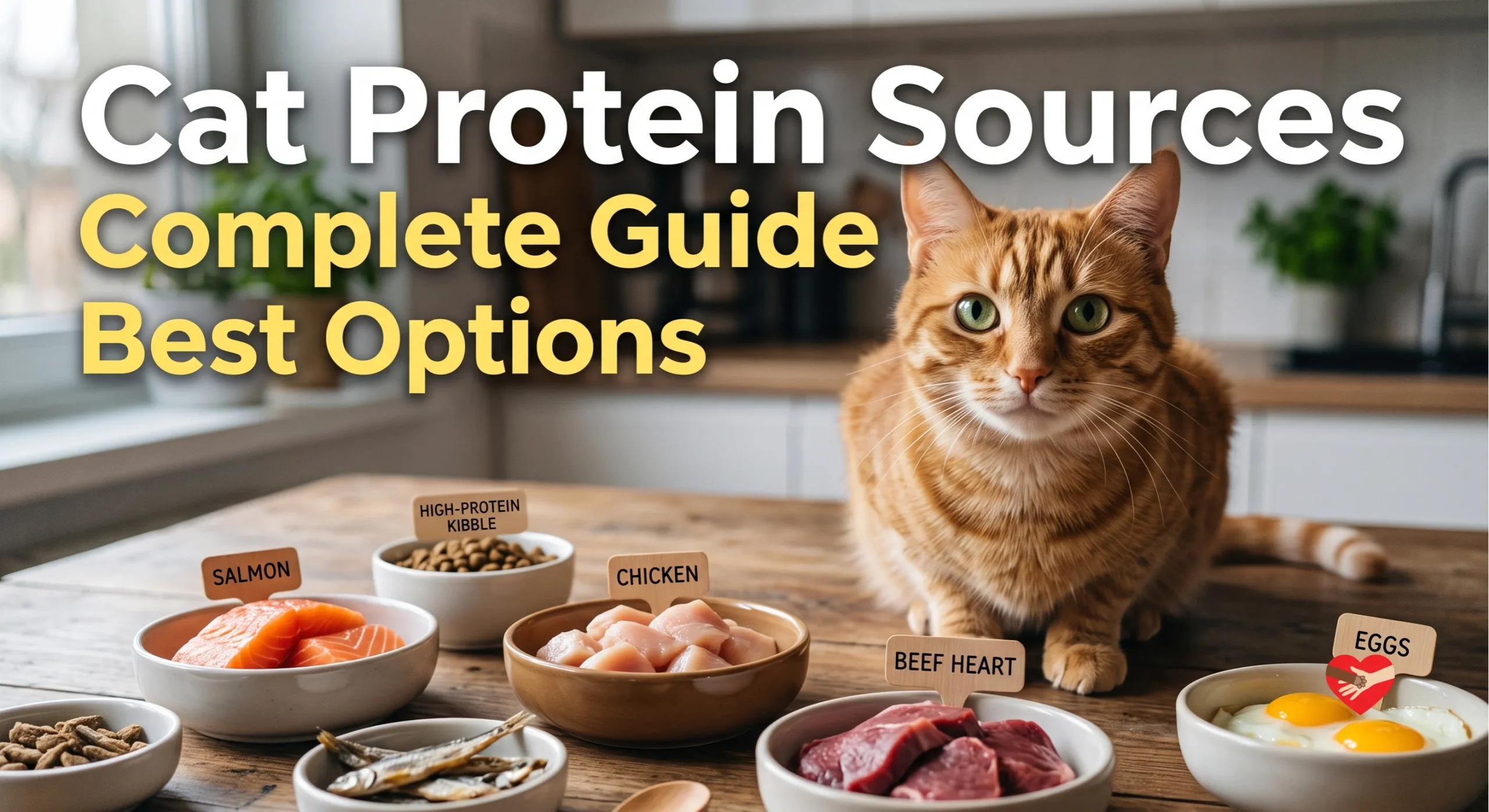
Cat Protein Sources Complete Guide to Best Options for Your Cat
You stand in the pet food aisle reading ingredient lists and realizing you have no idea what you are looking at. Chicken, chicken meal, chicken by-product meal, turkey, turkey meal, salmon, fish meal. The labels all say high protein, but you are not sure which sources are actually good for your cat. Maybe your cat has allergies and you need to figure out novel proteins.
Maybe your cat is picky and only eats one type of meat. Maybe you are trying to choose between chicken and fish based food and you have no idea which is healthier. Protein is the most important nutrient in your cat’s diet, but not all protein sources are created equal, and the differences matter for your cat’s health, digestion, and long term wellbeing.
As a certified veterinary expert and professional cat behaviorist, I have spent years evaluating cat foods and helping owners choose appropriate protein sources for their individual cats. Cats are obligate carnivores, which means their bodies are designed to get nutrition from animal tissues. They require specific amino acids that only animal proteins can provide in adequate amounts. Taurine, arginine, methionine, and cysteine are essential amino acids that cats cannot synthesize and must obtain from the meat they eat.
Plant proteins do not provide these amino acids in the right proportions or forms for feline nutrition. This guide covers the best animal protein sources for cats, the differences between whole meats and meals, novel proteins for cats with allergies, plant proteins and why they are inadequate, how to evaluate protein quality on food labels, and the best protein choices for specific health conditions including kidney disease, diabetes, and food allergies.
📚 Recommended Cat Guides
🐱 The Trainable Cat Book
Learn proven methods to train your cat and stop unwanted behaviors.
View Book →❤️ Complete Cat Care Manual
Your complete guide to cat nutrition, health, grooming, behavior, and daily care.
Get the Manual →Why Animal Protein Is Essential for Cats
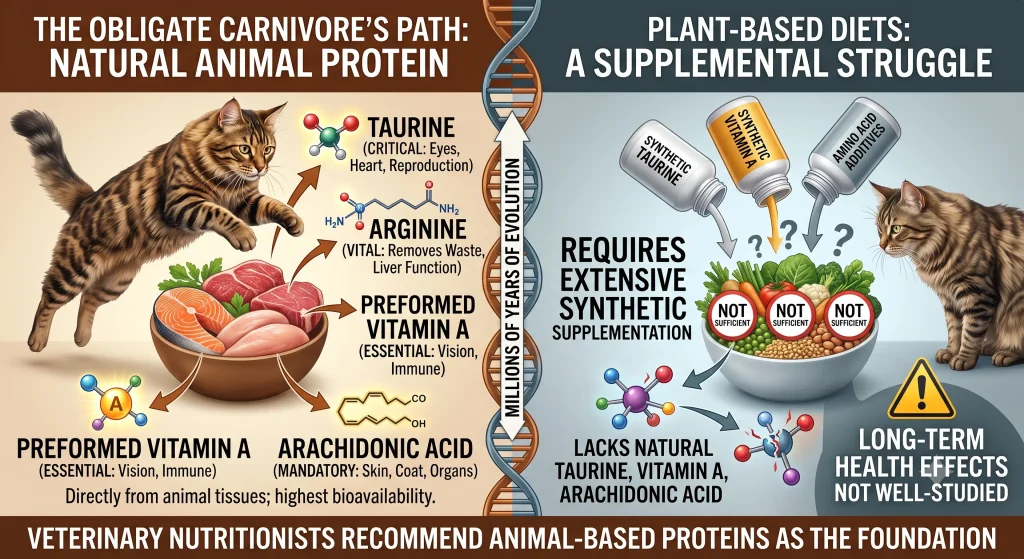
Cats evolved as obligate carnivores over millions of years. Their digestive systems, metabolism, and nutritional requirements are specifically adapted to a diet of animal tissues. Unlike dogs, which have evolved some ability to digest plant materials, cats retain the strict nutritional requirements of their wild ancestors. The most critical difference is taurine.
Taurine is an amino acid found exclusively in animal tissues. Dogs and humans can synthesize taurine from other amino acids, but cats cannot produce enough to meet their needs. They must obtain taurine directly from the meat they eat. Taurine deficiency causes blindness, heart disease, and reproductive failure in cats. Every commercial cat food that meets AAFCO standards includes sufficient taurine, but the quality and bioavailability of that taurine depends on the protein source. Animal proteins naturally contain taurine, while plant proteins do not.
Beyond taurine, cats require high levels of arginine, another amino acid found primarily in animal tissues. Arginine deficiency in cats causes rapid onset of severe illness including vomiting, muscle tremors, and even death within hours. Cats also require preformed vitamin A and arachidonic acid, both of which are found naturally in animal tissues but must be synthetically added to plant based diets.
Feeding a cat a diet based primarily on plant proteins, like many vegetarian or vegan cat foods, requires extensive synthetic supplementation to meet basic nutritional requirements. While these diets can be formulated to meet AAFCO standards, the long term health effects of feeding cats plant based proteins with synthetic additives are not well studied. Most veterinary nutritionists recommend animal based proteins as the foundation of a healthy cat diet.
Best Animal Protein Sources for Cats
Chicken
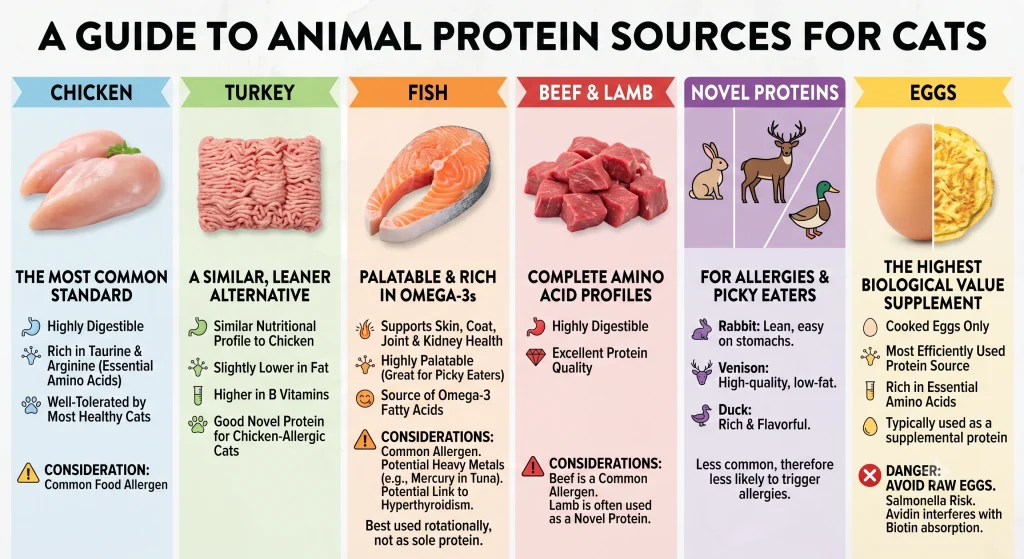
Chicken is the most common protein source in commercial cat foods and for good reason. It is highly digestible, rich in essential amino acids, and generally well tolerated by most cats. Chicken provides high levels of taurine, arginine, and other essential amino acids in forms that cats can use efficiently. Whole chicken, chicken meal, and chicken by-products all provide excellent protein quality, though the specific processing methods affect digestibility and nutrient concentration.
Chicken is an appropriate protein source for most healthy cats. However, chicken is also one of the most common food allergens in cats, along with beef and fish. Cats that develop allergic reactions to chicken may need alternative protein sources.
Turkey
Turkey is very similar to chicken in nutritional profile but is slightly lower in fat and higher in certain B vitamins. Turkey provides excellent protein quality with high digestibility. Many cats that are allergic to chicken can tolerate turkey because the protein structures are different enough that the immune system does not cross react in most cases. Turkey is an excellent option for cats that need a novel protein after developing chicken allergies. Turkey meal provides concentrated protein and is commonly used in premium cat foods.
Fish
Fish provides high quality protein along with beneficial omega-three fatty acids that support skin, coat, joint, and kidney health. Salmon, tuna, whitefish, and sardines are common fish protein sources in cat foods. Fish is highly palatable, meaning most cats love the taste, which makes fish based foods useful for picky eaters. However, fish based diets have some concerns. Fish is a common allergen in cats, and some cats develop fish allergies after prolonged exposure. Fish based diets may contain higher levels of heavy metals including mercury, particularly large predatory fish like tuna.
Some cats on exclusive fish diets develop hyperthyroidism, though the exact relationship is still being studied. Fish is best used as part of a rotational diet rather than the sole protein source for life.
Beef and Lamb
Beef and lamb provide excellent protein quality but are less commonly used in cat foods than chicken or fish. Both are highly digestible and provide complete amino acid profiles. Beef is a common allergen in cats, so it is not ideal for cats with suspected food allergies unless they have been specifically tested and found to tolerate it. Lamb is often used as a novel protein in limited ingredient diets for cats with allergies to more common proteins. Both beef and lamb are appropriate protein sources for cats that tolerate them well.
Rabbit, Venison, and Duck
Rabbit, venison, and duck are considered novel proteins, meaning they are less commonly used in cat foods and therefore less likely to trigger allergic reactions. These protein sources are excellent options for cats with confirmed food allergies to chicken, beef, or fish. Rabbit is particularly lean and highly digestible, making it appropriate for cats with sensitive stomachs. Venison provides high quality protein with low fat content. Duck is richer and more flavorful, making it appealing for picky eaters. Novel protein diets are typically more expensive than chicken or fish based diets, but they provide essential nutrition for cats that cannot tolerate common proteins.
Eggs
Eggs are an excellent protein source with the highest biological value of any protein, meaning the protein in eggs is more efficiently used by the body than protein from almost any other source. Cooked eggs provide highly digestible protein rich in essential amino acids. Raw eggs should be avoided due to the risk of salmonella and the presence of avidin, a protein that interferes with biotin absorption. Cooking destroys avidin and eliminates the bacterial risk. Eggs are not typically used as the primary protein source in commercial cat foods but are included as a supplemental protein in many formulations.
Whole Meat vs Meat Meal vs By-Products
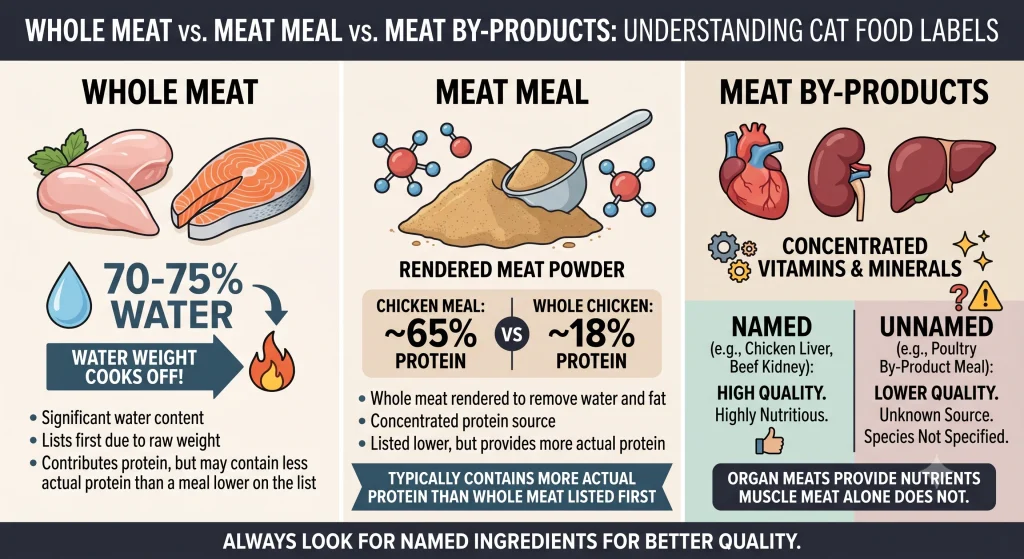
Understanding the difference between whole meat, meat meal, and meat by-products is essential for evaluating cat food labels. Whole meat, like chicken or salmon, contains approximately seventy to seventy-five percent water. When whole meat is listed as the first ingredient, it contributes protein but also significant water weight that cooks off during processing. This means a food listing whole chicken as the first ingredient may actually contain less chicken protein than a food listing chicken meal lower on the list. Meat meal is whole meat that has been rendered to remove most of the water and fat, leaving a concentrated protein powder.
Chicken meal contains approximately sixty-five percent protein compared to about eighteen percent protein in whole chicken. Foods listing meat meal as the first ingredient typically contain more actual meat protein than foods listing whole meat first. Meat by-products include organ meats like liver, kidneys, and hearts, as well as other non-muscle tissues. Organ meats are highly nutritious and provide concentrated sources of vitamins and minerals that muscle meat alone does not provide. Named meat by-products, like chicken liver or beef liver, are high quality ingredients. Unnamed meat by-products, like poultry by-product meal without species specification, are lower quality because the source is unknown.
Plant Proteins in Cat Food
Plant proteins including corn gluten meal, soybean meal, wheat gluten, and pea protein are used in some cat foods to increase total protein content at lower cost than animal proteins. These plant proteins are incomplete for cats because they lack adequate levels of taurine, arginine, and other essential amino acids. While synthetic amino acids can be added to compensate, the bioavailability and long term effects of synthetic amino acid supplementation in plant based diets are not as well understood as the natural amino acid profiles in animal proteins.
Additionally, plant proteins are less digestible for cats than animal proteins, meaning more of the protein passes through the digestive system without being absorbed. This increases stool volume and places additional burden on the digestive system. High levels of plant proteins in cat food are associated with lower overall diet quality and are generally not recommended for optimal feline nutrition. If plant proteins appear in the top five ingredients of your cat’s food, the food likely relies too heavily on plant based protein sources and may not provide optimal nutrition.
Protein and Health Conditions
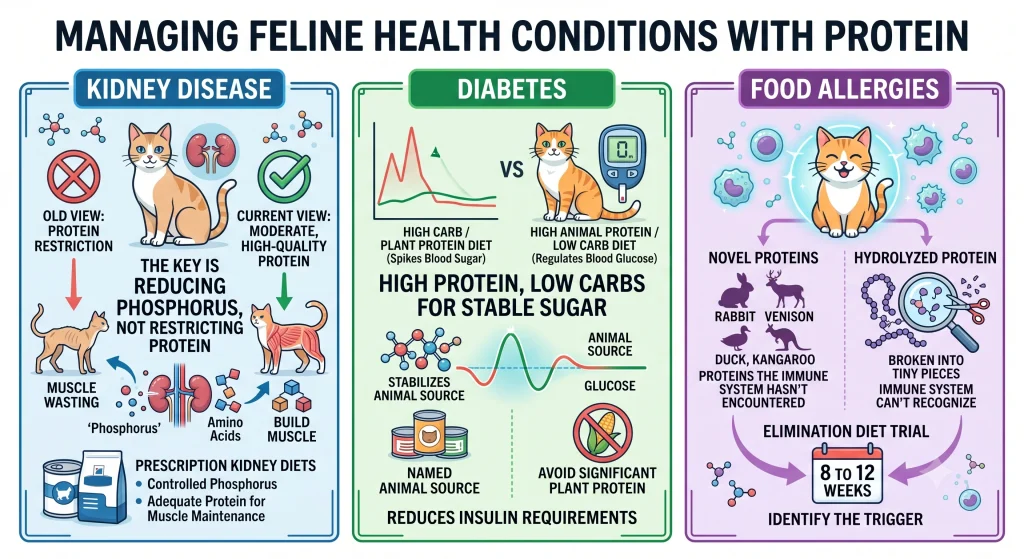
Kidney Disease
For cats with kidney disease, protein management becomes more complex. Restricting protein was once the standard recommendation for kidney disease, but current research shows that moderate, high quality protein is actually beneficial. The key is reducing phosphorus, which often accompanies protein, rather than restricting protein itself. High quality animal proteins with controlled phosphorus levels provide the amino acids cats need without overworking the kidneys.
Prescription kidney diets contain moderate protein from high quality sources with reduced phosphorus. The goal is providing adequate protein for muscle maintenance while minimizing phosphorus intake. Cats with kidney disease should not be fed low protein diets because protein restriction leads to muscle wasting and worsened outcomes.
Diabetes
Cats with diabetes benefit from high protein, low carbohydrate diets that help regulate blood glucose levels. Animal protein sources with minimal carbohydrates support stable blood sugar and reduce insulin requirements. Canned foods with high protein content from named animal sources are ideal for diabetic cats. Avoid foods with significant plant protein content, which often come with higher carbohydrate levels.
Food Allergies
Cats with food allergies need diets with novel or hydrolyzed protein sources. Novel proteins are animal proteins that the cat has not eaten before, so the immune system has not developed an allergic response. Common novel proteins include rabbit, venison, duck, and kangaroo. Hydrolyzed protein diets break the protein into such small pieces that the immune system cannot recognize them as allergens. These prescription diets are effective for cats with severe or multiple food allergies. Identifying the specific protein trigger requires an elimination diet trial over eight to twelve weeks.
Expert Tips From My Practice
The most common protein mistake I see is owners assuming that a food is high quality because it lists whole chicken as the first ingredient. They do not realize that whole chicken is mostly water, and the actual protein content depends on what comes after the chicken in the ingredient list. A food with whole chicken first followed by corn and wheat may contain less animal protein than a food with chicken meal listed fourth but followed by other animal ingredients. Read the guaranteed analysis for protein percentage, not just the ingredient list. A quality cat food should have protein content above forty percent on a dry matter basis from named animal sources.
- Animal protein should be the first ingredient. Look for named animal protein or named meat meal as the first ingredient in any cat food you buy.
- Rotate protein sources. Feeding a variety of animal proteins over time reduces the risk of developing food allergies to any single protein.
- Fish is best in moderation. Fish based diets are fine for occasional feeding but may not be ideal as a lifelong exclusive diet.
- Novel proteins for allergy cats. Rabbit, venison, duck, and kangaroo are excellent options for cats with protein allergies.
- Ignore marketing claims about protein. Read the guaranteed analysis and ingredient list. Marketing labels like high protein are unregulated.
- Consider your cat’s life stage. Kittens need higher protein than adults. Seniors need high quality protein to prevent muscle wasting.
- Wet food has better protein profiles. Canned foods typically contain higher proportions of animal protein and fewer carbohydrates than dry foods.
- Consult your vet for health conditions. Cats with kidney disease, diabetes, or allergies need specific protein recommendations from their veterinarian.
FAQ
What is the best protein source for cats?
Chicken, turkey, and fish are excellent protein sources for most cats. The best source depends on your cat’s individual tolerance, health status, and preferences. Rotating between different animal proteins provides nutritional diversity.
Can cats be vegetarian or vegan?
Cats are obligate carnivores and require nutrients found naturally only in animal tissues. While vegetarian diets can be formulated with synthetic supplements, most veterinary nutritionists recommend animal based proteins for optimal health. Vegan diets are not recommended for cats.
What is the difference between chicken and chicken meal?
Chicken is whole meat containing approximately seventy-five percent water. Chicken meal is rendered chicken with most water and fat removed, creating a concentrated protein powder. Chicken meal provides more actual protein per weight than whole chicken.
Is fish good for cats?
Fish provides high quality protein and omega-three fatty acids but has concerns including heavy metal accumulation and higher allergy risk. Fish is appropriate as part of a rotational diet but may not be ideal as the sole protein source for life.
What are novel proteins for cats?
Novel proteins are animal proteins that a cat has not eaten before, making them less likely to trigger allergic reactions. Common novel proteins include rabbit, venison, duck, and kangaroo. They are used in limited ingredient diets for cats with food allergies.
Can cats eat raw meat for protein?
Raw meat contains high quality protein but carries risks including bacterial contamination, parasites, and nutritional imbalances if not properly formulated. Commercial raw diets are formulated to be complete and balanced. Homemade raw diets require veterinary nutritionist guidance.
How much protein does my cat need?
Adult cats need approximately forty to fifty percent protein on a dry matter basis. Kittens need higher levels, around fifty to sixty percent. Senior cats need high quality protein to prevent muscle wasting. The specific amount depends on age, health, and activity level.
What protein is best for cats with allergies?
Novel proteins like rabbit, venison, duck, or hydrolyzed protein diets are best for cats with confirmed food allergies. An elimination diet trial identifies specific triggers. Once triggers are identified, avoid that protein source completely.
Are by-products bad for cats?
Named meat by-products from specified species, like chicken liver, are nutritious and provide concentrated vitamins and minerals. Unnamed by-products without species specification are lower quality. Named by-products are acceptable protein sources.
Can cats be allergic to chicken?
Yes, chicken is one of the most common food allergens in cats along with beef and fish. Signs of chicken allergy include skin itching, hair loss, ear infections, and digestive upset. A diet trial with a novel protein identifies the allergy.