

Table of Contents
Cat Hiding Behavior Complete Guide to Why Cats Hide and When to Worry
Your cat spends more time under the bed than in their usual sunny spot. They dart into the closet when company comes over. You have not seen them in three hours, and when you finally find them, they are squeezed behind the sofa in a spot you did not even know they could fit into. You wonder if something is wrong, if they are scared of something, or if this is just normal cat behavior.
Hiding is one of the most misunderstood behaviors in cats. Some hiding is completely normal and even healthy, an expression of your cat’s natural instinct to seek safety in enclosed spaces. But other hiding signals fear, stress, pain, or illness that needs your attention. The difference between normal hiding and problem hiding is subtle but critical to understand.
As a certified veterinary expert and professional cat behaviorist, I have worked with countless cats whose owners were concerned about hiding behavior. In some cases, the hiding was perfectly normal and the owner simply needed reassurance. In other cases, the hiding was the first sign of a medical emergency, an anxiety disorder, or a serious environmental stressor that needed immediate intervention.
This guide covers the evolutionary reasons cats hide, the difference between normal and concerning hiding behavior, the medical conditions that cause hiding, how to create a safe environment that reduces stress-related hiding, how to help a fearful cat feel more secure, and when hiding warrants a veterinary visit. Understanding why your cat hides is the first step toward knowing whether to leave them alone or seek help.
📚 Recommended Cat Guides
🐱 The Trainable Cat Book
Learn proven methods to train your cat and stop unwanted behaviors.
View Book →❤️ Complete Cat Care Manual
Your complete guide to cat nutrition, health, grooming, behavior, and daily care.
Get the Manual →Why Cats Hide: The Evolutionary Reason
Cats are both predator and prey in the natural world. They hunt small animals, but they are also hunted by larger predators. This dual role shaped their behavior in profound ways. Hiding is a survival strategy that serves two purposes. It protects the cat from predators who might spot them in the open, and it conceals the cat from potential prey that might be scared away by their presence.
Domestic cats retain these instincts even though they no longer face the same threats. A hiding spot makes your cat feel safe, secure, and in control of their environment. When your cat hides in a box, under the bed, or behind furniture, they are not being antisocial. They are following an instinct that kept their ancestors alive for millions of years.
The hiding instinct is strongest in certain situations. New environments trigger hiding because the cat does not know where threats may be hiding. Loud noises, unfamiliar people, and other animals all trigger the instinct to find a secure hiding spot. Even cats that are normally confident and social will hide when their environment changes or when they feel threatened. This is not a sign that your cat is broken or traumatized. It is a sign that their survival instincts are working exactly as they should.
Normal Hiding vs Concerning Hiding
The key difference between normal hiding and problematic hiding lies in the context, duration, and associated behaviors. Normal hiding follows predictable patterns. Your cat hides when visitors arrive but comes out after they settle down. They retreat to their favorite spot for a nap and emerge after a few hours. They hide during thunderstorms or fireworks but return to normal when the noise stops. They choose hiding spots that are accessible and come out readily when called for meals or treats.
Concerning hiding looks different. Your cat hides for extended periods, more than twelve hours at a time. They choose spots that are difficult to reach, suggesting they want to stay hidden rather than just rest. They do not come out for meals, treats, or their favorite activities. They show other signs of illness or distress including loss of appetite, lethargy, vomiting, diarrhea, or changes in litter box habits. They hide even when there are no obvious triggers like visitors or loud noises. They flinch or hiss when approached in their hiding spot. These patterns suggest the hiding is driven by fear, anxiety, or medical issues rather than normal instinct.
Common Reasons Cats Hide
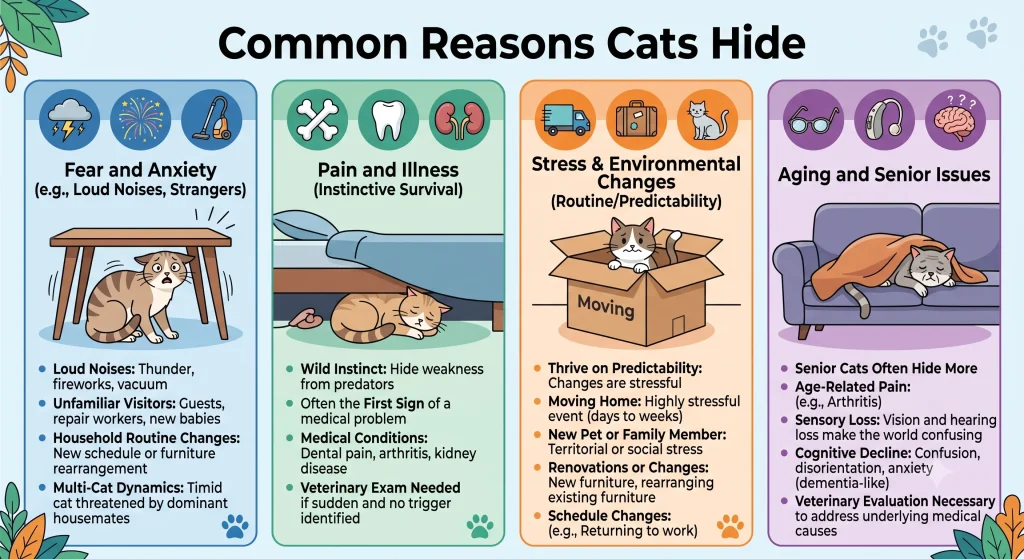
Fear and Anxiety
Fear is the most common cause of hiding behavior. Cats hide when they are frightened by something in their environment. Common fear triggers include loud noises like thunderstorms, fireworks, construction sounds, or vacuum cleaners. Unfamiliar visitors including house guests, repair workers, or new babies can trigger hiding because the cat does not know whether these new people are threats. Changes in the household routine, like a new work schedule or furniture rearrangement, can create enough uncertainty to trigger hiding. Multi-cat households often have one cat that hides more than others, usually the more timid or lower ranking cat who feels threatened by more dominant housemates.
Pain and Illness
Pain is a powerful trigger for hiding behavior. Cats instinctively hide when they are injured or ill because showing weakness in the wild makes them vulnerable to predators. This survival instinct means that hiding is often the first sign of a medical problem. Cats with dental pain, arthritis, urinary tract infections, pancreatitis, kidney disease, and many other conditions will hide before they show any other symptoms. If your cat suddenly starts hiding more than usual and you cannot identify an environmental trigger, a veterinary examination is warranted. The hiding may be the only clue your cat gives you that something is wrong.
Stress and Environmental Changes
Stress causes cats to withdraw and hide. Cats are creatures of habit who thrive on predictability. Changes that seem minor to humans can be deeply stressful to cats. Moving to a new home is one of the most stressful events for a cat and almost always triggers hiding for days to weeks. Adding a new pet or new family member creates territorial and social stress. Renovations, new furniture, or even rearranging existing furniture can disrupt a cat’s sense of security. Changes in your schedule, like returning to work after being home for an extended period, can cause stress-related hiding. Even positive changes like adopting a second cat can initially trigger hiding as the resident cat adjusts to the new dynamic.
Natural Personality and Temperament
Some cats are simply more inclined to hide than others. This is not a problem but a personality trait. Cats that were not adequately socialized as kittens, particularly kittens separated from their mother too early or kittens with limited human contact during the sensitive socialization period between two and seven weeks, are more likely to be cautious hiders as adults. Genetics also play a role. Some breeds are naturally more confident while others tend toward caution. A cat that has always been a cautious hider since kittenhood is likely expressing their natural temperament, not signaling a problem. The key is knowing your individual cat’s baseline behavior.
Nesting and Maternal Instincts
Pregnant cats hide when they are preparing to give birth. They seek out quiet, dark, secure locations where they can have their kittens safely. This nesting behavior is completely normal. Spayed female cats may also demonstrate nesting behavior, particularly if they are experiencing a false pregnancy. If your unspayed female cat suddenly starts hiding and showing nesting behavior, she may be pregnant or in heat and seeking a safe space for mating or delivery.
Aging and Cognitive Decline
Senior cats often hide more than younger cats. This can be due to several factors related to aging. Arthritis and other age-related pain conditions make cats want to hide where they feel safe from being bumped or jostled. Vision and hearing loss make the world more confusing and frightening, leading cats to retreat to familiar safe spaces. Cognitive dysfunction syndrome, similar to dementia in humans, causes confusion, disorientation, and anxiety that leads to increased hiding. Senior cats that suddenly start hiding more than usual should be evaluated by a veterinarian to identify and address underlying medical causes.
How to Help a Hiding Cat Feel Safe
Do Not Force Them Out
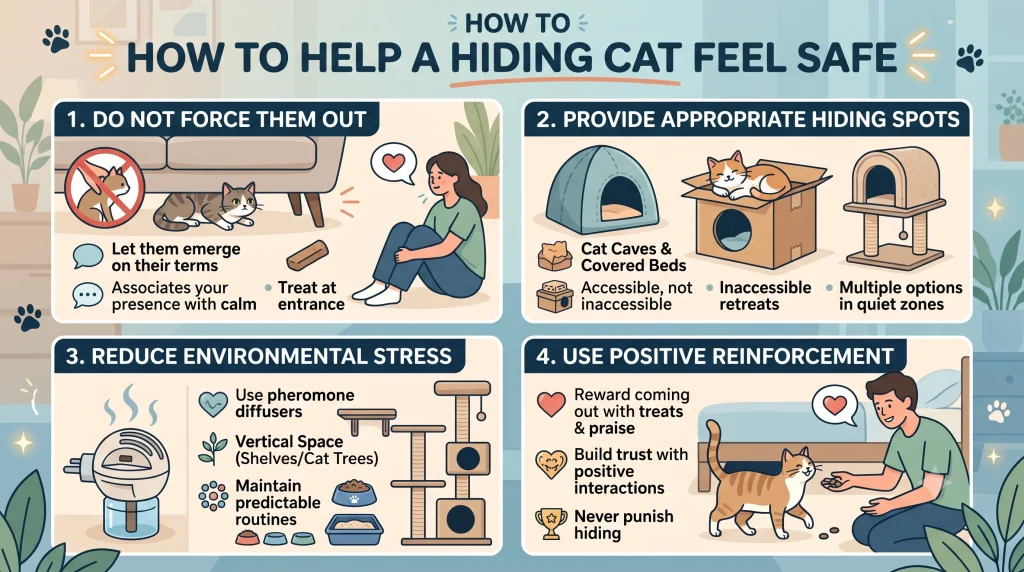
The most important rule when your cat is hiding is never force them out. Pulling a hiding cat from their spot confirms that their hiding spot is not safe and that you are a threat. It teaches them to find even more inaccessible hiding spots. Instead, let your cat come out on their own terms. Make the environment around their hiding spot calm and quiet. Sit nearby and speak softly. Offer treats at the entrance of their hiding spot without reaching in. Let them associate your presence with positive experiences.
Provide Appropriate Hiding Spots
Instead of trying to eliminate hiding, provide appropriate hiding spots where your cat can feel safe without disappearing into inaccessible areas. Cat caves, covered cat beds, cardboard boxes with entrance holes cut into them, and covered cat trees all provide secure hiding opportunities. Place these in quiet areas away from high traffic zones. Having multiple hiding options in different rooms allows your cat to feel safe wherever they are in the house. Cats that have appropriate hiding spots are actually more confident because they know they have a safe retreat available.
Reduce Environmental Stress
Identify and reduce the stressors that trigger hiding behavior. Use Feliway pheromone diffusers to create a calming environment. Maintain predictable routines for feeding, play, and interaction. Create vertical space with cat trees and shelves so your cat can observe from heights where they feel safe. Provide multiple resources including food bowls, water stations, litter boxes, and resting areas so your cat does not have to compete for access. Minimize loud noises and sudden changes when possible.
Use Positive Reinforcement
When your cat comes out of hiding on their own, reward them with treats, gentle praise, and calm interaction. This reinforces the behavior of coming out and creates positive associations with being visible. Never punish a cat for hiding, which will only increase their fear. Build trust through consistent positive interactions at the cat’s pace.
When to See a Veterinarian
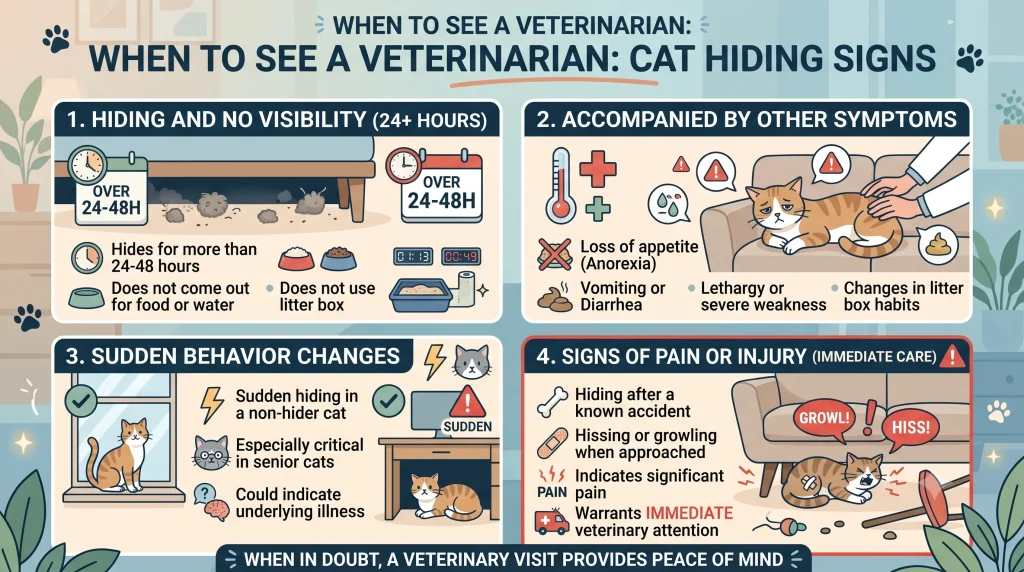
Some hiding behavior warrants veterinary attention. If your cat hides for more than twenty-four to forty-eight hours without coming out for food, water, or litter box use, a veterinary visit is necessary. Hiding combined with other symptoms like loss of appetite, vomiting, diarrhea, lethargy, or changes in litter box habits requires evaluation. Sudden hiding in a cat that has never been a hider before, particularly in a senior cat, should prompt a veterinary examination.
Hiding after a known injury or accident warrants immediate veterinary attention. Cats that hiss, growl, or become aggressive when approached in their hiding spot may be in significant pain and need medical evaluation. When in doubt, a veterinary visit provides peace of mind and catches medical problems early.
Expert Tips From My Practice
I tell my clients to know their cat’s normal hiding patterns. Some cats hide for a few hours every afternoon and that is just who they are. Other cats never hide unless something is wrong. The baseline matters more than the hiding itself. If your cat has always been a confident social butterfly who suddenly starts hiding, that is a red flag. But if your cat has always preferred the quiet corner and comes out for meals and affection, that is likely just their personality. Learn what is normal for your cat, not what you think a cat should be.
- Never force a hiding cat out. This damages trust and makes future hiding worse.
- Provide covered hiding spots in multiple rooms. Appropriate hiding spots reduce stress-related hiding.
- Use pheromone diffusers during stressful periods. They help anxious cats feel more secure.
- Maintain predictable routines. Cats feel safer when they know what to expect.
- Rule out medical causes first. Before assuming hiding is behavioral, have your vet check for pain or illness.
- Respect your cat’s need for solitude. Some cats need more alone time, and that is okay.
- Create vertical escape routes. Cat trees and shelves give cats safe observation points.
- Be patient with shy cats. Building trust takes time and cannot be rushed.
FAQ
Why does my cat hide under the bed all the time?
Hiding under the bed is common for cats seeking a dark, enclosed, secure space. It may be normal behavior for a cautious cat, or it could indicate fear, stress, or illness. Evaluate whether there are environmental triggers or medical issues causing the hiding.
Is it normal for cats to hide when visitors come over?
Yes, many cats hide when unfamiliar people visit. This is a normal fear response. Provide a safe hiding spot before visitors arrive and let your cat come out when they feel ready. Pushing them to socialize increases stress.
How long do cats hide after moving to a new home?
Most cats hide for three to seven days after moving to a new home. Some cats adjust within a few days while others may take several weeks. Provide familiar items including bedding and toys to help them settle. Let them explore at their own pace.
When should I worry about my cat hiding?
Worry when hiding lasts more than forty-eight hours without eating, drinking, or using the litter box. Also worry if hiding is accompanied by other symptoms including vomiting, diarrhea, lethargy, or aggression when approached. These patterns warrant veterinary evaluation.
Can hiding be a sign of illness in cats?
Yes, hiding is often the first sign of illness or pain in cats. Cats instinctively hide weakness to avoid predators in the wild. Any sudden increase in hiding, especially in a cat that is normally social, should prompt a veterinary examination.
How do I get my cat to stop hiding from me?
Do not force interaction. Sit quietly near their hiding spot, offer treats, speak softly, and let them approach you. Build trust through consistent positive interactions. Provide appropriate hiding spots so they feel secure without needing to disappear completely.
Why does my new cat hide and not come out?
New cats hide because they are in an unfamiliar environment with unknown scents and sounds. This is normal. Provide a quiet room with food, water, litter box, and hiding spots. Let them adjust for several days before expecting them to explore the rest of the home.
Is my cat depressed if they hide all the time?
Hiding alone does not indicate depression. Look for other signs including loss of appetite, reduced grooming, changes in vocalization, and loss of interest in previously enjoyed activities. A cat that hides but still eats, grooms, and responds to interaction is likely anxious rather than depressed.
Why does my senior cat hide more than usual?
Senior cats hide more due to arthritis pain, vision or hearing loss, cognitive dysfunction, or other age related medical conditions. Any change in behavior in a senior cat warrants a veterinary examination to identify and address underlying medical causes.
Should I let my cat hide or force them to socialize?
Always let your cat hide. Forcing socialization increases stress and damages trust. Provide a safe environment with appropriate hiding spots, reduce stressors, and let your cat choose when to interact. Trust is built through respect for their choices.