

Table of Contents
Cat Respiratory Infection Complete Guide to Symptoms, Causes, and Treatment Options
Your cat starts sneezing, and you think it is dust or maybe a tickle. Then the sneezing continues: clear discharge appears from the nose, the eyes start watering, and your cat stops eating because they cannot smell the food. You hear a wet, congested breathing sound when they sleep. You wonder if cats can catch colds like humans, if this will pass on its own, or if you need to rush to the vet.
Feline upper respiratory infections are incredibly common, affecting cats of all ages, but they are particularly dangerous for kittens, senior cats, and cats with compromised immune systems. What starts as a simple sneeze can escalate into pneumonia, chronic sinusitis, or permanent eye damage if the wrong virus or bacteria is involved.
As a certified veterinary expert and professional cat behaviorist, I have treated countless cats with respiratory infections: ranging from mild, self-limiting cases to life threatening pneumonia requiring intensive hospitalization. The most common mistake owners make is waiting too long to seek treatment, assuming the cat will get better on their own the way humans shake off a cold.
But cats are not small humans, and their respiratory infections are caused by pathogens that behave very differently from human cold viruses. This guide covers the specific viruses and bacteria that cause feline respiratory infections, the symptoms that require immediate veterinary attention, how veterinarians diagnose the specific cause, treatment options from supportive care to medications, home care strategies to help your cat recover faster, and prevention methods including vaccination protocols.
📚 Recommended Cat Guides
🐱 The Trainable Cat Book
Learn proven methods to train your cat and stop unwanted behaviors.
View Book →❤️ Complete Cat Care Manual
Your complete guide to cat nutrition, health, grooming, behavior, and daily care.
Get the Manual →What Causes Upper Respiratory Infections in Cats
Feline upper respiratory infections are caused by a group of highly contagious pathogens: viruses and bacteria that target the eyes, nose, throat, and sinuses. The two most common causes, feline herpesvirus and feline calicivirus, account for approximately ninety percent of all cases. Understanding the specific cause matters because treatment approaches, prognosis, and long term effects differ between them.
Feline Herpesvirus
Feline herpesvirus type one is the most common cause of respiratory infections in cats, responsible for approximately fifty to seventy percent of all cases. Once a cat is infected, the virus establishes lifelong latent infection in the nerve tissues. The cat carries the virus forever, and it can reactivate during periods of stress, illness, or immunosuppression. Reactivation causes recurrent symptoms that may be milder than the initial infection but still require management. Herpesvirus primarily causes conjunctivitis, eye discharge, sneezing, and corneal ulcers. It does not survive long outside the cat’s body, typically only a few hours on surfaces, which means direct cat to cat contact is the primary transmission route.
Feline Calicivirus
Feline calicivirus is the second most common cause, responsible for approximately twenty to thirty percent of respiratory infections. Unlike herpesvirus, calicivirus mutates frequently, which means new strains emerge regularly and vaccines must be updated to maintain effectiveness. Calicivirus causes oral ulcers on the tongue, gums, and lips in addition to respiratory symptoms. Some strains cause limping syndrome with joint inflammation and fever. Calicivirus is more environmentally stable than herpesvirus and can survive on surfaces for up to a month, making indirect transmission through food bowls, bedding, and human hands more common.
Other Causes
Bordetella bronchiseptica causes respiratory infection similar to kennel cough in dogs and is more common in multi-cat environments like shelters and catteries. Chlamydophila felis primarily causes conjunctivitis with eye swelling and discharge. Mycoplasma species are bacterial organisms that contribute to respiratory disease, often as secondary infections following viral damage. Fungal infections like cryptococcus and aspergillus are less common but can cause chronic respiratory symptoms that do not respond to standard antibiotics. Fungal infections typically require long term antifungal therapy and have a more guarded prognosis.
Common Symptoms of Cat Respiratory Infections
Respiratory infection symptoms vary depending on the specific pathogen involved, the cat’s age, and their immune status. Some cats show mild signs that resolve quickly, while others develop severe, systemic illness. Here are the most common symptoms organized by cause and severity.
| Symptom | Common Cause | Severity |
|---|---|---|
| Sneezing | Herpesvirus or calicivirus | Mild to moderate |
| Nasal discharge | Any respiratory pathogen | Clear to yellow or green |
| Eye discharge | Herpesvirus or chlamydophila | Watery to thick pus-like |
| Conjunctivitis | Herpesvirus or chlamydophila | Mild to severe swelling |
| Oral ulcers | Calicivirus | Painful, may cause drooling |
| Fever | Any infection | Mild to high |
| Loss of appetite | Secondary to congestion or ulcers | Mild to complete anorexia |
| Lethargy | Any infection | Mild to severe |
| Coughing | Bordetella or pneumonia | Moderate to severe |
| Difficulty breathing | Pneumonia or severe congestion | Emergency |
Symptoms That Require Emergency Veterinary Care
Most respiratory infections can be managed at home with supportive care, but certain symptoms indicate the infection is severe enough to require immediate veterinary attention. Open mouth breathing or rapid, labored breathing indicates the airways are significantly compromised, or pneumonia may be developing. Complete refusal to eat or drink for more than twenty-four hours leads to dehydration and malnutrition, which complicate recovery.
Thick, yellow, or green discharge from the eyes or nose that persists for more than a few days indicates secondary bacterial infection requiring antibiotics. Eye ulcers or cloudiness visible on the cornea require immediate treatment to prevent permanent vision damage. Severe lethargy, where the cat cannot stand or shows minimal response to stimulation, is a sign of systemic illness requiring hospitalization. Blue or pale gums indicate oxygen deficiency and require emergency intervention.
How Veterinarians Diagnose Respiratory Infections
Physical Examination
Your vet will examine the eyes, nose, mouth, and throat for specific signs that help identify the cause. They look for conjunctival swelling, corneal ulcers using a fluorescein stain, oral ulcers on the tongue and gums, nasal discharge character and color, and listen to the lungs for abnormal sounds indicating pneumonia. The pattern of symptoms often points toward a specific pathogen.
Diagnostic Testing
In most straightforward cases, the diagnosis is made based on clinical signs and history without extensive testing. However, testing becomes important when the infection is severe, chronic, or not responding to treatment. PCR testing on swabs from the eyes, nose, or mouth can identify the specific virus or bacteria involved. Blood work assesses overall health and identifies complications such as dehydration or organ stress. Chest X-rays are indicated when pneumonia is suspected based on lung sounds or breathing difficulty. Fungal testing, including antigen tests or culture, may be needed for chronic cases that do not respond to standard treatments.

Treatment Options for Cat Respiratory Infections
Supportive Care at Home
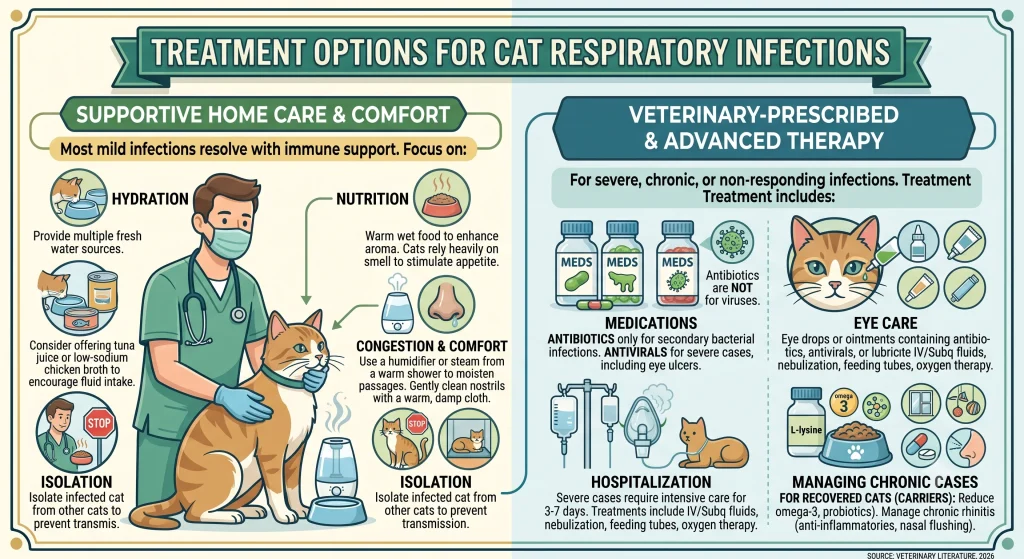
Most mild to moderate respiratory infections resolve with supportive care, as the cat’s immune system clears the infection over time. Supportive care focuses on maintaining hydration, nutrition, and comfort while the immune system does its work. Provide multiple fresh water sources, and consider offering tuna juice or low sodium chicken broth to encourage fluid intake. Warm wet food to enhance aroma, as cats rely heavily on smell to stimulate appetite. If nasal congestion prevents eating, gently clean the nostrils with a warm, damp cloth and use a humidifier or steam from a warm shower to moisten the nasal passages. Isolate the infected cat from other cats to prevent transmission.
Medications
Antibiotics are not effective against viruses, which cause most respiratory infections, but they are prescribed when secondary bacterial infection is suspected based on thick yellow or green discharge. Doxycycline is a common antibiotic choice for respiratory infections. L-lysine supplementation was historically recommended for herpesvirus management, though recent research questions its effectiveness. Antiviral medications like famciclovir are used for severe herpesvirus infections, particularly those involving eye ulcers. Eye drops or ointments containing antibiotics, antivirals, or lubricants may be prescribed for eye involvement. Probiotics support immune function during and after infection.
Hospitalization
Severe cases require hospitalization for intensive treatment. Hospitalized cats receive intravenous or subcutaneous fluids to correct dehydration, nutritional support through feeding tubes if the cat is not eating, oxygen therapy for breathing difficulty, nebulization treatments to moisten airways and deliver medications directly to the lungs, and injectable medications for cats that cannot tolerate oral medications. Hospitalization is typically required for three to seven days depending on severity and response to treatment.
Managing Chronic and Recurrent Infections
Cats that have recovered from herpesvirus carry the virus for life and may experience recurrent flare-ups during stress. Managing recurrent infections focuses on reducing stress through environmental enrichment, predictable routines, and minimizing changes. L-lysine supplementation may help some cats, though evidence is mixed. Immune support through high quality nutrition, omega-three fatty acids, and probiotics may reduce flare-up frequency. Some cats with chronic rhinitis, ongoing nasal inflammation after the initial infection clears, benefit from anti-inflammatory medications and nasal flushing procedures performed under sedation.
Home Care Tips for Sick Cats
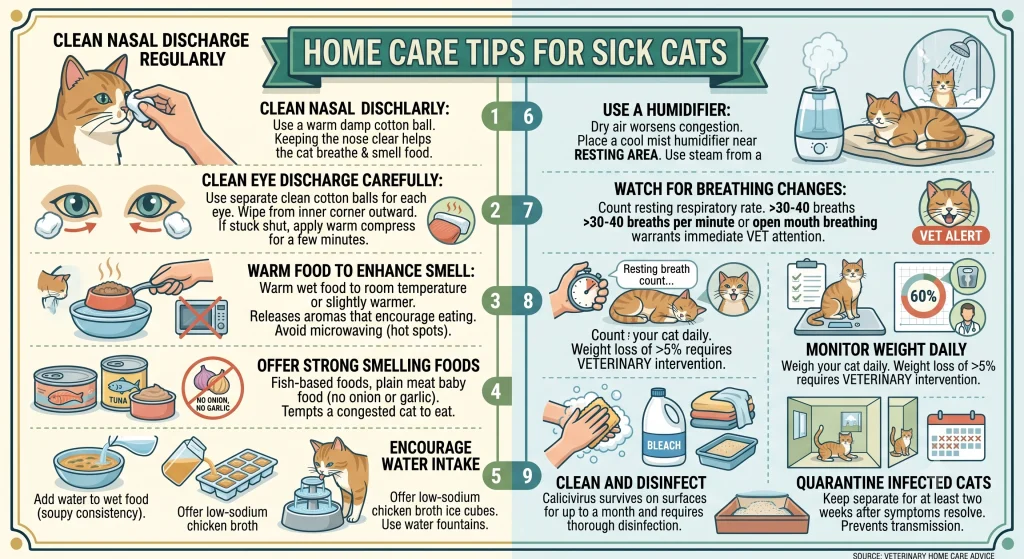
- Clean nasal discharge regularly: Use a warm damp cotton ball to gently wipe away discharge from the nostrils. Keeping the nose clear helps the cat breathe and smell food, which stimulates appetite.
- Clean eye discharge carefully: Use separate clean cotton balls for each eye to prevent cross contamination. Wipe from the inner corner outward. If the eyes appear stuck shut, apply a warm compress for a few minutes before gently wiping.
- Use a humidifier: Dry air worsens respiratory congestion. Place a cool mist humidifier near your cat’s resting area or run a hot shower and sit with your cat in the steamy bathroom for ten to fifteen minutes several times daily.
- Warm food to enhance smell: Cats rely on their sense of smell to stimulate appetite. Warming wet food to room temperature or slightly warmer releases aromas that encourage eating. Avoid microwaving which creates hot spots.
- Offer strong smelling foods: Fish based foods, baby food without onion or garlic, and plain meat baby food have strong odors that may tempt a congested cat to eat.
- Encourage water intake: Add water to wet food to create a soupy consistency. Offer ice cubes made from low sodium chicken broth. Use water fountains to encourage drinking.
- Quarantine infected cats: Keep infected cats separate from other household cats for at least two weeks after symptoms resolve to prevent transmission.
- Clean and disinfect: Wash food bowls, water bowls, bedding, and litter boxes with hot soapy water followed by dilute bleach solution. Calicivirus survives on surfaces for up to a month and requires thorough disinfection.
- Monitor weight daily: Weigh your cat daily during illness. Weight loss of more than five percent requires veterinary intervention to prevent complications.
- Watch for breathing changes: Count resting respiratory rate. An increase above thirty to forty breaths per minute or any open mouth breathing warrants immediate veterinary attention.
Prevention of Respiratory Infections
Vaccination
Vaccination is the most effective prevention method for respiratory infections. The FVRCP vaccine protects against feline herpesvirus, calicivirus, and panleukopenia. Kittens should receive their first dose at six to eight weeks with boosters every three to four weeks until sixteen weeks. Adult cats need regular boosters as recommended by your veterinarian. Vaccination does not prevent infection entirely but significantly reduces severity, duration, and complications. Vaccinated cats that do become infected typically experience milder symptoms and recover faster than unvaccinated cats.
Environmental Management
Reducing stress through environmental enrichment lowers the risk of herpesvirus reactivation in carrier cats. Provide vertical space, hiding spots, predictable routines, and appropriate outlets for natural behaviors. Maintain good ventilation in living areas. Avoid overcrowding in multi-cat households. Quarantine new cats for at least two weeks before introducing them to resident cats. Use separate food bowls and litter boxes for each cat to reduce transmission risk.
Nutritional Support
High quality nutrition supports immune function and reduces susceptibility to infection. Omega-three fatty acids from fish oil support respiratory health and reduce inflammation. Probiotics support gut health and immune function. Adequate hydration through wet food and water fountains maintains mucous membrane health. Avoid stress during boarding, travel, and introductions. Rescue cats and shelter cats should be vaccinated and quarantined before introduction to household cats.
Expert Tips From My Practice
The most heartbreaking respiratory cases I treat are kittens from unvaccinated mothers. These kittens have no maternal antibodies and no vaccine protection, and they often present with severe infections that damage their eyes and airways permanently. Vaccinating the mother cat before breeding, and starting kitten vaccines at six to eight weeks, prevents almost all severe respiratory cases in kittens. If you adopt a kitten, ask about the mother’s vaccination status. If it is unknown, assume the kitten is vulnerable and prioritize the vaccine series immediately. A few weeks of vaccine protection is worth a lifetime of healthy breathing and vision.
- Do not assume sneezing is harmless. While many respiratory infections are mild, some progress rapidly. Monitor symptoms closely, and seek veterinary care if they worsen or persist beyond a few days.
- Never give human cold medications to cats. Human decongestants, antihistamines, and pain relievers can be toxic to cats. Acetaminophen is particularly dangerous: it causes liver failure and death.
- Humidity is your best home treatment. A humidifier or steam treatment provides more relief for respiratory congestion than any over the counter product designed for humans.
- Feed strong smelling food. Cats need to smell food to want to eat it. Warming food, offering fish based options, and adding warm water releases aromas that overcome nasal congestion.
- Isolation prevents spread. Keep infected cats separate from other household cats for at least two weeks. Wash hands thoroughly after handling the infected cat.
- Chronic carriers need stress management. Cats recovered from herpesvirus need stable environments with minimal stress to prevent recurrent flare-ups.
- Address eye issues immediately. Eye ulcers can progress to perforation and vision loss within hours. Any squinting, pawing at eyes, or visible cloudiness requires immediate veterinary attention.
FAQ
Can cats catch colds from humans?
No. The viruses that cause respiratory infections in humans are species specific. Your cat cannot catch your cold, and you cannot catch your cat’s respiratory infection. However, other cats in the household are highly susceptible to transmission.
How long do cat respiratory infections last?
Most uncomplicated upper respiratory infections last seven to fourteen days. Severe infections or those with secondary bacterial involvement may last three to six weeks. Chronic carriers of herpesvirus may experience recurrent episodes throughout their lives.
When should I take my cat to the vet for a respiratory infection?
Seek veterinary care if your cat stops eating or drinking for more than twenty-four hours, has difficulty breathing, develops thick yellow or green discharge, shows severe lethargy, or if symptoms persist beyond seven days without improvement.
Can cat respiratory infections go away on their own?
Mild cases in healthy adult cats often resolve on their own with supportive care within seven to fourteen days. However, kittens, senior cats, and cats with compromised immune systems are at higher risk for complications requiring veterinary intervention.
What is the FVRCP vaccine for cats?
FVRCP is a combination vaccine protecting against feline viral rhinotracheitis, calicivirus, and panleukopenia. It is a core vaccine recommended for all cats and significantly reduces the severity of respiratory infections in vaccinated cats.
How do I clean my house after a cat respiratory infection?
Clean food bowls, water bowls, bedding, and litter boxes with hot soapy water followed by a diluted bleach solution. Vacuum and steam clean soft surfaces. Calicivirus can survive on surfaces for up to a month, so thorough disinfection is important.
Can cats get pneumonia from a respiratory infection?
Yes. Upper respiratory infections can spread to the lower respiratory tract and cause pneumonia, particularly in kittens, senior cats, and immunocompromised cats. Signs of pneumonia include coughing, difficulty breathing, fever, and lethargy requiring immediate veterinary care.
Is cat respiratory infection contagious to other cats?
Yes. Feline respiratory infections are highly contagious between cats. Transmission occurs through direct contact, sneeze droplets, contaminated food bowls, bedding, and human hands. Infected cats should be isolated from other cats for at least two weeks.
What can I give my cat for sneezing and congestion at home?
Provide a humidifier or steam treatment to moisten nasal passages. Gently clean nasal discharge with a warm damp cloth. Warm wet food to enhance aroma and encourage eating. Never give human cold medications, which are toxic to cats.
How do I prevent respiratory infections in my cat?
Keep your cat up to date on FVRCP vaccinations. Reduce stress through environmental enrichment. Provide high quality nutrition. Avoid overcrowding in multi-cat households. Quarantine new cats before introduction. Maintain good ventilation and cleanliness in living areas.