

Table of Contents
Cat Treats Guide Healthy Options and Hidden Dangers Every Owner Should Know
You give your cat a treat when they come when called. You give them a treat when they sit nicely. You give them a treat just because they look at you with those big eyes. Treats are part of how we bond with cats, reward good behavior, and show affection. But most commercial cat treats are nutritionally empty, high in carbohydrates, loaded with artificial ingredients, and designed to be addictive rather than nutritious. Your cat loves them not because they are healthy but because manufacturers engineer them to be irresistible. Meanwhile the calories from those tiny treats add up faster than you realize, and some common treat ingredients pose genuine health risks that most owners never think about.
As a certified veterinary expert and professional cat behaviorist, I have seen cats develop obesity, diabetes, and digestive problems from excessive treat consumption, and I have also seen treats used effectively as training tools, medication delivery systems, and enrichment aids when chosen carefully.
This guide covers the nutritional reality of commercial cat treats, which treats are actually healthy and which are essentially junk food, how to use treats effectively for training without overfeeding, homemade treat options you can make safely, the specific ingredients that pose hidden dangers, and strategies for managing treat calories within your cat’s overall nutrition plan. Treats can be part of a healthy relationship with your cat, but only when you know what you are actually feeding.
📚 Recommended Cat Guides
🐱 The Trainable Cat Book
Learn proven methods to train your cat and stop unwanted behaviors.
View Book →❤️ Complete Cat Care Manual
Your complete guide to cat nutrition, health, grooming, behavior, and daily care.
Get the Manual →The Nutritional Reality of Commercial Cat Treats
Calorie Density
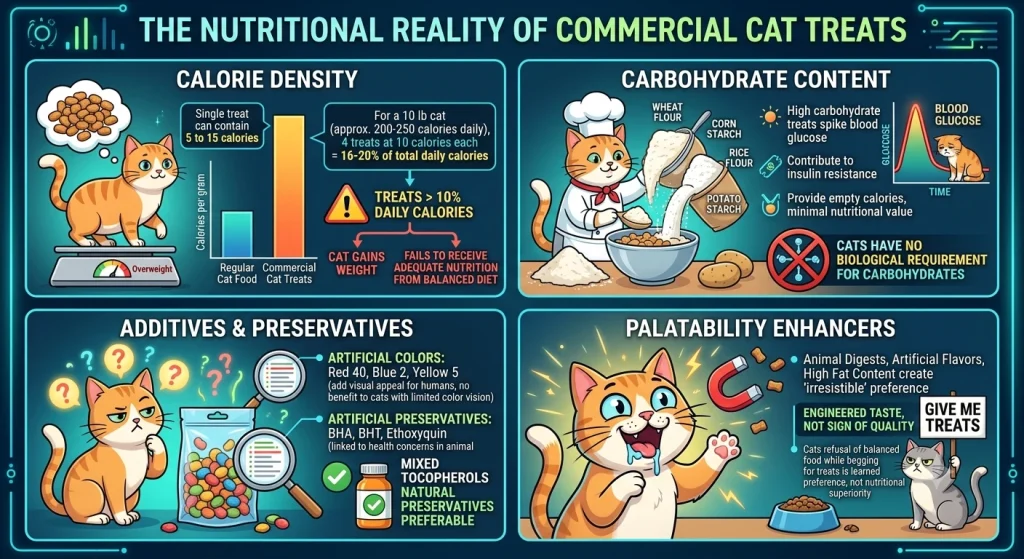
Most commercial cat treats contain significantly more calories per gram than regular cat food. A single treat can contain five to fifteen calories, which may not sound like much but represents a significant portion of a cat’s daily caloric needs. For a ten pound cat needing approximately two hundred to two hundred fifty calories daily, four treats at ten calories each already account for sixteen to twenty percent of total calories. When treats exceed the recommended ten percent of daily calories, the cat either gains weight or fails to receive adequate nutrition from their balanced diet.
📚 The Complete Cat Care Bundle
Get 3 premium eBooks covering cat training, behavior, nutrition, and health. Instant digital download in one value-packed bundle.
Get the Bundle →Carbohydrate Content
Many commercial cat treats are primarily carbohydrate based, using wheat flour, corn starch, rice flour, or potato starch as primary ingredients. These high carbohydrate treats spike blood glucose, contribute to insulin resistance, and provide empty calories with minimal nutritional value. Cats have no biological requirement for carbohydrates, and carbohydrate dense treats serve no nutritional purpose while actively undermining metabolic health.
Additives and Preservatives
Commercial cat treats often contain artificial colors, flavors, and preservatives that are unnecessary and potentially problematic. Artificial colors like Red 40, Blue 2, and Yellow 5 add visual appeal for human buyers but provide no benefit to cats, who have limited color vision anyway. Artificial preservatives like BHA, BHT, and ethoxyquin extend shelf life but have been linked to health concerns in animal studies. Natural preservatives like mixed tocopherols, a form of vitamin E, are preferable when they appear on ingredient lists.
Palatability Enhancers
Manufacturers add palatability enhancers including animal digests, artificial flavors, and high fat content to make treats irresistible. These additives create the strong preference cats show for treats over their regular food, which is not a sign of treat quality but of treat engineering. Cats that refuse balanced cat food while begging for treats have learned that treats taste better, not that treats are better for them.
Healthy Treat Options That Actually Provide Benefits
Freeze Dried Meat Treats
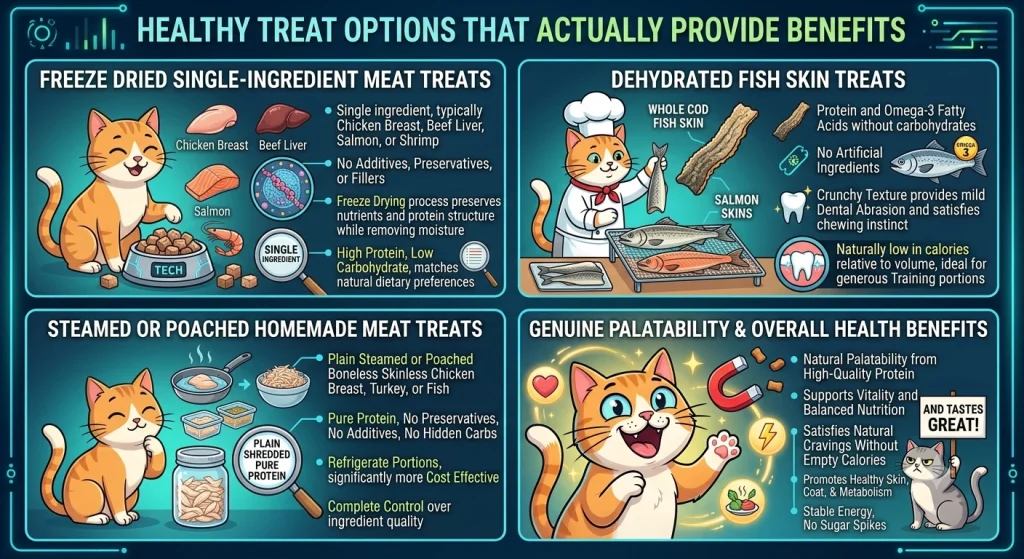
Freeze dried single ingredient meat treats are among the healthiest options available. These treats contain a single ingredient, typically chicken breast, beef liver, salmon, or shrimp, with no additives, preservatives, or fillers. The freeze drying process removes moisture while preserving protein structure and nutrients. Freeze dried treats provide high protein, low carbohydrate nutrition that closely matches a cat’s natural dietary preferences. Look for products with a single ingredient listed and no added flavors or preservatives.
Dehydrated Fish Skin Treats
Dehydrated fish skin treats, particularly cod skin or salmon skin, provide protein and omega-three fatty acids without carbohydrates or artificial ingredients. The crunchy texture also provides mild dental abrasion and satisfies the chewing instinct. These treats are naturally low in calories relative to their volume, allowing more generous portions for training purposes without excessive calorie intake.
Steamed or Poached Meat
Plain steamed or poached chicken breast, turkey, or fish makes an excellent treat that you control completely. Boil or poach boneless skinless chicken breast until fully cooked, shred or dice into small pieces, and refrigerate in portion sizes. These homemade treats contain pure protein with no additives, no preservatives, and no hidden carbohydrates. They are also significantly more cost effective than commercial treats.
Commercial Vet Recommended Dental Treats
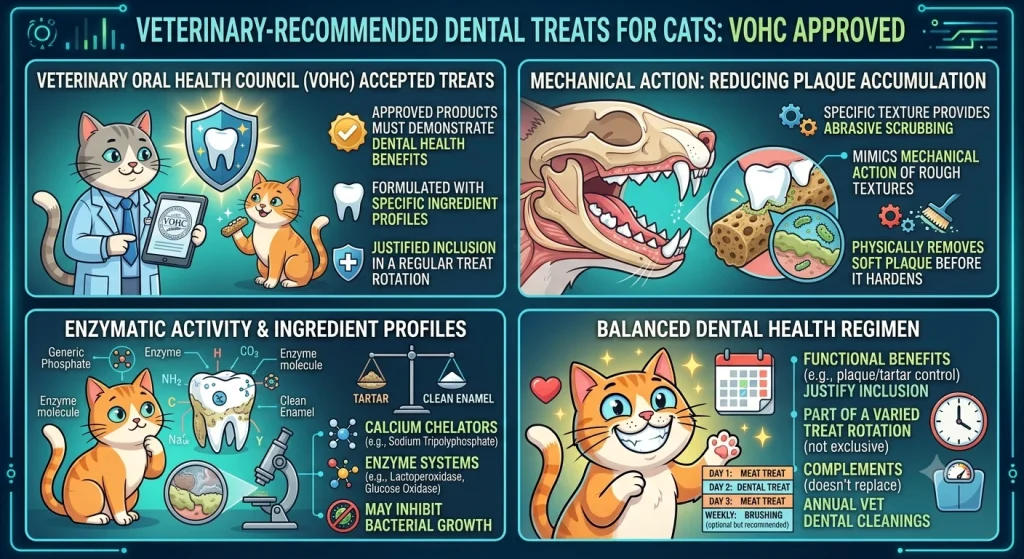
Certain commercial dental treats approved by the Veterinary Oral Health Council provide dental health benefits while serving as treats. These treats are formulated with specific texture and ingredient profiles that reduce plaque and tartar accumulation through mechanical action or enzymatic activity. While not as nutritionally pure as single ingredient meat treats, VOHC approved dental treats offer functional benefits that justify their inclusion in a treat rotation.
Small Amounts of Cat Safe Fruits and Vegetables
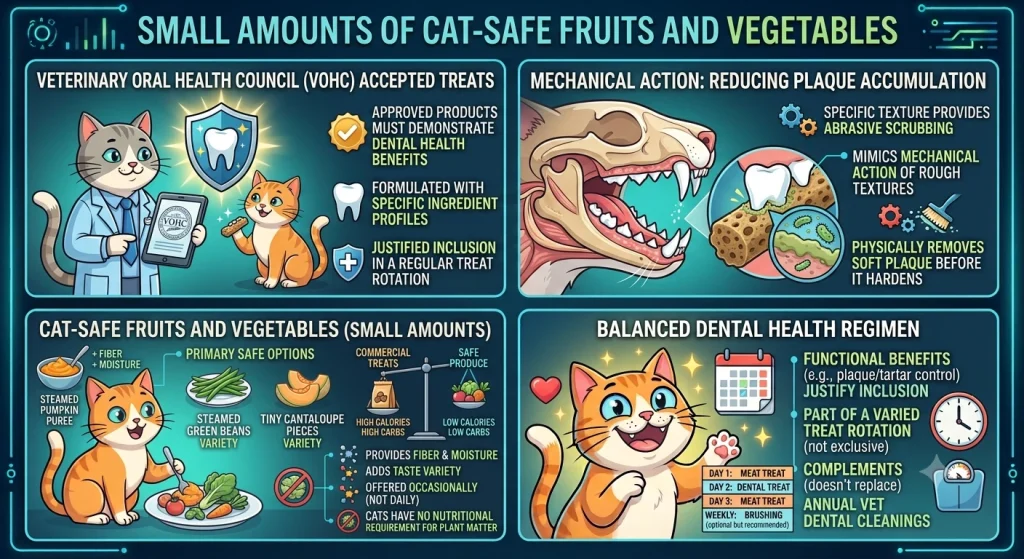
Some cats enjoy small amounts of cat safe produce as occasional treats. Steamed pumpkin puree, small pieces of steamed green beans, or tiny amounts of cantaloupe provide fiber, moisture, and variety. These options are low in calories and carbohydrates compared to commercial treats but should remain occasional offerings rather than daily staples because cats have no nutritional requirement for plant matter.
Commercial High Protein Training Treats
Several brands now produce training specific treats formulated with high protein, low carbohydrate profiles and small sizes suitable for frequent use during training sessions. Look for treats with named meat as the first ingredient, protein content above thirty percent, and minimal ingredient lists without added sugars or artificial additives. The small size of training treats, typically two to three calories each, allows multiple rewards during training without exceeding calorie budgets.
📚 The Complete Cat Care Bundle
Get 3 premium eBooks covering cat training, behavior, nutrition, and health. Instant digital download in one value-packed bundle.
Get the Bundle →Commercial Treats to Avoid
- Dairy based treats. Most adult cats are lactose intolerant. Dairy based treats cause digestive upset including diarrhea and vomiting in sensitive cats. Even cats that tolerate small amounts of dairy receive no nutritional benefit from it.
- Squeeze tube treats. These popular pureed treats are high in carbohydrates, often contain added sugars and artificial flavors, and the tube format encourages overconsumption because cats finish the entire tube quickly. The calorie content of a single tube can exceed an appropriate daily treat allowance.
- Crunchy kibble style treats. Most crunchy treats are primarily grain or starch based with minimal meat content. They provide empty carbohydrate calories with little protein and no nutritional value. The first ingredient is typically a grain, starch, or flour.
- Treats with added sugar. Sugar, corn syrup, molasses, and other sweeteners appear in some cat treats despite cats having no ability to taste sweetness. These additives contribute empty calories and promote obesity without any benefit to the cat.
- Treats with unspecified meat sources. Avoid treats listing generic meat meal, animal digest, or poultry by-product without species specification. These may contain rendered material from unknown sources with inconsistent quality.
- Catnip infused treats. While catnip itself is safe, catnip infused treats often contain lower quality ingredients because the catnip masks the flavor. The nutritional quality of the base treat matters more than the catnip addition.
- Human food not safe for cats. Avoid treats that are simply repackaged human snacks including bacon flavored products, cheese flavored products, or jerky treats with high salt content and seasonings toxic to cats.
- Imported treats with unclear sourcing. Some imported treats, particularly from countries with less rigorous pet food regulations, may contain undeclared ingredients, heavy metals, or contaminants. Stick to treats from reputable manufacturers with transparent sourcing.
How Many Treats Is Too Many
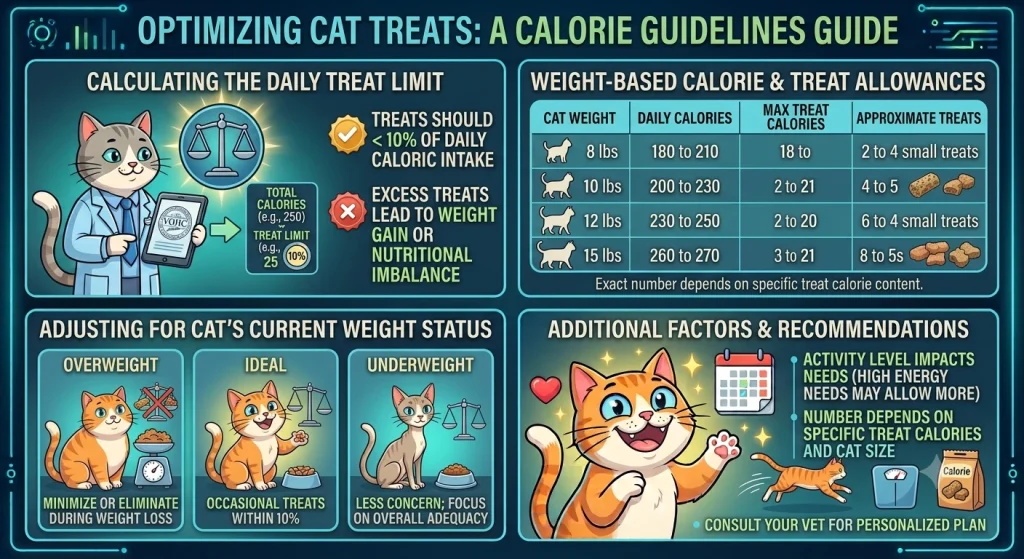
The general guideline is that treats should constitute no more than ten percent of your cat’s daily caloric intake. For a cat eating two hundred fifty calories daily, treat calories should not exceed twenty-five calories.
This typically translates to two to five small treats per day depending on the specific treat’s calorie content. However, the exact number depends on your cat’s size, activity level, and whether they need to maintain, lose, or gain weight. For overweight cats, treats should be minimized or eliminated entirely during weight loss phases. For cats at ideal weight, occasional treats within the ten percent guideline maintain balance. For underweight cats or cats with high energy needs, treats can be a smaller concern within overall caloric adequacy.
| Cat Weight | Daily Calories | Max Treat Calories | Approximate Treats |
|---|---|---|---|
| 8 pounds | 180 to 210 | 18 to 21 | 2 to 4 small treats |
| 10 pounds | 200 to 250 | 20 to 25 | 2 to 5 small treats |
| 12 pounds | 240 to 290 | 24 to 29 | 3 to 5 small treats |
| 15 pounds | 280 to 340 | 28 to 34 | 3 to 6 small treats |
Hidden Dangers in Common Cat Treats
Toxic Foods Masquerading as Treats
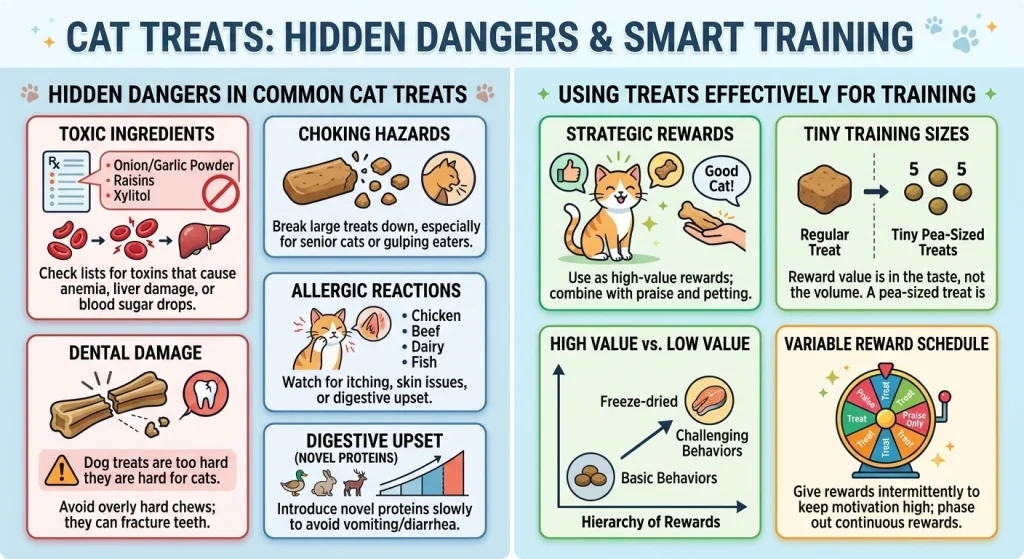
Some treats contain ingredients that are toxic to cats in sufficient quantities. Onion and garlic powder appear as flavoring in some treats and can cause oxidative damage to red blood cells leading to anemia. Grapes and raisins, while more famous for toxicity in dogs, also pose risks for cats. Xylitol, an artificial sweetener found in some human treats that owners mistakenly give cats, causes dangerous blood sugar drops and liver damage. Always check ingredient lists for these toxic ingredients before offering any treat.
Choking Hazards
Some treats, particularly freeze dried whole proteins and hard crunchy treats, pose choking risks, especially for cats that gulp food without chewing. Cats with dental problems, senior cats, and enthusiastic eaters are at higher risk. Break large treats into smaller pieces before offering, and supervise your cat when introducing new treat textures. If your cat coughs, gags, or paws at their mouth after eating a treat, the treat size or texture may be inappropriate.
Dental Damage
Extremely hard treats designed to be dental chews can actually fracture teeth in some cats, particularly cats with preexisting dental disease or those that bite down with force. The same texture that provides dental cleaning benefit through abrasion can also cause tooth fractures if the treat is harder than the tooth structure. Choose dental treats appropriately sized for cats and avoid treats marketed for dogs that are too hard for feline teeth.
Allergic Reactions
Treats can trigger allergic reactions in sensitive cats, particularly treats containing common allergens like chicken, beef, dairy, or fish. Signs of allergic reactions include facial itching, ear inflammation, hair loss, vomiting, or diarrhea after treat consumption. If you suspect treat related allergies, stop all treats for ten to fourteen days until symptoms resolve, then reintroduce single ingredient treats one at a time to identify triggers.
Digestive Upset From Novel Proteins
Introducing novel protein treats, like rabbit, venison, or duck, to cats accustomed to chicken based diets can cause digestive upset including vomiting, diarrhea, or gas. While novel proteins are valuable for cats with food allergies, introduce them gradually in small amounts to allow the digestive system to adjust. Start with a single small piece and monitor for any adverse reaction over twenty-four hours before offering more.
Using Treats Effectively for Training
Treats are most valuable when used strategically as training rewards rather than given freely. The key principles for effective treat based training include using very small treat sizes, reserving the highest value treats for the most challenging behaviors, pairing treats with verbal praise and petting to build multiple reward associations, and phasing out treats gradually once behaviors are established. Training treats should be tiny, approximately the size of a pea, because the reward value lies in the taste experience, not the volume consumed. A single large treat broken into five small pieces provides five training opportunities rather than one.
The most effective training approach uses a variable reward schedule where treats are given intermittently rather than every time the cat performs the desired behavior. This unpredictability keeps the cat engaged and motivated because they never know which repetition will earn a reward. Start with a continuous reward schedule during initial training, then gradually transition to variable rewards as the behavior becomes reliable. This approach maximizes training effectiveness while minimizing total treat consumption.
Homemade Treat Recipes
Simple Chicken Bites
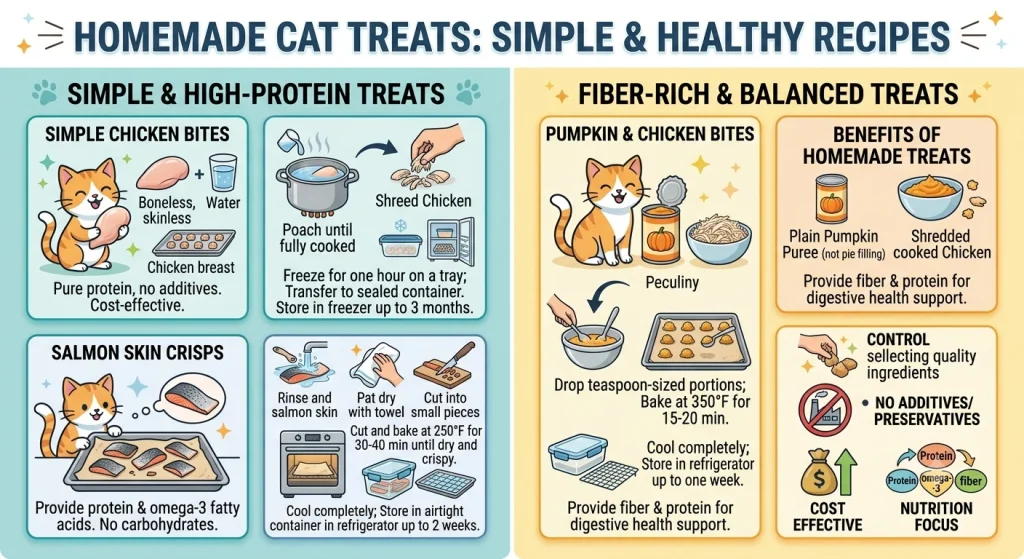
Poach boneless skinless chicken breast in water until fully cooked. Let cool, then shred or dice into small pea sized pieces. Spread on a baking sheet and freeze for one hour. Transfer frozen pieces to a sealed container and store in the freezer for up to three months. These treats contain pure protein with no additives and cost significantly less than commercial treats.
Salmon Skin Crisps
Rinse salmon skin thoroughly and pat dry. Cut into small pieces. Place on a baking sheet lined with parchment paper and bake at two hundred fifty degrees Fahrenheit for thirty to forty minutes until dry and crispy. Cool completely and store in an airtight container in the refrigerator for up to two weeks. These provide protein and omega-three fatty acids without carbohydrates.
Pumpkin and Chicken Bites
Mix one can of plain pumpkin puree, not pumpkin pie filling, with one cup of finely shredded cooked chicken. Drop small teaspoon sized portions onto a parchment lined baking sheet. Bake at three hundred fifty degrees Fahrenheit for fifteen to twenty minutes. Cool and refrigerate for up to one week. These provide fiber along with protein for digestive health support.
📚 The Complete Cat Care Bundle
Get 3 premium eBooks covering cat training, behavior, nutrition, and health. Instant digital download in one value-packed bundle.
Get the Bundle →Expert Tips From My Practice
I tell my clients to think of treats the same way they think of dessert for themselves. Dessert is enjoyable, it can be part of a healthy relationship with food, and it has a place in a balanced lifestyle. But dessert is not nutrition, and treating it like nutrition leads to health problems. The same applies to cat treats. They are for bonding, training, and enrichment. They are not a food group. When owners start thinking of treats as occasional rewards rather than daily provisions, both the cat’s health and the owner’s peace of mind improve dramatically.
- Read treat labels as carefully as food labels. Treats are not regulated as strictly as complete foods. Check ingredients and calorie content before buying any treat.
- Account for treat calories in daily totals. If you give treats, reduce meal portions slightly or accept that treats may slow weight loss goals. Calories count regardless of source.
- Use treats for specific purposes. Give treats as rewards for desired behaviors, not randomly throughout the day. Purposeful treats maintain their reward value better than freely given treats.
- Rotate treat types. Offering a variety of healthy treats prevents boredom and provides nutritional diversity. Rotate between freeze dried meat, dental treats, and homemade options.
- Consider non-food rewards. Many cats value play, petting, or access to favorite perches as much as treats. Pairing treats with other rewards reduces total treat dependency.
- Watch for treat addiction. Some cats become so treat focused that they refuse regular food. If your cat skips meals hoping for treats, eliminate treats entirely until regular eating resumes.
- Store treats properly. Freeze dried and homemade treats lose quality quickly when exposed to air. Store in airtight containers and follow storage guidelines for each type.
- Do not use treats as meal replacements. Treats do not provide complete nutrition. If your cat is not eating their regular food, address the underlying cause rather than substituting treats.
FAQ
How many cat treats per day is safe?
Treats should not exceed ten percent of daily caloric intake. For a ten pound cat, this means approximately twenty to twenty-five calories from treats daily, typically two to five small treats depending on calorie content.
What are the healthiest treats for cats?
The healthiest treats are single ingredient freeze dried meats like chicken breast, beef liver, or salmon. Plain cooked meat without seasoning and VOHC approved dental treats also provide nutritional benefits beyond empty calories.
Can treats cause health problems in cats?
Yes. Excessive treat consumption causes obesity, diabetes, and nutritional imbalances. Some treats contain toxic ingredients like onion or garlic powder. Hard treats can fracture teeth. Dairy treats cause digestive upset in lactose intolerant cats.
Are squeeze tube treats bad for cats?
Most squeeze tube treats are high in carbohydrates, contain artificial ingredients, and provide minimal nutritional value. The tube format encourages overconsumption. They are acceptable as occasional treats but not as daily staples.
Can I give my cat human food as treats?
Plain cooked meat without seasoning, small amounts of steamed vegetables, and plain pumpkin puree are safe human food treat options. Avoid onions, garlic, grapes, raisins, chocolate, xylitol, and salty or seasoned foods.
How do I use treats for cat training?
Use very small pea sized treat pieces. Reward immediately after the desired behavior. Use high value treats for difficult behaviors. Gradually transition from continuous to variable rewards as the behavior becomes reliable.
Are freeze dried treats healthy for cats?
Yes. Freeze dried single ingredient meat treats contain pure protein with no additives, preservatives, or fillers. They provide nutritionally appropriate treat options that closely match a cat’s natural dietary preferences.
Can treats cause diarrhea in cats?
Yes, particularly dairy based treats in lactose intolerant cats, novel protein treats in sensitive cats, or treats with artificial ingredients. Sudden treat introduction or overconsumption also causes digestive upset.
What treats should cats with allergies avoid?
Cats with known allergies should avoid treats containing their specific allergens, most commonly chicken, beef, dairy, or fish. Single ingredient novel protein treats like rabbit or venison work well for allergy management.
Are catnip treats safe for cats?
Catnip itself is safe and non-addictive. However, catnip infused treats often contain lower quality base ingredients. Check the ingredient list rather than assuming catnip treats are high quality based on the catnip content alone.