

Table of Contents
Best Wet Food for Cats Complete Buying Guide for Every Budget and Need
You stand in the pet food aisle staring at rows upon rows of cans. Pates, shreds, chunks in gravy, minced, flaked, sliced, and everything in between. The price ranges from less than a dollar per can to almost five dollars. Some say natural, some say holistic, some say premium, and none of those words actually mean anything regulated.
You want to give your cat the best nutrition you can afford, but you have no way to tell whether the expensive can is actually better or whether your cat would be just as healthy on the budget brand. You pick up a can, read the ingredients, and put it back because you are not sure what you are looking for. This confusion is completely normal because the pet food industry uses marketing language that sounds meaningful but provides no real nutritional information.
As a certified veterinary expert and professional cat behaviorist, I have evaluated hundreds of wet cat food formulations across every price point and helped cat owners make informed choices that balance nutritional quality, palatability, and budget. This guide covers why wet food benefits your cat, how to read and understand wet food labels, the best wet foods at every price point, what ingredients to prioritize and which to avoid, how to choose the right texture for your cat’s preferences, and practical tips for feeding wet food without breaking the bank. The best wet food for your cat is the one they will eat willingly, that meets their nutritional needs, and that fits your budget consistently.
📚 Recommended Cat Guides
🐱 The Trainable Cat Book
Learn proven methods to train your cat and stop unwanted behaviors.
View Book →❤️ Complete Cat Care Manual
Your complete guide to cat nutrition, health, grooming, behavior, and daily care.
Get the Manual →Why Wet Food Is Beneficial for Cats
Hydration Advantages
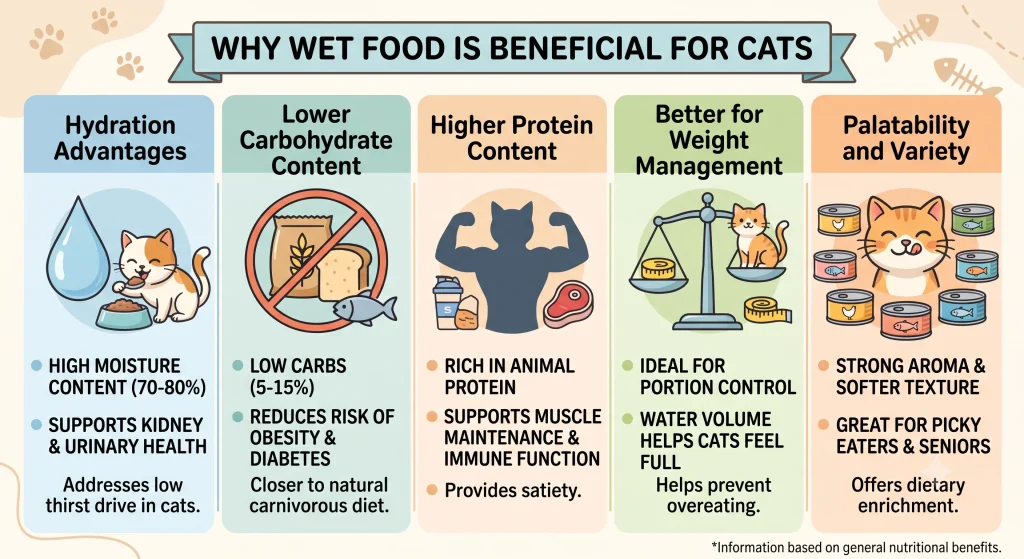
Wet food contains approximately seventy to eighty percent moisture, closely matching the water content of a cat’s natural prey. Cats evolved in arid environments with a low thirst drive, meaning they naturally consume most of their water through food rather than drinking from a bowl. Feeding wet food addresses this evolutionary reality by providing hydration directly through meals. Adequate hydration supports kidney function, urinary tract health, and overall cellular health. Studies consistently show that cats eating primarily wet food have lower rates of chronic kidney disease, urinary crystals, and bladder inflammation than cats on dry food alone.
Lower Carbohydrate Content
Wet food naturally contains fewer carbohydrates than dry food because the manufacturing process does not require starches for binding and shaping. Dry kibble typically contains thirty to fifty percent carbohydrates on a dry matter basis, while wet food contains five to fifteen percent. This difference is significant because cats have no nutritional requirement for carbohydrates and high carbohydrate diets contribute to obesity, diabetes, and metabolic syndrome. Feeding wet food aligns more closely with a cat’s natural carnivorous macronutrient profile.
Higher Protein Content
Most wet cat foods contain higher protein percentages than dry foods, particularly animal based protein. The higher protein content supports muscle maintenance, immune function, and satiety. Cats on high protein diets feel fuller between meals, reducing begging behavior and making weight management easier. Look for wet foods where the protein content is at least forty percent on a dry matter basis, which most quality wet foods naturally provide.
Better for Weight Management
The combination of high moisture, high protein, and low carbohydrates makes wet food ideal for weight management. Cats feel satisfied on fewer calories because the water content adds volume without adding calories. Portion control is also easier with wet food because cans provide standardized servings. Cats switching from free fed dry food to measured wet food meals often lose excess weight naturally without restrictive dieting.
Palatability and Variety
Wet food is generally more palatable to cats than dry food due to the stronger aroma, softer texture, and higher moisture content. This makes wet food particularly useful for picky eaters, senior cats with dental issues, and cats recovering from illness who need encouragement to eat. The variety of textures and flavors available in wet food also allows owners to rotate proteins and textures, providing dietary enrichment that reduces the risk of developing food sensitivities to any single ingredient.
How to Read Wet Cat Food Labels
Understanding Guaranteed Analysis
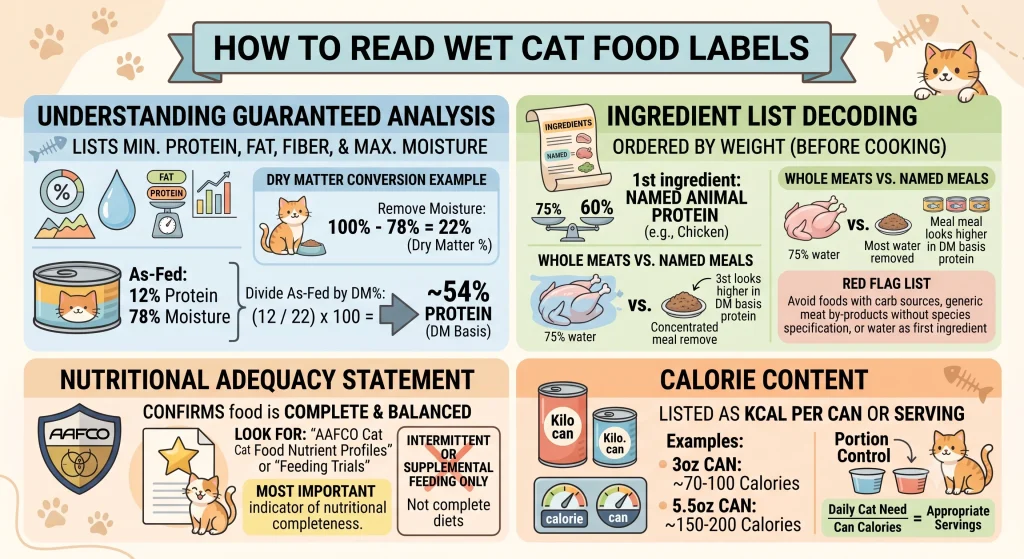
The guaranteed analysis lists minimum crude protein, minimum crude fat, maximum crude fiber, and maximum moisture. These numbers represent the food as fed, meaning they include water weight. To compare wet and dry foods accurately, convert to dry matter basis by removing moisture. For a wet food with seventy-eight percent moisture and twelve percent protein, the dry matter protein is calculated as twelve divided by twenty-two, the dry matter percentage, multiplied by one hundred, yielding approximately fifty-four percent protein. This conversion allows accurate comparison across different food types.
Ingredient List Decoding
Ingredients are listed by weight before cooking. The first ingredient in a quality wet food should be a named animal protein like chicken, turkey, salmon, or beef. Whole meats contain approximately seventy-five percent water, so they shrink significantly during processing. Named meat meals, like chicken meal, are concentrated protein sources with most water removed and appear higher on a dry matter protein ranking than whole meats. Avoid foods where the first ingredient is a carbohydrate source, a generic meat by-product without species specification, or water, though water or broth is expected in the first few positions for wet food.
📚 The Complete Cat Care Bundle
Get 3 premium eBooks covering cat training, behavior, nutrition, and health. Instant digital download in one value-packed bundle.
Get the Bundle →Nutritional Adequacy Statement
The AAFCO nutritional adequacy statement confirms the food provides complete and balanced nutrition. Look for a statement saying the food meets nutritional levels established by AAFCO Cat Food Nutrient Profiles or that feeding trials have substantiated the food. Foods labeled for intermittent or supplemental feeding only are not complete diets and should not be the sole food source. This statement is the most important indicator of nutritional completeness on any label.
Calorie Content
Calorie content is listed as kilocalories per kilogram and often per can or per serving. This information is essential for portion control. A typical three ounce can contains approximately seventy to one hundred calories, while a five and a half ounce can contains one hundred fifty to two hundred calories. Calculate your cat’s daily caloric needs using their ideal body weight and activity level, then divide by the calories per can to determine appropriate servings.
Best Wet Food Options by Category
Premium Budget Friendly Wet Foods
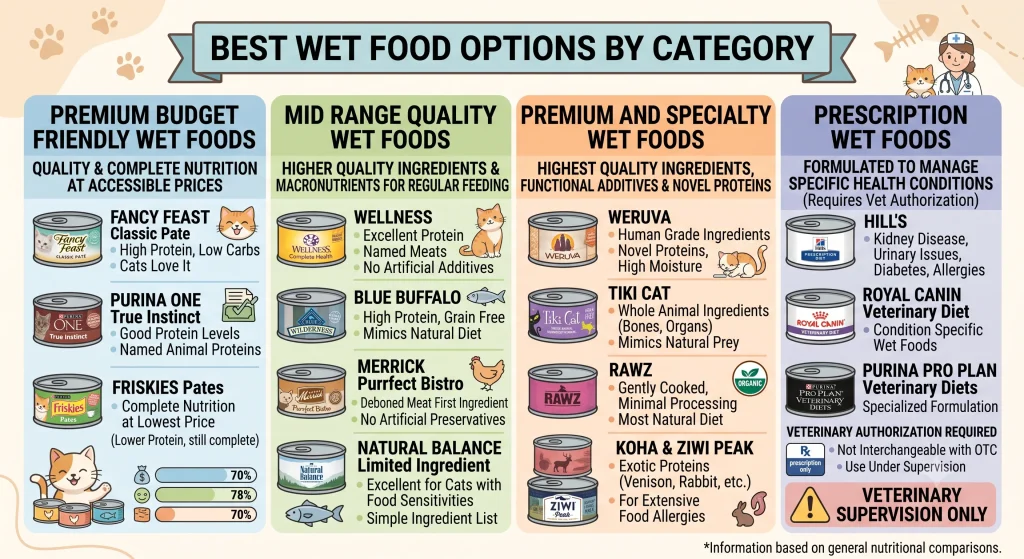
You do not need to spend premium prices for quality wet food. Several well established brands produce nutritionally complete wet foods at accessible price points. Fancy Feast classic pates, not the grill or creme varieties, provide high protein, low carbohydrate nutrition in a format that most cats love. Purina One True Instinct wet foods offer good protein levels with named animal proteins. Friskies pates, while lower in protein than premium brands, still provide complete nutrition at the lowest price point. These budget friendly options allow owners to feed primarily wet food without exceeding their budget.
Mid Range Quality Wet Foods
Mid range wet foods offer higher quality ingredients and better macronutrient profiles than budget options while remaining affordable for regular feeding. Wellness Complete Health wet foods provide excellent protein levels with named meats and no artificial additives. Blue Buffalo Wilderness wet foods offer high protein, grain free formulations that mimic natural feline diets. Merrick Purrfect Bistro provides deboned meat as the first ingredient with no artificial preservatives. Natural Balance Limited Ingredient wet foods are excellent for cats with food sensitivities needing simple ingredient lists.
Premium and Specialty Wet Foods
Premium wet foods use the highest quality ingredients with strict sourcing standards and often include functional additives for specific health benefits. Weruva wet foods feature human grade ingredients with novel proteins and excellent moisture content. Tiki Cat uses whole animal ingredients including bones and organs to more closely mimic natural prey composition. Rawz offers gently cooked wet foods with minimal processing for cats needing the most natural diet possible. Koha and Ziwi Peak provide exotic proteins for cats with extensive food allergies needing novel protein sources not found in standard formulations.
Prescription Wet Foods
Prescription wet foods are formulated to manage specific health conditions including kidney disease, urinary issues, diabetes, and food allergies. Hill’s Prescription Diet, Royal Canin Veterinary Diet, and Purina Pro Plan Veterinary Diets offer condition specific wet foods that require veterinary authorization. These foods are not interchangeable with over the counter options and should only be used under veterinary supervision for diagnosed conditions. The higher cost reflects the specialized formulation and controlled manufacturing processes.
📚 The Complete Cat Care Bundle
Get 3 premium eBooks covering cat training, behavior, nutrition, and health. Instant digital download in one value-packed bundle.
Get the Bundle →Wet Food Textures and Your Cat’s Preferences
| Texture | Description | Best For |
|---|---|---|
| Pate | Smooth, uniform, mousse-like texture | Pickier cats, senior cats, cats with dental issues |
| Minced | Small bite-sized pieces in gravy or jelly | Most cats, those who enjoy texture but not large chunks |
| Shredded | Long shredded meat pieces in broth | Cats who enjoy chewing, younger cats with good teeth |
| Chunks in gravy | Larger meat pieces suspended in thick gravy | Cats who prefer recognizable meat pieces |
| Flaked | Thin layered fish or meat flakes in broth | Cats who prefer delicate textures |
Texture preference is highly individual and often fixed by adulthood. Cats that grew up eating pate may reject shredded food, and cats accustomed to chunks in gravy may refuse pate. Experiment with small quantities of different textures to identify your cat’s preferences before buying in bulk. Senior cats with dental problems or missing teeth often prefer pate or minced textures that require minimal chewing.
Ingredients to Prioritize and Avoid
Ingredients to Look For
- Named animal protein. Chicken, turkey, salmon, beef, duck, or rabbit as the first ingredient indicates high quality protein sourcing.
- Animal fat sources. Named fats like chicken fat, salmon oil, or fish oil provide essential fatty acids for skin, coat, and immune health.
- Added taurine. All complete cat foods should include added taurine because cats cannot synthesize adequate amounts.
- Vitamins and minerals. Chelated minerals and natural vitamin sources indicate higher quality ingredient selection.
- Broth or water. These provide moisture without adding unnecessary calories or carbohydrates.
- Omega fatty acids. Fish oil or flaxseed oil provide omega-three and omega-six fatty acids for skin and coat health.
Ingredients to Avoid
- Generic meat by-products. Unspecified by-products may include low quality rendered tissues from unknown species.
- Artificial colors. Cats do not see colors the way humans do and artificial colors provide no nutritional value.
- Artificial preservatives. BHA, BHT, and ethoxyquin are synthetic preservatives linked to health concerns. Natural preservatives like vitamin E and vitamin C are preferable.
- Added sugars. Sugar, corn syrup, and other sweeteners add empty calories and contribute to obesity and dental problems. Cats cannot taste sweetness anyway.
- Excessive gums. Guar gum, xanthan gum, and carrageenan are thickeners used in chunk and gravy formulations. Small amounts are generally safe, but excessive gum content may cause digestive upset in sensitive cats.
- Propylene glycol. This humectant is sometimes used in semi moist foods but is unnecessary in properly formulated wet food.
Practical Tips for Feeding Wet Food
- Feed at room temperature. Cold wet food is less aromatic and less appealing to cats. Warm the food slightly by placing the sealed can in warm water for five minutes before serving. Do not microwave, which can create hot spots that burn the mouth.
- Cover and refrigerate opened cans. Opened wet food stays fresh in the refrigerator for two to three days. Cover the can with a tight fitting lid or transfer leftovers to an airtight container.
- Discard uneaten food after one hour. Wet food left at room temperature for more than one hour should be discarded because bacterial growth accelerates in the moist, protein rich environment.
- Transition gradually if switching foods. Mix increasing amounts of new wet food with the current food over seven to ten days. Abrupt changes cause digestive upset even with high quality foods.
- Consider smaller cans for single cat households. Three ounce cans provide appropriate single servings for most cats, reducing waste from opened larger cans. Five and a half ounce cans work better for multi-cat households or cats needing larger portions.
- Rotate proteins and brands. Feeding a variety of protein sources and brands provides nutritional diversity and reduces the risk of developing food sensitivities. Rotate every few weeks or whenever you buy new stock.
- Combine wet and dry if budget requires. If exclusive wet food feeding exceeds your budget, feeding wet food for one to two meals and dry food for one meal still provides significant hydration and nutritional benefits compared to dry food alone.
- Check expiration dates before purchasing. Wet food has a limited shelf life. Check expiration dates and buy stock that provides at least several months before expiration for optimal freshness.
Wet Food and Dental Health
A common concern about wet food is that it does not clean teeth like dry kibble. The reality is that neither wet nor dry food effectively cleans teeth. The dry kibble dental cleaning claim is largely a myth. Dry kibble shatters on impact and does not provide meaningful mechanical cleaning. The best approach to feline dental health is regular tooth brushing with veterinary toothpaste, dental treats approved by the Veterinary Oral Health Council, and professional dental cleanings as recommended by your veterinarian. Wet food itself does not cause dental disease, and the hydration and nutritional benefits of wet food generally outweigh any theoretical dental disadvantages.
Expert Tips From My Practice
The most common wet food mistake I see is owners buying an expensive premium brand that their cat refuses to eat, then concluding that their cat simply does not like wet food. Cats are individuals with distinct texture and flavor preferences. A cat that rejects one pate may devour a minced variety from a different brand. Before committing to any food, buy single cans of three to five different textures and brands. Offer a small amount of each over several days. The food your cat actually eats provides more nutrition than the theoretically best food they refuse. Palatability is not optional, it is essential.
- Read the back, not the front. Front of package claims like natural, holistic, and premium are unregulated marketing terms. The guaranteed analysis, ingredient list, and AAFCO statement on the back or side panel provide real nutritional information.
- Calculate cost per calorie. A cheap can with low calories may cost more per calorie fed than a premium can with higher calorie density. Compare cost per calorie rather than cost per can for accurate budget planning.
- Buy in bulk when possible. Buying wet food by the case reduces per can cost significantly. Online retailers and warehouse stores offer substantial discounts for case purchases compared to individual cans from pet stores.
- Monitor stool quality. Stool quality tells you more about food suitability than any label. Well formed, firm stools that are easy to scoop indicate good digestibility. Loose or excessively firm stools warrant food adjustment.
- Observe your cat’s reaction. Enthusiastic eating, consistent finishing, and good energy after meals indicate the food agrees with your cat. Disinterest, leaving food, or vomiting within two hours of eating may indicate the food is not appropriate.
- Use wet food for medication administration. The strong aroma and palatable texture of wet food makes it ideal for hiding medications. Pill pockets made from wet food work better than commercial pill pockets for many cats.
- Do not mix brands in the same bowl. Different brands have different nutrient profiles and textures. Mixing them in a single serving can reduce palatability and makes it harder to identify which food your cat prefers or tolerates.
📚 The Complete Cat Care Bundle
Get 3 premium eBooks covering cat training, behavior, nutrition, and health. Instant digital download in one value-packed bundle.
Get the Bundle →FAQ
Is wet food better than dry food for cats?
Wet food is generally better for cats because it provides hydration, lower carbohydrates, and higher protein that more closely matches their natural dietary needs. However, quality dry food can be part of a balanced diet when wet food feeding is not feasible.
How much wet food should I feed my cat daily?
Most adult cats need approximately two to three three ounce cans or one to two five and a half ounce cans daily, depending on calorie content and your cat’s individual needs. Calculate based on your cat’s ideal weight and the specific food’s calorie content.
Can I feed my cat only wet food?
Yes, as long as the wet food is nutritionally complete and balanced according to AAFCO standards. Exclusive wet food feeding provides excellent hydration and nutrition for cats. Ensure you select a complete and balanced formulation rather than a supplemental product.
Is expensive wet cat food worth the cost?
Not always. Some expensive wet foods use higher quality ingredients and better sourcing, but mid range brands provide complete nutrition at significantly lower cost. The best food is one your cat will eat consistently and that fits your budget for long term feeding.
How long can open wet cat food sit out?
Opened wet cat food should not sit out for more than one hour. Bacteria grow rapidly in the moist protein rich environment. Refrigerate leftovers immediately and discard any food left uneaten after one hour to prevent foodborne illness.
What ingredients should I avoid in wet cat food?
Avoid artificial colors, artificial preservatives, added sugars, generic meat by-products without species specification, and carrageenan if your cat has digestive sensitivity. Prioritize foods with named animal protein as the first ingredient.
Can wet food cause diarrhea in cats?
Wet food can cause diarrhea if introduced too quickly, if your cat has a specific ingredient intolerance, or if the food contains ingredients your cat cannot digest. Transition gradually over seven to ten days to minimize digestive upset.
How do I transition my cat from dry to wet food?
Transition gradually over seven to ten days. Start with approximately twenty-five percent wet food mixed with seventy-five percent dry food. Gradually increase the wet food proportion while decreasing dry food. Some cats need longer transitions of two to three weeks.
Is grain free wet food better than regular wet food?
Most wet food is naturally grain free because the manufacturing process does not require grains for binding. The grain free label on wet food is often redundant. Focus on protein content and ingredient quality rather than grain free claims when choosing wet food.
Should I add water to my cat’s wet food?
Adding extra water to wet food can increase hydration further, which benefits cats with kidney disease, urinary issues, or constipation. Start with small amounts to avoid overwhelming your cat. Some cats enjoy the increased broth texture while others prefer thicker consistency.