

Table of Contents
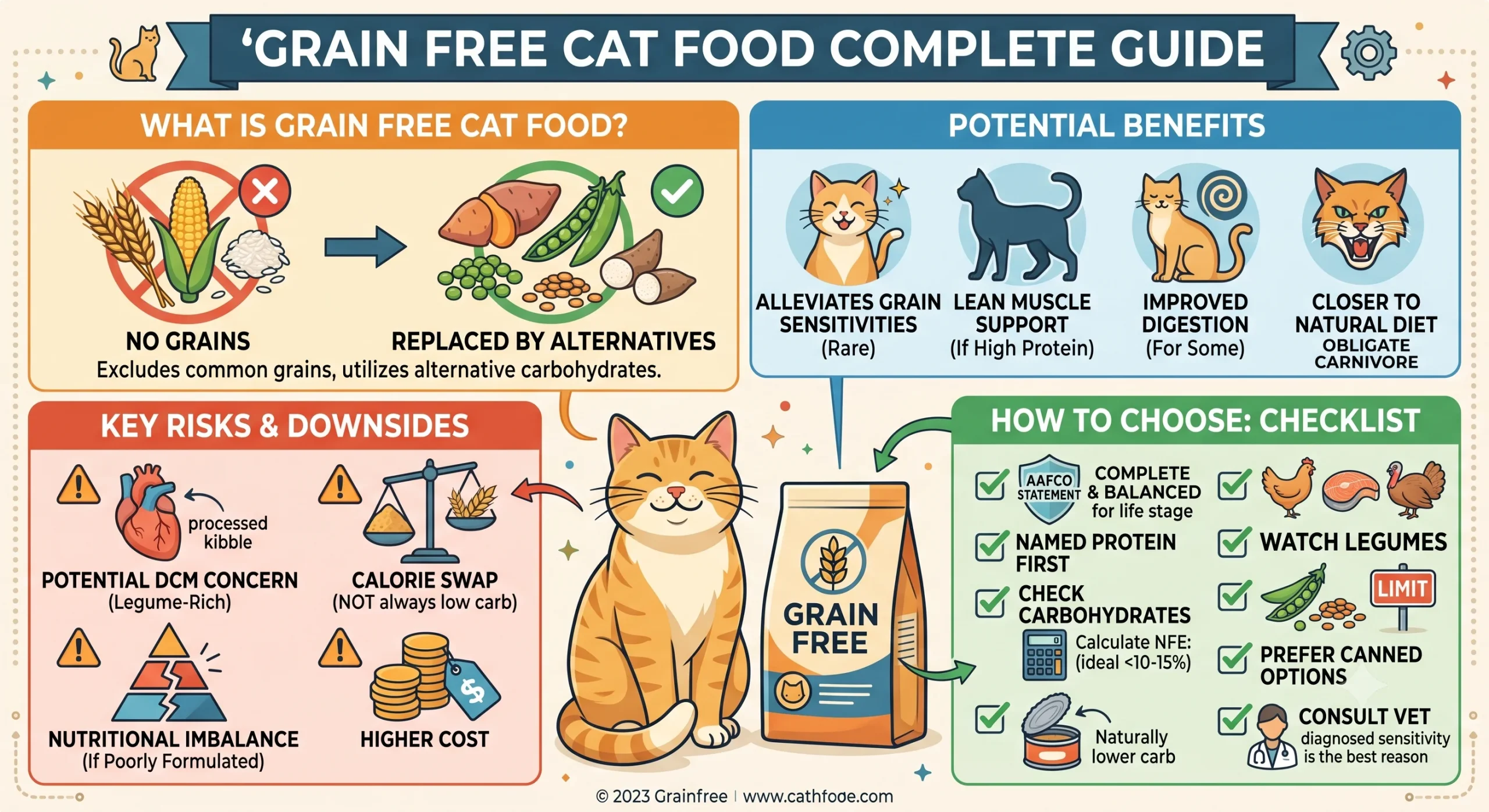
Grain Free Cat Food Complete Guide to Benefits, Risks, and Choosing the Best Options
You walk down the pet food aisle and every bag seems to say grain free in big bold letters. The marketing promises healthier cats, shinier coats, better digestion, and fewer allergies. It sounds convincing, but the price tag is higher and you start wondering whether grain free is actually better for your cat or just better for the company selling it. Maybe your cat has been eating grain inclusive food for years with no issues, and you feel pressure to switch without understanding why.
Or maybe your cat has sensitive skin or digestive problems and you are looking for answers. The grain free debate in cat nutrition is one of the most confusing topics for pet owners, largely because the truth is more nuanced than both the marketing hype and the fear mongering would suggest.
As a certified veterinary expert and professional cat behaviorist, I have spent years evaluating nutritional research and seeing firsthand which diets produce healthy cats and which create problems. This guide breaks down what grain free cat food actually means, whether cats need grains at all, the real benefits of grain free diets for specific cats, the legitimate risks including the potential link to heart disease, how to choose a quality grain free food, and how to determine whether grain free is right for your individual cat. The answer, as with most things in nutrition, depends entirely on your cat’s specific health status, not on marketing claims or internet trends.
📚 Recommended Cat Guides
🐱 The Trainable Cat Book
Learn proven methods to train your cat and stop unwanted behaviors.
View Book →❤️ Complete Cat Care Manual
Your complete guide to cat nutrition, health, grooming, behavior, and daily care.
Get the Manual →What Grain Free Cat Food Actually Means
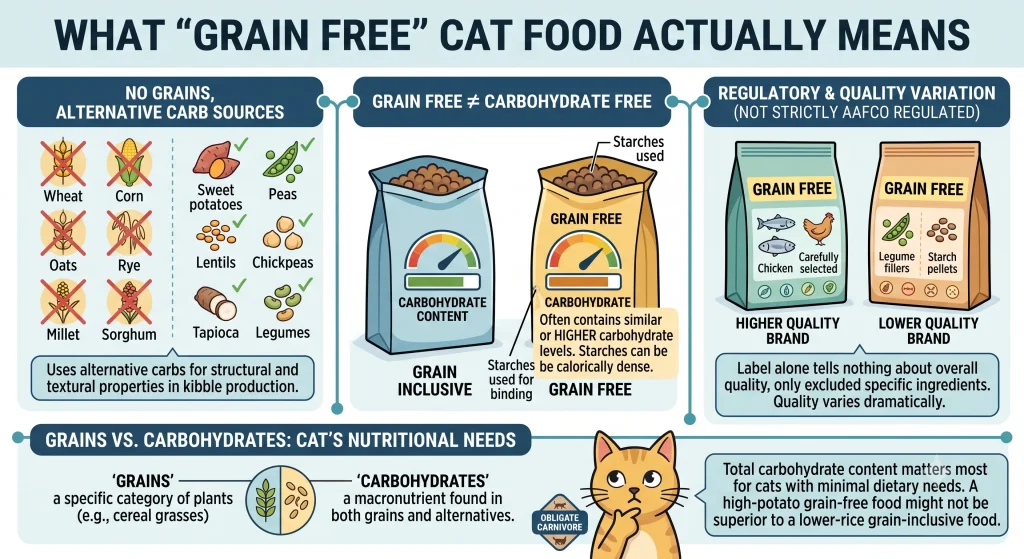
Grain free cat food contains no grains including wheat, corn, rice, barley, oats, rye, millet, or sorghum. Instead, grain free foods rely on alternative carbohydrate sources like sweet potatoes, potatoes, peas, lentils, chickpeas, tapioca, or various legumes to provide the structural and textural properties that grains normally contribute to kibble production. It is important to understand that grain free does not mean carbohydrate free. Many grain free foods contain similar or even higher carbohydrate levels than grain inclusive foods because the alternative starches used to bind kibble can be calorically dense. The primary difference is the source of those carbohydrates, not the total amount.
Regulatory Definition
The term grain free is not strictly regulated by the Association of American Feed Control Officials or any governing body. Any manufacturer can label a food grain free as long as it does not contain grain ingredients. This means quality varies dramatically between brands. Some grain free foods use high quality animal proteins and carefully selected alternative carbohydrates, while others use cheap fillers including legumes and starches that provide minimal nutritional value. The label alone tells you nothing about overall food quality, only that it excludes specific ingredients.
Grains Versus Carbohydrates
Understanding the difference between grains and carbohydrates is essential. Grains are a specific category of plants that include cereal grasses. Carbohydrates are a macronutrient found in grains and many other foods. A grain free food may contain substantial carbohydrates from potatoes, peas, or legumes, even though it contains no grains. For cats, which evolved as obligate carnivores with minimal dietary carbohydrate requirements, the total carbohydrate content matters more than whether the carbohydrates come from grains or alternative sources. A grain free food with high carbohydrate content from potatoes may not be nutritionally superior to a grain inclusive food with lower carbohydrate content from rice.
📚 The Complete Cat Care Bundle
Get 3 premium eBooks covering cat training, behavior, nutrition, and health. Instant digital download in one value-packed bundle.
Get the Bundle →Do Cats Need Grains in Their Diet?
The short answer is no. Cats have no nutritional requirement for grains. As obligate carnivores, their evolutionary diet consisted of prey animals including rodents, birds, and small reptiles, which provided protein, fat, moisture, and minimal carbohydrates from stomach contents. Grains offer no essential nutrients that cats cannot obtain from animal sources. However, the absence of nutritional requirement does not mean grains are harmful. Appropriately processed grains in moderate amounts provide digestible carbohydrates and fiber that many cats tolerate perfectly well. The question is not whether cats need grains but whether grain free diets offer advantages that justify the higher cost and potential risks.
Potential Benefits of Grain Free Cat Food
Reduced Allergic Reactions
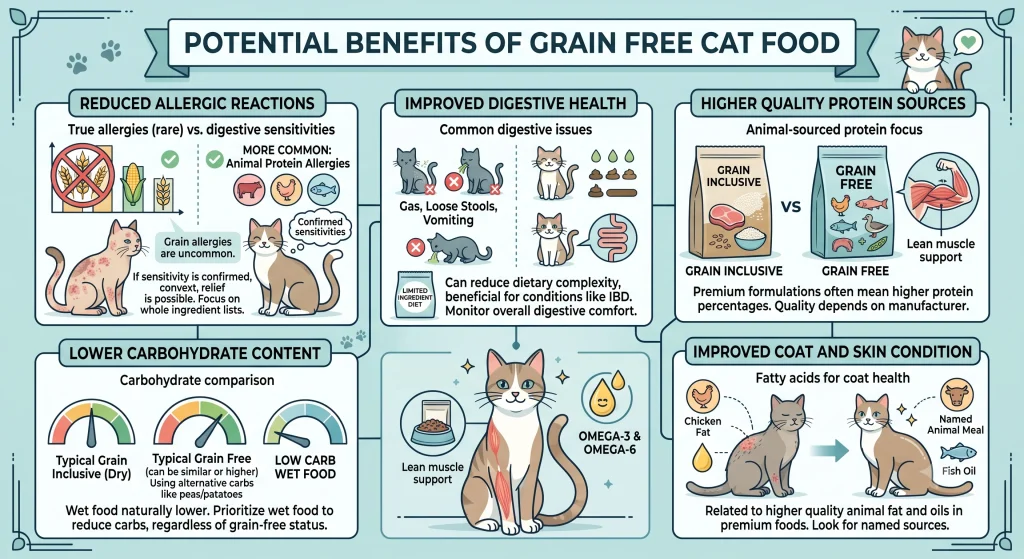
True grain allergies in cats are significantly less common than many pet owners believe. Studies suggest that food allergies in cats account for approximately ten to fifteen percent of all allergic skin disease. Among those cases, the most common allergens are animal proteins including beef, dairy, chicken, and fish, not grains. True grain allergies, where the immune system specifically reacts to grain proteins like wheat gluten or corn, are rare. However, some cats with digestive sensitivities do better on grain free diets because they have difficulty digesting certain grain components or because the alternative carbohydrate sources are more easily tolerated. If your cat has confirmed grain sensitivity, a grain free diet may provide relief.
Improved Digestive Health
Some cats experience digestive issues with grain inclusive foods including gas, loose stools, or vomiting. Switching to a grain free diet sometimes resolves these symptoms. The improvement may result from eliminating grains specifically or from the higher quality ingredients often found in grain free formulations. Cats with inflammatory bowel disease or other chronic digestive conditions sometimes benefit from grain free diets, particularly those with limited ingredient lists that reduce overall dietary complexity. Monitor your cat’s stool quality and digestive comfort when evaluating whether grain free improves digestive health.
Higher Quality Protein Sources
Many grain free foods contain higher protein percentages and more animal sourced ingredients than grain inclusive foods. This reflects consumer demand for premium formulations rather than an inherent benefit of grain free composition. The higher protein content better matches feline nutritional requirements and supports lean muscle maintenance. However, high protein grain inclusive foods also exist. The protein quality depends on the manufacturer’s formulation priorities, not on whether the food includes grains.
Lower Carbohydrate Content
Some grain free foods contain lower carbohydrate percentages than typical grain inclusive foods, though this is not universal. Grain free foods that use alternative carbohydrates like peas or chickpeas may still contain significant carbohydrate levels. The grain free foods with the lowest carbohydrate content are typically canned wet foods, which are naturally lower in carbohydrates regardless of whether they are labeled grain free. If reducing carbohydrates is your goal, prioritize low carbohydrate wet foods over grain free dry foods that may contain similar carbohydrate levels to grain inclusive alternatives.
Improved Coat and Skin Condition
Some owners report shinier coats and improved skin condition after switching to grain free diets. This improvement likely relates to increased omega-three and omega-six fatty acid content from higher quality animal fat sources in premium grain free foods rather than the absence of grains. Higher quality grain inclusive foods with adequate fatty acid profiles produce similar coat improvements. If coat condition is your primary concern, look for foods with named animal fat sources and added fish oil rather than focusing on grain content.
Potential Risks and Downsides of Grain Free Cat Food
Dilated Cardiomyopathy Concerns
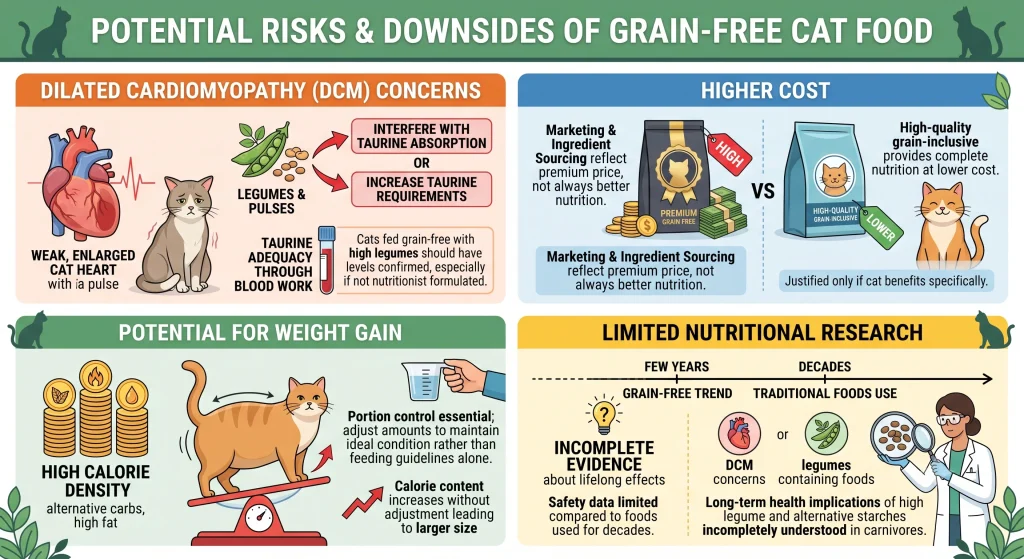
The most significant concern regarding grain free cat foods involves a potential link to taurine deficiency and dilated cardiomyopathy, a serious heart condition where the heart muscle becomes weakened and enlarged. The connection appears to involve legumes and pulses commonly used in grain free foods to replace grains. Some studies suggest that certain legumes interfere with taurine absorption or increase taurine requirements, though the exact mechanism remains under investigation. While DCM is less common in cats than in dogs on grain free diets, cases have been documented. Cats fed grain free diets with high legume content should have adequate taurine levels confirmed through blood work, especially if the diet is not formulated by a board certified veterinary nutritionist.
Higher Cost
Grain free cat foods consistently cost more than grain inclusive alternatives. The premium pricing reflects marketing and ingredient sourcing rather than necessarily superior nutrition. For cat owners on a budget, high quality grain inclusive foods from reputable manufacturers provide complete nutrition at lower cost. The extra expense of grain free food is justified only if your cat specifically benefits from grain free formulation, not as a general health investment.
Potential for Weight Gain
Some grain free foods contain higher calorie density due to the alternative carbohydrates and increased fat content used to improve palatability. Cats transitioning to high calorie grain free foods without portion adjustment may gain weight. Portion control remains essential regardless of food type. Check the calorie content per cup or can and adjust feeding amounts to maintain ideal body condition rather than relying on feeding guidelines alone.
Limited Nutritional Research
Long term safety data for grain free diets in cats is limited compared to traditional grain inclusive foods that have been used for decades. The DCM concerns in dogs and emerging questions about legume containing foods in cats highlight that grain free is a relatively recent trend with incomplete evidence about lifelong feeding effects. Reputable manufacturers formulate grain free foods to meet AAFCO nutritional standards, but the long term health implications of feeding high levels of legumes and alternative starches to carnivores remain incompletely understood.
How to Choose a Quality Grain Free Cat Food
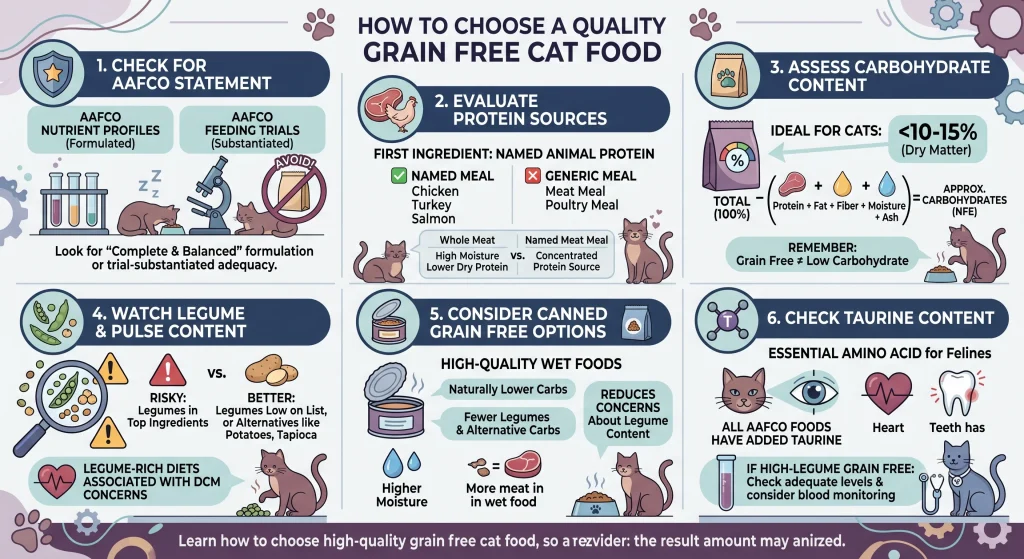
Check for AAFCO Nutritional Adequacy Statement
The most important indicator of complete nutrition is the AAFCO nutritional adequacy statement. This statement confirms that the food meets established nutritional requirements for cats at the specified life stage. Look for a statement that says the food is formulated to meet nutritional levels established by AAFCO Cat Food Nutrient Profiles or that feeding trials have substantiated the food’s nutritional adequacy. Avoid foods without explicit AAFCO statements regardless of any other claims on the label.
Evaluate Protein Sources
The first ingredient should be a named animal protein source such as chicken, turkey, salmon, or beef. Avoid foods with generic terms like meat meal or poultry meal that do not specify the animal species. Multiple named animal protein sources in the top ingredients indicate higher protein content from animal sources, which is appropriate for cats. Whole meat ingredients listed before meals indicate higher moisture content but lower dry weight protein contribution, so named meat meals are actually more concentrated protein sources.
Assess Carbohydrate Content
Calculate approximate carbohydrate content by subtracting protein, fat, fiber, moisture, and ash from the total. The result is the nitrogen free extract, an estimate of carbohydrate content. For cats, carbohydrate content below ten to fifteen percent on a dry matter basis is ideal. Higher carbohydrate grain free foods offer no advantage over grain inclusive alternatives. Compare carbohydrate content across foods rather than assuming grain free automatically means low carbohydrate.
Watch Legume and Pulse Content
Grain free foods that rely heavily on peas, lentils, chickpeas, and other legumes as primary carbohydrate sources raise more concerns than foods using potatoes, sweet potatoes, or tapioca. The DCM concerns are specifically associated with legume rich diets. If feeding grain free, choose options where legumes appear lower on the ingredient list and animal proteins dominate the formulation. Foods with multiple legume ingredients listed in the first five to ten positions are more likely to raise nutritional concerns.
📚 The Complete Cat Care Bundle
Get 3 premium eBooks covering cat training, behavior, nutrition, and health. Instant digital download in one value-packed bundle.
Get the Bundle →Consider Canned Grain Free Options
High quality grain free wet foods naturally contain lower carbohydrates than dry foods because moisture replaces the need for structural starches. Canned grain free foods also contain fewer legumes and alternative carbohydrates than dry grain free foods. Feeding primarily canned food with minimal dry food, whether grain free or grain inclusive, better matches feline nutritional requirements and reduces concerns about legume content in dry formulations.
Check Taurine Content
Taurine is an essential amino acid that cats cannot synthesize in adequate amounts and must obtain from diet. All commercial cat foods meeting AAFCO standards contain added taurine, but levels vary. If feeding a grain free diet with high legume content, check that the taurine content is adequate and consider periodic blood taurine level monitoring. Signs of taurine deficiency include vision problems, dental issues, and heart abnormalities. Most reputable manufacturers add sufficient taurine to their grain free formulations, but independent verification provides additional peace of mind.
When Grain Free May Not Be the Best Choice
- Your cat is healthy on their current food. If your cat has a healthy coat, normal digestion, stable weight, and no signs of food sensitivity, switching to grain free without a specific reason introduces unnecessary variables and expense.
- Your cat has heart disease concerns. Cats with existing heart conditions should avoid grain free diets high in legumes until more research clarifies the DCM link. Discuss dietary options with your veterinarian for cats with heart disease.
- Your cat is a picky eater resistant to change. Switching to a grain free diet requires a gradual seven to ten day transition. Picky eaters may reject new food entirely, causing nutritional gaps. If your cat is finicky, consider whether the benefits justify the transition difficulty.
- You have budget constraints. High quality grain inclusive foods from reputable manufacturers provide complete nutrition at lower cost. Your budget is better spent on a balanced grain inclusive diet than a marginal grain free option.
- Your cat has kidney disease. Some grain free foods contain higher protein levels that may need modification for cats with kidney disease. Always discuss dietary changes with your vet if your cat has chronic health conditions.
- Your cat has pancreatitis. High fat grain free foods may trigger pancreatitis in susceptible cats. Check fat content carefully and discuss with your veterinarian before switching.
Grain Free Versus Limited Ingredient Diets
Grain free and limited ingredient diets are not the same. Limited ingredient diets use a minimal number of ingredients to reduce the chance of adverse food reactions. A limited ingredient diet may or may not be grain free. Some limited ingredient diets use rice or oats as the sole carbohydrate source. If you suspect your cat has food allergies, a limited ingredient diet with a single novel protein and single novel carbohydrate, which may or may not be grain free, provides more diagnostic value than simply switching to a grain free food with multiple protein and carbohydrate sources.
Expert Tips From My Practice
I have treated cats that truly benefited from grain free diets, particularly those with confirmed grain sensitivities or inflammatory bowel disease that improved dramatically on grain free limited ingredient foods. But I have treated far more cats whose owners switched to grain free for no specific reason, spent more money, and saw no health improvement whatsoever. The most common result of switching to grain free without cause is a lighter wallet and the same cat. Before you switch, ask yourself what specific problem you are trying to solve. If you cannot name one, the switch is probably unnecessary.
- Look beyond the marketing. The words grain free on the front of the bag are marketing. The ingredient list and guaranteed analysis on the back provide real nutritional information. Read the back of the bag before making decisions.
- Prioritize animal protein. Regardless of grain free status, the best cat foods list named animal protein as the first ingredient and contain multiple animal protein sources before carbohydrate sources appear. This reflects a carnivore appropriate formulation.
- Moisture matters more than grain content. Increasing your cat’s moisture intake through canned food provides measurable health benefits for urinary tract and kidney health. A grain inclusive canned food with high moisture content is superior to a grain free dry food with low moisture.
- Transition any new food slowly. Switching abruptly to any new food, grain free or not, causes digestive upset. Transition over seven to ten days, gradually increasing the proportion of new food while decreasing the old.
- Monitor your cat after switching. After switching to grain free, watch for changes in coat condition, stool quality, energy level, and appetite over two to four weeks. If no improvements occur, the grain free change was likely unnecessary.
- Consult your veterinarian. Before making significant dietary changes, discuss with your veterinarian. They know your cat’s health history and can recommend appropriate options based on individual needs rather than marketing trends.
- Consider rotational feeding. Some nutritionists recommend rotating between two to three high quality foods to provide nutritional diversity and reduce the risk of developing food sensitivities to any single ingredient. This approach works with either grain free or grain inclusive diets.
FAQ
Is grain free cat food better for cats?
Grain free cat food is not inherently better for all cats. It is beneficial for cats with confirmed grain allergies or digestive sensitivities to grains. For healthy cats without these issues, high quality grain inclusive foods provide complete nutrition at lower cost without proven disadvantages.
Why do some vets recommend against grain free cat food?
Some veterinarians express caution about grain free diets due to concerns about dilated cardiomyopathy linked to legume heavy formulations, the higher cost without proven benefit for most cats, and the incomplete long term safety data for high legume grain free diets.
Can grain free cat food cause heart disease in cats?
Research shows a link between grain free diets high in legumes and pulses and dilated cardiomyopathy in dogs, with emerging evidence that similar concerns may exist in cats. The exact relationship is still under investigation, but caution is warranted for long term use of legume heavy grain free diets.
What are the symptoms of grain allergy in cats?
True grain allergy symptoms include skin itching, hair loss, ear infections, gastrointestinal upset, and chronic inflammation. However, food allergies in cats are more commonly caused by animal proteins like beef, dairy, chicken, or fish rather than grains.
How do I know if my cat needs grain free food?
Your cat may need grain free food if they have a confirmed grain allergy through elimination diet testing, if they show consistent digestive issues with grain inclusive foods, or if your veterinarian recommends grain free for a specific diagnosed condition. Otherwise, grain free is likely unnecessary.
What ingredients should I look for in grain free cat food?
Look for named animal protein as the first ingredient, moderate fat content from named animal fat sources, alternative carbohydrates like sweet potatoes or peas appearing lower on the ingredient list, and added taurine. Avoid foods with multiple legumes in the top five ingredients.
Are legumes in grain free cat food safe?
Legumes in moderate amounts are generally considered safe for most cats. However, grain free diets relying heavily on legumes as primary carbohydrate sources raise more nutritional concerns than those using potatoes or tapioca. Moderation and ingredient diversity reduce potential risks.
Can I mix grain free and grain inclusive food?
Yes, mixing grain free and grain inclusive food is safe provided both foods are nutritionally complete and balanced. Mixing allows you to provide dietary variety while managing cost. Ensure the combined diet meets AAFCO nutritional standards for your cat’s life stage.
Is grain free food good for cats with diabetes?
Grain free foods with low carbohydrate content can benefit diabetic cats because they reduce the glucose spike after meals. However, check the actual carbohydrate content rather than assuming grain free means low carb. Some grain free foods contain substantial carbohydrates from alternative sources.
How much more expensive is grain free cat food?
Grain free cat foods typically cost twenty to fifty percent more than comparable grain inclusive foods from the same brand. The premium reflects ingredient sourcing and marketing rather than necessarily superior nutritional value for most cats.