

Table of Contents
Cat Vaccination Schedule Complete Guide for Every Life Stage
You brought your kitten home. Your vet said they need shots. You nodded. You forgot exactly which shots, when they’re due, and why some are considered essential while others are optional. Now your cat is two years old and you’re not sure if they’re up to date. You’re not alone. Vaccination schedules are confusing, the terminology is overwhelming, and the internet is full of conflicting opinions about whether vaccines are necessary, dangerous, or somewhere in between. Here is the truth that matters: vaccinations save lives. They prevent deadly diseases that still exist in the real world, and skipping them because your cat seems healthy is like skipping your seatbelt because you’ve never been in an accident.
As a certified veterinary expert and professional cat behaviorist, I’ve seen the devastating consequences of preventable diseases in unvaccinated cats, and I’ve also seen the peace of mind that comes from knowing your cat is protected. This guide covers every vaccine your cat needs, the complete vaccination schedule from kittenhood through senior years, the difference between core and non-core vaccines, the real risks and benefits, and how to work with your vet to create a vaccination plan tailored to your cat’s specific lifestyle and risk factors.
📚 Recommended Cat Guides
🐱 The Trainable Cat Book
Learn proven methods to train your cat and stop unwanted behaviors.
View Book →❤️ Complete Cat Care Manual
Your complete guide to cat nutrition, health, grooming, behavior, and daily care.
Get the Manual →Why Vaccinations Matter for Cats
Vaccinations work by training your cat’s immune system to recognize and fight specific viruses and bacteria before they cause disease. Without vaccination, a cat exposed to feline panleukopenia, rabies, or feline leukemia has no immune memory to draw on and must fight the infection with unprepared defenses. Vaccinated cats either don’t get sick at all or experience significantly milder illness. The diseases vaccines prevent are not theoretical. Feline panleukopenia kills kittens. Rabies kills cats and humans. Feline leukemia shortens lifespans dramatically. These diseases still circulate in cat populations worldwide, and indoor cats are not immune to exposure.
Core Vaccines vs Non-Core Vaccines

Core Vaccines
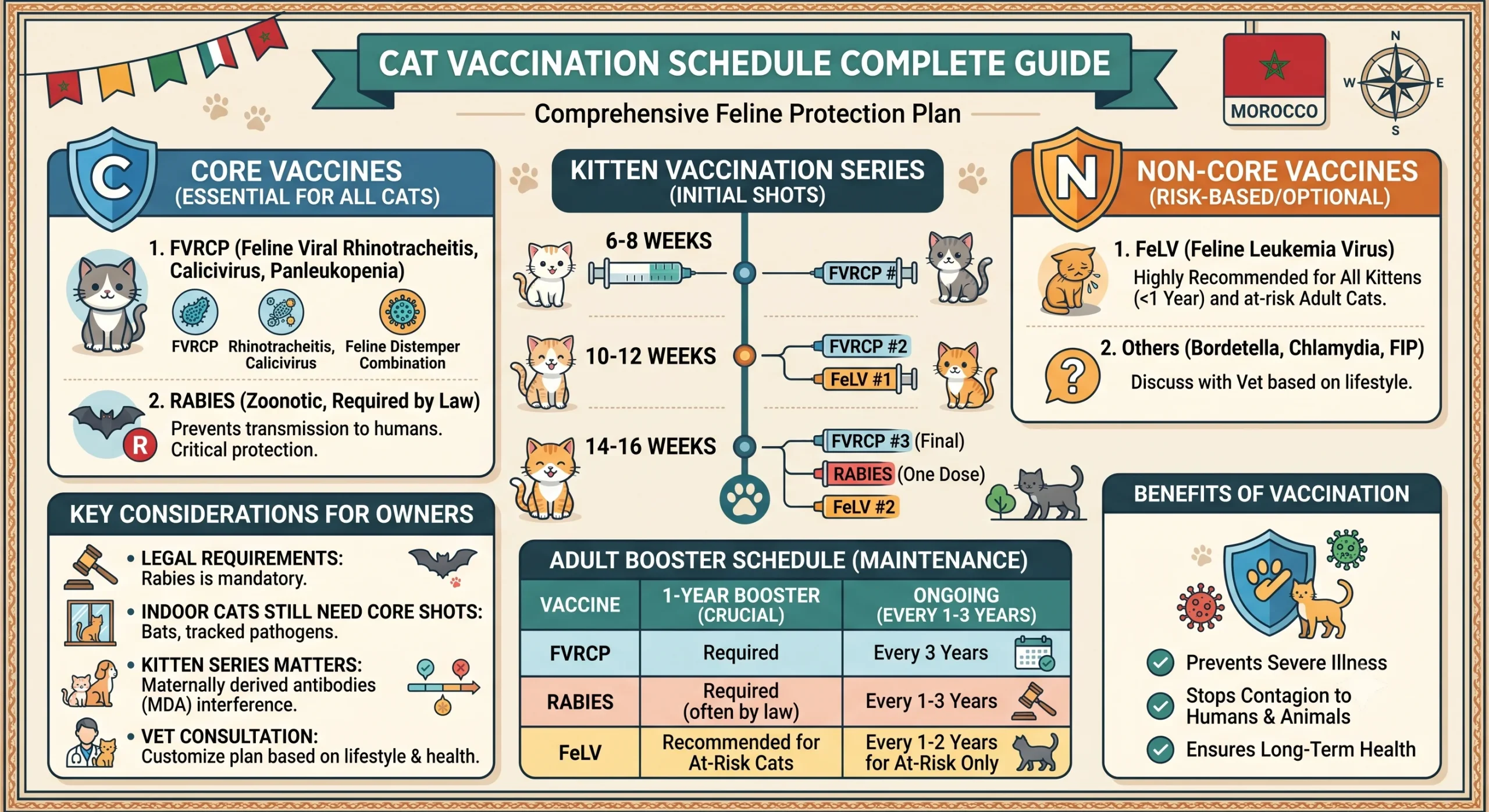
Core vaccines are considered essential for all cats regardless of lifestyle because they protect against diseases that are widespread, highly contagious, and potentially fatal. Every cat should receive core vaccines on schedule. These include:
- Rabies. Required by law in most jurisdictions. Rabies is fatal to both cats and humans with no cure once symptoms appear. Cats can contract rabies from wildlife, bats, and other infected animals even in indoor environments.
- Feline Panleukopenia (FPV). Also called feline distemper. This highly contagious virus attacks the intestinal lining, bone marrow, and immune system. It is often fatal in kittens and carries significant mortality even in adults. The virus persists in the environment for months to years.
- Feline Calicivirus (FCV). A leading cause of upper respiratory infections in cats. While rarely fatal on its own, calicivirus causes painful oral ulcers, fever, and pneumonia in severe cases. It mutates frequently, making ongoing vaccination important.
- Feline Herpesvirus-1 (FHV-1). The other major cause of feline upper respiratory disease. Herpesvirus establishes lifelong latent infection, meaning the cat carries it forever with periodic reactivation during stress. Vaccination reduces severity and duration of flare-ups.
Non-Core Vaccines
Non-core vaccines are recommended based on your cat’s individual risk factors, lifestyle, and exposure potential. They are not required for every cat but may be essential for cats with specific lifestyles:
- Feline Leukemia Virus (FeLV). Recommended for all kittens and for any cat who spends time outdoors or lives with FeLV-positive cats. FeLV suppresses the immune system and causes fatal cancers. The vaccine is highly effective when administered properly.
- Bordetella bronchiseptica. A bacterial cause of respiratory infection, recommended for cats in multi-cat environments, boarding facilities, shelters, or catteries where close contact increases transmission risk.
- Chlamydophila felis. A bacterial cause of conjunctivitis, recommended for cats in multi-cat environments where outbreaks occur. Less commonly needed for single-cat households.
- Feline Infectious Peritonitis (FIP). A newer vaccine with limited efficacy data, recommended only in high-risk environments where FIP has been documented.
Kitten Vaccination Schedule
| Age | Vaccine | Type |
|---|---|---|
| 6 to 8 weeks | FVRCP (first dose) | Core |
| 9 to 11 weeks | FVRCP (second dose) | Core |
| 9 to 11 weeks | FeLV (first dose) | Non-core (recommended for kittens) |
| 12 to 14 weeks | FVRCP (third dose) | Core |
| 12 to 14 weeks | FeLV (second dose) | Non-core |
| 12 to 16 weeks | Rabies | Core |
| 16 weeks | Bordetella (if needed) | Non-core |
FVRCP is a combination vaccine that protects against feline viral rhinotracheitis (FHV-1), calicivirus (FCV), and panleukopenia (FPV). It is the most important vaccine series your kitten will receive. The three-dose series is necessary because maternal antibodies passed through the placenta and milk can interfere with early vaccination. Each subsequent dose boosts immunity as maternal antibodies wane.
Adult Cat Vaccination Schedule
| Timeframe | Vaccine | Notes |
|---|---|---|
| 1 year after initial series | FVRCP booster | Required to complete kitten series |
| 1 year after initial series | Rabies booster | Required by law, frequency depends on vaccine type |
| 1 year after initial series | FeLV booster (if risk factors exist) | For outdoor cats or multi-cat environments |
| Every 1 to 3 years | FVRCP booster | Frequency determined by vet based on risk |
| Every 1 to 3 years | Rabies booster | 1-year or 3-year vaccine depending on product |
| Every 1 to 2 years | FeLV booster (if ongoing risk) | For cats with continued outdoor exposure |
Kitten to Adult Transition
The first booster given one year after the initial kitten series is critical. This booster completes the primary vaccination series and establishes long-term immunity. Skipping this booster leaves the kitten with incomplete protection that wanes within months. After the one-year booster, your vet determines ongoing frequency based on your cat’s lifestyle and risk factors.
Senior Cat Vaccination
Senior cats, typically those over seven to ten years old, may need modified vaccination schedules. Older immune systems sometimes respond less robustly to vaccines, and some seniors have health conditions that influence vaccination decisions. However, senior cats should not be completely unvaccinated because they remain susceptible to the same diseases as younger cats. Discuss appropriate timing and frequency with your vet, balancing vaccination benefits against any age-related health concerns.
📚 The Complete Cat Care Bundle
Get 3 premium eBooks covering cat training, behavior, nutrition, and health. Instant digital download in one value-packed bundle.
Get the Bundle →What Each Vaccine Prevents

Feline Panleukopenia
Panleukopenia is often called the cat equivalent of parvovirus in dogs. The virus attacks rapidly dividing cells, devastating the intestinal lining, bone marrow, and immune system. Symptoms include severe vomiting, bloody diarrhea, dehydration, fever, and sudden death. Kittens under six months have mortality rates approaching ninety percent even with aggressive treatment. The virus persists in the environment for up to a year, contaminating surfaces, bowls, litter boxes, and human clothing. Vaccination is the only reliable prevention.
Feline Calicivirus
Calicivirus causes upper respiratory symptoms including sneezing, nasal discharge, and eye discharge. Its hallmark is painful oral ulceration on the tongue, lips, and palate, which causes drooling, refusal to eat, and weight loss. Severe cases develop pneumonia. Some strains cause virulent systemic disease with high mortality. The virus mutates frequently, which is why regular vaccination is important even for previously vaccinated cats.
Feline Herpesvirus
Herpesvirus causes upper respiratory disease with sneezing, eye discharge, and conjunctivitis. After initial infection, the virus establishes latent infection in nerve tissues and reactivates during stress, illness, or immunosuppression. Recurrent flare-ups cause chronic conjunctivitis, corneal ulcers, and nasal discharge. Vaccination doesn’t prevent infection entirely but significantly reduces severity and frequency of flare-ups.
Rabies
Rabies is a viral encephalitis transmitted through saliva, usually via bite wounds from infected wildlife. It is invariably fatal once symptoms appear, affecting both the nervous system and behavior. Rabid cats may show unusual aggression, paralysis, drooling, and nighttime activity. Because rabies poses a direct threat to human health, vaccination is legally required in most jurisdictions. Indoor cats need rabies vaccination because bats and other wildlife occasionally enter homes.
Feline Leukemia
FeLV is a retrovirus that suppresses the immune system and predisposes cats to cancers, anemia, and secondary infections. Transmission occurs through saliva, nasal secretions, and mutual grooming. FeLV-positive cats have significantly shortened lifespans and require ongoing monitoring for related diseases. The vaccine is highly effective and recommended for all kittens and any cat with outdoor access or FeLV-positive housemates.
Vaccine Side Effects

Common Mild Reactions
Most vaccine reactions in cats are mild and self-limiting. Common responses include:
- Mild lethargy. Decreased activity for 24 to 48 hours after vaccination is normal and indicates the immune system is responding.
- Low-grade fever. Slight temperature elevation for one to two days is expected as the immune system activates.
- Soreness at injection site. Mild swelling or tenderness at the vaccination site resolves within a few days.
- Decreased appetite. Reduced food intake for one meal to one day is normal following vaccination.
- Mild sneezing. If the FVRCP vaccine was given intranasally, mild sneezing for a day or two is expected.
Rare Serious Reactions
While uncommon, serious vaccine reactions do occur and require immediate veterinary attention:
- Anaphylaxis. Facial swelling, difficulty breathing, collapse, or vomiting within minutes to hours of vaccination requires emergency treatment.
- Injection site sarcomas. Rare tumors that develop at vaccine injection sites, particularly with adjuvanted vaccines. These occur in approximately one in ten thousand vaccinated cats and typically appear months to years after vaccination.
- Fever persisting beyond 48 hours. Extended fever may indicate vaccine reaction or coincidental illness.
- Complete appetite loss persisting beyond 48 hours. Prolonged anorexia requires veterinary evaluation.
Vaccine Safety Considerations
Adjuvanted vs Non-Adjuvanted Vaccines
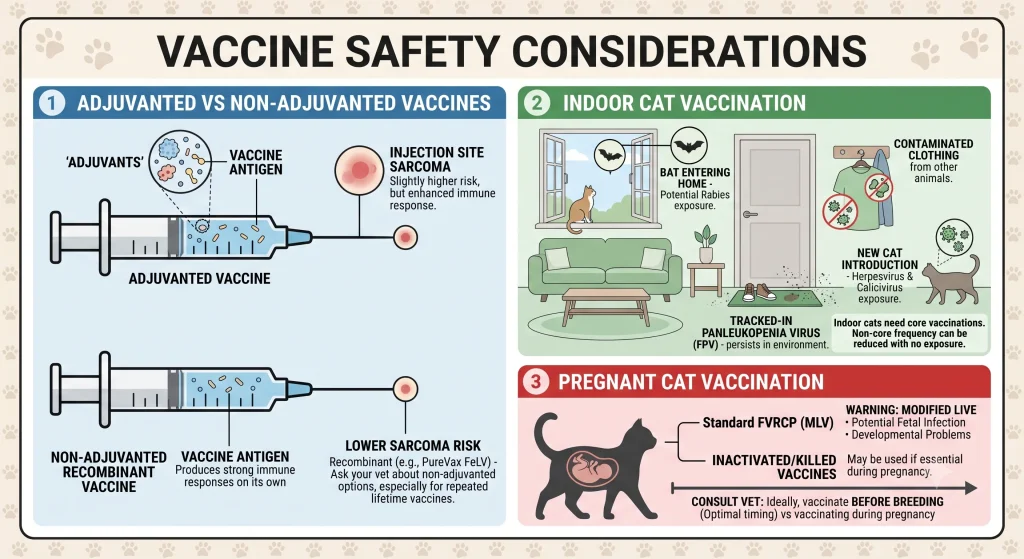
Adjuvants are additives included in some vaccines to enhance immune response. They are associated with a slightly higher risk of injection site sarcomas. Non-adjuvanted, recombinant vaccines, particularly the PureVax FeLV vaccine, produce strong immune responses without adjuvants. Ask your vet about non-adjuvanted options, especially for vaccines given repeatedly over a cat’s lifetime.
Indoor Cat Vaccination
Indoor cats still need core vaccinations. Rabies exposure can occur through bats entering homes, escaped cats encountering wildlife, or human clothing carrying virus particles. Panleukopenia virus persists in the environment and can be tracked in on shoes. Herpesvirus and calicivirus can be introduced through new cats entering the household. Non-core vaccines may be reduced in frequency for strictly indoor cats with no exposure to other animals.
Pregnant Cat Vaccination
Pregnant cats should not receive modified live virus vaccines, including standard FVRCP, because these can cause fetal infection and developmental problems. Inactivated killed vaccines may be used if vaccination is essential during pregnancy. Consult your vet about appropriate timing, ideally vaccinating before breeding rather than during pregnancy.
How to Track Your Cat’s Vaccinations
- Keep the vaccination certificate. Your vet provides a record after each vaccination. Store this with important pet documents.
- Create a digital backup. Photograph the vaccination record and store it on your phone or in cloud storage for easy access.
- Set calendar reminders. Add upcoming vaccination dates to your phone calendar with alerts two weeks before the due date.
- Use a pet health app. Many free apps track vaccination schedules and send automatic reminders.
- Request reminder calls. Most veterinary clinics offer reminder services by phone, text, or email before vaccination dates.
- Bring records to every visit. Provide vaccination history at every vet visit to ensure continuity of care.
Expert Tips From My Practice
The most common vaccination mistake I see is the owner who skips the one-year booster after the kitten series. This booster is not optional. Without it, the kitten’s immunity from the initial series wanes within months, leaving them completely unprotected. The one-year booster completes the primary series and establishes long-term immunity. Never skip it. Every other vaccination decision flows from the foundation built during kittenhood and the first-year booster.
- Don’t over-vaccinate. Not every cat needs every non-core vaccine every year. Tailor the vaccination plan to your cat’s actual risk factors, not a generic schedule.
- Don’t under-vaccinate. Skipping core vaccines because your cat seems healthy or stays indoors is dangerous. Diseases still exist, and exposure can happen in unexpected ways.
- Discuss titer testing. Antibody titer tests measure immunity levels and can help determine whether boosters are needed. Not all vets offer titer testing, and it doesn’t replace rabies vaccination which is legally required.
- Separate vaccination visits. If your cat needs multiple vaccines, consider spacing them across separate visits to reduce the chance of overwhelming the immune system and to make adverse reactions easier to identify.
- Watch your cat after vaccination. Monitor for 24 to 48 hours after any vaccination. Mild lethargy and decreased appetite are normal. Anything more severe warrants a call to your vet.
- Annual wellness exams matter. Vaccination schedules should be reviewed annually during wellness exams. Your vet adjusts recommendations based on your cat’s changing health status, age, and lifestyle.
- Cost should not be a barrier. Many veterinary clinics offer low-cost vaccination clinics. Preventive vaccination costs a fraction of treating the diseases vaccines prevent. Our complete cat care books cover preventive health strategies extensively.
FAQ
What vaccines do indoor cats need?
Indoor cats need core vaccines: FVRCP (feline panleukopenia, calicivirus, herpesvirus) and rabies. Rabies is legally required regardless of indoor status. FeLV vaccination is recommended for kittens and cats with any outdoor exposure or new cat introductions.
How often do cats need vaccinations?
Kittens receive vaccines every three to four weeks from six to sixteen weeks of age. A booster is given one year after the initial series. After that, most core vaccines are given every one to three years depending on risk factors and vaccine type.
Are cat vaccinations safe?
Cat vaccinations are generally very safe. Most side effects are mild and temporary, including lethargy, decreased appetite, and soreness at the injection site. Serious reactions are rare. The benefits of vaccination significantly outweigh the minimal risks for most cats.
What is FVRCP vaccine for cats?
FVRCP is a combination core vaccine protecting against feline viral rhinotracheitis (herpesvirus), calicivirus, and panleukopenia. It is the most important vaccine your cat receives and is given as a three-dose series to kittens, with boosters throughout life.
When do kittens get their first vaccine?
Kittens receive their first FVRCP vaccine at six to eight weeks of age, with subsequent doses given every three to four weeks until sixteen weeks. FeLV vaccination begins at nine to eleven weeks. Rabies is typically given at twelve to sixteen weeks.
Can adult cats get vaccinated for the first time?
Yes. Adult cats with no vaccination history should receive a primary series similar to kittens, typically two FVRCP doses spaced three to four weeks apart, plus rabies and FeLV based on risk assessment.
What happens if I miss my cat’s vaccination?
Missing a scheduled vaccination leaves your cat unprotected. Contact your vet to reschedule as soon as possible. Depending on how overdue the vaccination is, your vet may restart the series or administer a single booster.
Do cats need rabies if they never go outside?
Yes. Rabies vaccination is legally required in most jurisdictions regardless of indoor status. Bats and other wildlife can enter homes, and cats can escape. Rabies is fatal with no treatment, making prevention essential.
What is titer testing for cats?
Titer testing measures antibody levels in the blood to determine whether a cat still has immunity from previous vaccination. It can help reduce unnecessary boosters but does not replace legally required rabies vaccination.
Can vaccines cause cancer in cats?
Injection site sarcomas are a rare complication, occurring in approximately one in ten thousand vaccinated cats. Using non-adjuvanted vaccines and rotating injection sites minimizes this risk. The benefit of vaccination far exceeds this minimal risk.