

Table of Contents
Trim Cat Nails
Your cat needs their nails trimmed. You know this. But every time you try. It turns into a battle. Scratching. Hissing. Running. Hiding. You end up frustrated. And your cat ends up traumatized. Sound familiar. You are not alone. Nail trimming is one of the most dreaded tasks. For cat owners everywhere.
As a certified veterinary expert and professional cat behaviorist. I have trimmed thousands of cat nails. And I can tell you. It does not have to be a battle. With the right technique. The right tools. And the right approach. Nail trimming can be calm. Quick. And even enjoyable. For both of you.
This guide teaches you everything. When to trim. How to trim. What tools to use. And how to make your cat tolerate. Even accept nail trimming. By the end. You will never dread this task again.
📚 Recommended Cat Guides
🐱 The Trainable Cat Book
Learn proven methods to train your cat and stop unwanted behaviors.
View Book →❤️ Complete Cat Care Manual
Your complete guide to cat nutrition, health, grooming, behavior, and daily care.
Get the Manual →Why Trim Cat Nails
Cats need their nails trimmed. Even indoor cats. Here is why.
Prevent Overgrowth
Cat nails grow continuously. If they are not worn down naturally. They become overgrown. Overgrown nails curve. And can grow into the paw pad. This is extremely painful. And can cause infection. It is a veterinary emergency. Regular trimming prevents this.
Protect Furniture
Short nails do less damage. Even if your cat scratches furniture. Short nails cause less destruction. Trimming regularly. Reduces the impact. On your couch. Your chairs. Your carpet. Everything.
Prevent Getting Stuck
Long nails get stuck. In carpet. Fabric. Clothing. And skin. When a nail gets stuck. Your cat panics. They pull. Which can tear the nail. Or dislocate the toe. This is painful. And scary. Short nails prevent this.
Protect You
Long nails hurt. When your cat kneads. Or plays. Or scratches accidentally. Short nails are less sharp. And less painful. Trimming protects you. And your family. From accidental scratches.
Senior Cats Need Extra Help
Senior cats are less active. They scratch less. Which means their nails do not wear down naturally. Senior cats need more frequent trimming. To prevent overgrowth. And paw pad injuries.
How Often to Trim Cat Nails
Most cats need trimming every two to three weeks. But it depends on several factors.
| Factor | Trim More Often | Trim Less Often |
|---|---|---|
| Activity level | Indoor and inactive | Outdoor and active |
| Age | Senior cats | Young active cats |
| Scratching surfaces | Soft surfaces only | Sisal and rough surfaces |
| Nail growth rate | Fast growers | Slow growers |
| Number of claws | Including dewclaws | Only front claws |
Check your cat’s nails weekly. When the tips start to curve. Or when you hear clicking on hard floors. It is time to trim.
What Tools You Need
Cat Nail Clippers
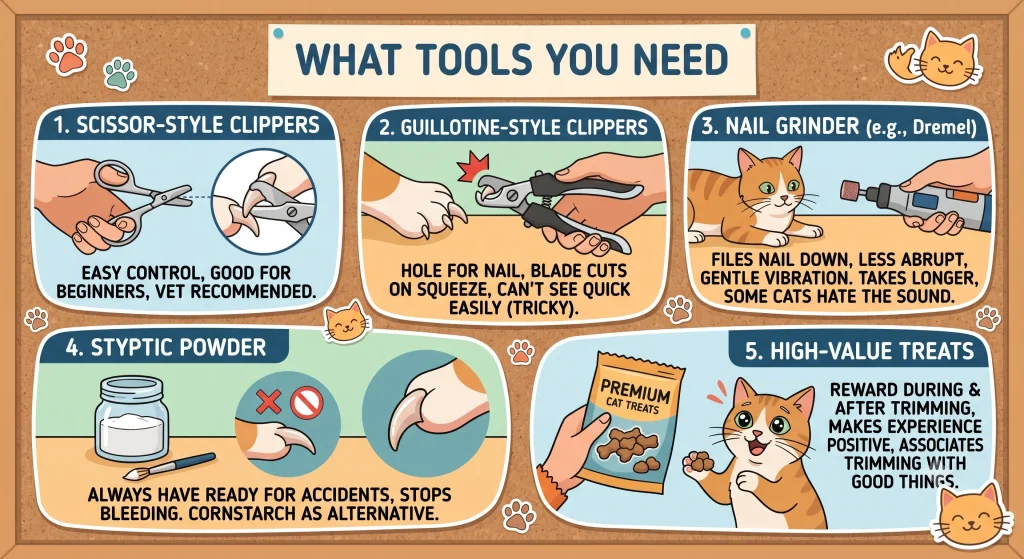
There are two main types. Scissor-style. And guillotine-style. Both work. It is personal preference.
- Scissor-style. Look like small scissors. Easy to control. Good for beginners. Recommended by most vets.
- Guillotine-style. Have a hole that the nail slides through. A blade cuts when you squeeze. Can be tricky. Because you cannot see the quick easily.
Nail Grinder
A nail grinder. Like Dremel. Files the nail down. Instead of cutting it. Some cats prefer this. Because it is less abrupt. No sudden snap. Just a gentle vibration. The downside. It takes longer. And some cats hate the sound. Try both. See what your cat tolerates better.
Styptic Powder
Accidents happen. If you cut the quick. You need styptic powder. Or cornstarch. To stop the bleeding. Always have this ready. Before you start trimming. Just in case.
Treats
High-value treats. For rewarding your cat. During. And after trimming. Treats make the experience positive. And help your cat associate trimming with good things.
How to Find the Quick
The quick is the pink area inside the nail. It contains blood vessels. And nerves. Cutting the quick causes pain. And bleeding. You must avoid it.
On light-colored nails. The quick is visible. As a pink area. Inside the white nail. Cut only the white tip. Leave the pink alone.
On dark-colored nails. The quick is harder to see. Cut small amounts. At a time. Look at the cross-section of the nail. As you cut. When you see a chalky white ring. Stop. That is the quick approaching. Do not cut further.
How to Trim Cat Nails Step by Step

Step 1: Get Your Cat Comfortable
Before you trim. Get your cat used to having their paws touched. Massage their paws. Gently. For a few days. Before the first trim. This builds tolerance. And reduces fear.
Step 2: Choose the Right Moment
Trim when your cat is relaxed. After a meal. After play. Or when they are sleepy. A tired cat. Is a cooperative cat. Do not try trimming when they are hyper. Or alert. Or stressed.
Step 3: Position Your Cat
Lap trimming works well. Sit in a comfortable chair. Place your cat in your lap. Facing away from you. This gives you access to the paws. While keeping them secure. Some cats do better on a table. Or on the floor. Find what works for your cat.
Step 4: Hold the Paw Gently
Take the paw in your hand. Hold gently. Press the pad. To extend the nails. This makes them visible. And easier to trim. Do not squeeze. Just gentle pressure.
Step 5: Trim One Nail at a Time
Cut one nail. Then stop. Give a treat. Praise your cat. Then cut another. Do not try to do all nails at once. This overwhelms your cat. One nail. One treat. One praise. Gradually build up. To multiple nails per session.
Step 6: Stop If Your Cat Gets Stressed
Watch for stress signals. Flattened ears. Dilated pupils. Tail twitching. Growling. Hissing. If you see these. Stop immediately. Try again later. Forcing it makes everything worse. Our cat anxiety guide covers stress management techniques.
Step 7: Reward Generously
After trimming. Give a big reward. Treats. Play. Cuddles. Whatever your cat loves. Make the end of trimming. The best part. This creates a positive association. For next time.
How to Trim Back Paws
Back paws are trickier. Because cats kick. When their back feet are held. Try this approach.
- Wrap method. Wrap your cat in a towel. Leaving one paw exposed. This prevents kicking. And keeps them calm.
- Two person method. One person holds. The other trims. This is easier. For nervous cats.
- Distraction method. Have someone feed your cat treats. While you trim back paws. The distraction. Makes them forget about the trimming.
How to Trim Dewclaws
Dewclaws are the extra claws. On the inside of the front paws. Some cats have them on back paws too. Dewclaws do not touch the ground. So they do not wear down naturally. They need trimming. More often than other nails.
Dewclaws are easy to forget. Check them regularly. They can grow into the paw pad. If left too long. This is painful. And requires veterinary attention.
What to Do If You Cut the Quick
Do not panic. It happens to everyone. Here is what to do.
- Stay calm. Your cat will pick up on your stress.
- Apply styptic powder. Or cornstarch. To the nail. Press gently.
- Hold for 30 seconds. The bleeding should stop.
- If bleeding does not stop after five minutes. Call your vet.
- Give your cat treats. And comfort. To reduce their stress.
- Do not try trimming again today. Wait a few days. Then try again.
How to Get a Cat to Tolerate Nail Trimming
Desensitization
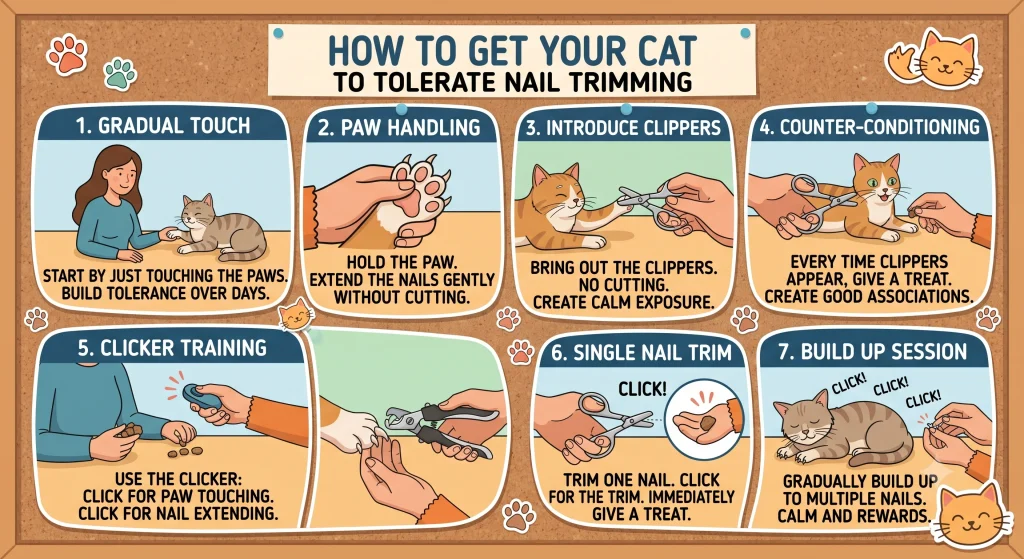
Desensitization is gradual exposure. Start by just touching the paws. Then hold the paw. Then extend the nails. Then bring out the clippers. Without cutting. Then cut one nail. Build up gradually. Over days. Or weeks. This teaches your cat. That trimming is not scary.
Counter-Conditioning
Counter-conditioning changes the emotional response. Pair trimming with something good. Like treats. Or play. Every time you touch the clippers. Give a treat. Every time you cut a nail. Give a treat. Your cat learns. Clippers equal treats. Good things happen.
Clicker Training
Clicker training works perfectly for nail trimming. Our clicker training guide covers this technique. Click for paw touching. Click for nail extending. Click for one nail trimmed. Build up gradually. The clicker provides precise. Positive feedback.
Professional Nail Trimming
If you cannot do it yourself. That is okay. Professional options exist.
- Veterinary clinic. Most vets offer nail trimming. Usually quick. And affordable. Some cats do better at the vet. With experienced handlers.
- Groomer. Professional groomers trim nails. They are experienced. And have the right tools. Some cats do better with groomers. Than with their owners.
- Mobile groomer. Comes to your house. Less stressful for your cat. No car ride. No strange environment. Just in-home trimming.
There is no shame in getting professional help. The important thing is that the nails get trimmed. Not who does it.
Expert Tips From My Practice

The most important thing I tell cat owners about nail trimming is this. Start young. And go slow. Kittens learn faster. But adult cats can learn too. The key is patience. And positive association. Every trim should end with a treat. Every touch should be gentle. Over time. Your cat will accept trimming. Even look forward to it.
- Trim regularly. Consistency is key. Regular trimming. Every two to three weeks. Keeps nails short. And makes each trim easier.
- Do one nail at a time. For beginners. Do one nail per day. Build up to all nails. Over a week. This is less stressful. For both of you.
- Use sharp clippers. Dull clippers crush the nail. Instead of cutting it. This is painful. Keep clippers sharp. Replace them regularly.
- Check dewclaws. Do not forget them. They grow the longest. Because they do not touch the ground. Check them every trim session.
- Make it routine. Trim at the same time. In the same place. With the same treats. Routine reduces anxiety. Because your cat knows what to expect.
- Stay calm. Your cat mirrors your energy. If you are stressed. They will be stressed. Take a deep breath. Stay calm. It helps.
- Use the towel wrap. For squirmy cats. A towel wrap. With one paw exposed. Works wonders. It prevents scratching. And calms the cat. Resources like our complete cat care books provide detailed grooming techniques for every cat.
FAQ
How often should I trim my cat’s nails?
Most cats need trimming every two to three weeks. Indoor cats may need more frequent trimming. Because they do not wear down naturally. Check weekly. When tips start to curve. Or you hear clicking on floors. It is time.
Can I trim my cat’s nails at home?
Yes. With the right tools. And technique. Home trimming is easy. Get cat nail clippers. Learn to find the quick. Go slowly. Use treats. Most cats can be trained to tolerate. Even accept home trimming.
What happens if I cut the quick?
The quick contains blood vessels. Cutting it causes pain. And bleeding. Apply styptic powder. Or cornstarch. To stop the bleeding. It heals quickly. But it hurts. Avoid the quick by cutting small amounts. At a time.
My cat hates nail trimming. What do I do?
Desensitize gradually. Start by touching paws. Then extend nails. Then clip one nail. Reward with treats. Build up over days. Use counter-conditioning. Pair trimming with good things. If it is too stressful. Get professional help.
Do indoor cats need nail trims?
Yes. Indoor cats need trims more than outdoor cats. Because they do not wear down naturally. Outdoor cats scratch trees. And rough surfaces. Which wears nails down. Indoor cats need manual trimming.
How do I trim my cat’s back claws?
Back claws are harder. Because cats kick. Try the towel wrap method. Wrap the cat. Leave one paw exposed. Trim. Then unwrap. Or use the two-person method. One holds. One trims.
Should I trim my cat’s dewclaws?
Yes. Dewclaws need trimming. They do not touch the ground. So they do not wear down. They can grow into the paw pad. If left too long. Check them every trim session.
What tools do I need to trim cat nails?
Cat nail clippers. Scissor-style or guillotine-style. Styptic powder. In case of accidents. Treats. For rewarding. Some cats prefer nail grinders. Try both. See what your cat tolerates.
Can I use human nail clippers?
Human clippers work in a pinch. But cat clippers are better. They are designed for cat nails. Sharper. More precise. And easier to control. Invest in proper cat clippers. For best results.
My cat’s nails are overgrown. What do I do?
If nails are overgrown. See your vet first. They may need professional trimming. To prevent injury. After the initial trim. Maintain regular trimming. Every two to three weeks. To prevent recurrence.
How do I know if my cat’s nails are too long?
Long nails click on hard floors. They curve visibly. They get stuck in carpet or fabric. They may grow into the paw pad. Check weekly. If you notice any of these. Trim immediately.
Is nail trimming painful for cats?
Proper trimming is not painful. It is like cutting your own nails. The quick is the only sensitive part. Avoid it. And your cat feels nothing. The key is cutting only the white tip. Never the pink area.