
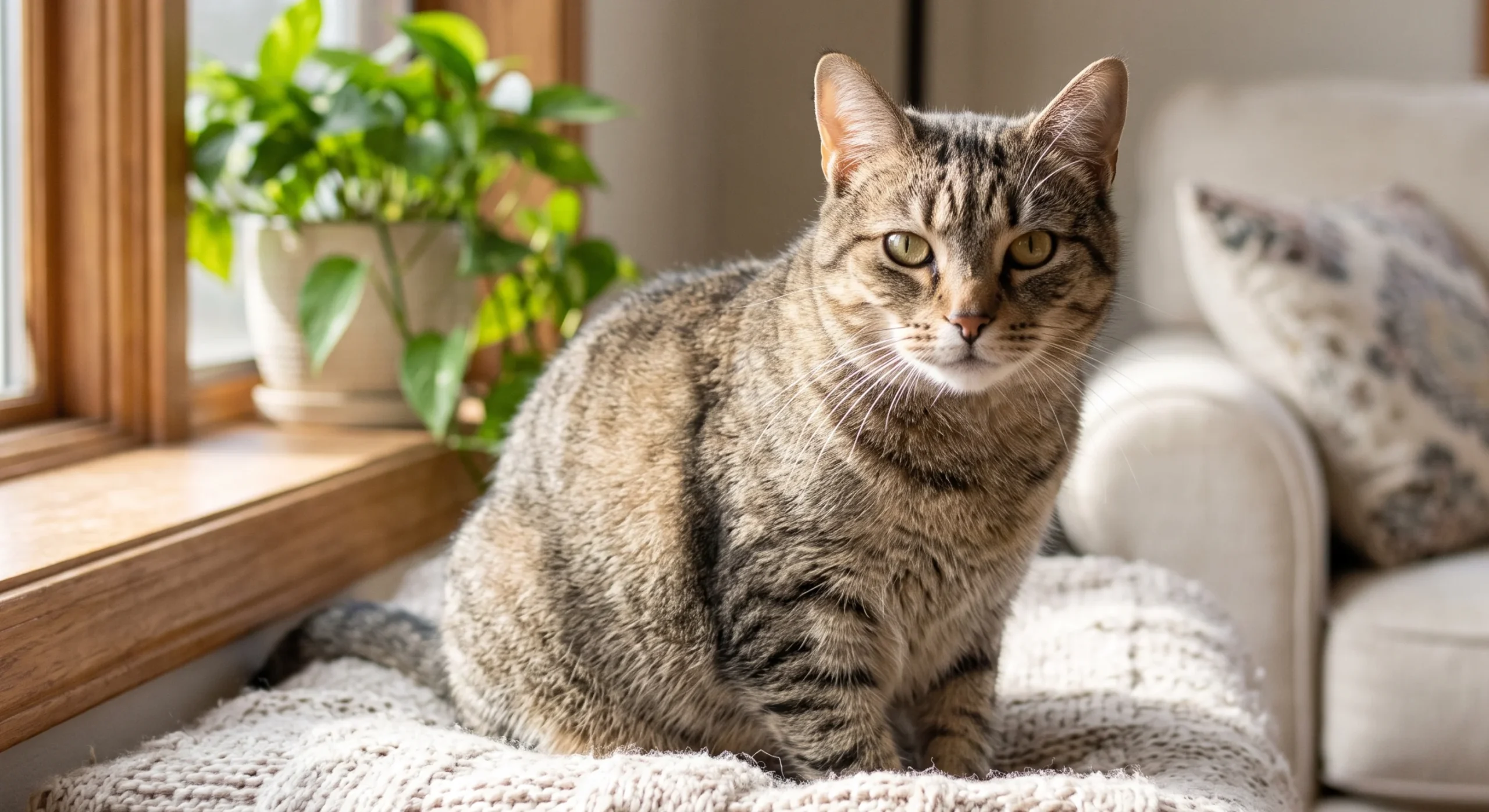

Table of Contents
Cat Kneading Meaning: Why Your Cat Makes Biscuits on You
Cat Kneading Meaning:
You are lying on the couch. Your cat jumps up. Plops down on your chest. And starts pushing their paws in and out. In and out. Against your body. Their claws might come out a little. They might drool. They might purr so loud you can feel it vibrating through your chest. And you are sitting there thinking. Why does my cat do this. What does it mean. Is it weird.
Not weird at all. In fact. It is one of the most normal things cats do. And once you understand why. You will actually feel honored. Because kneading is a compliment. A big one. Your cat is telling you something deeply personal. And most people have no idea what it means.
As a certified veterinary expert and professional cat behaviorist. I have studied kneading behavior for years. And I can tell you. This behavior is fascinating. It tells you so much about your cat. Their history. Their feelings. Their trust in you. Let me break it all down.
📚 Recommended Cat Guides
🐱 The Trainable Cat Book
Learn proven methods to train your cat and stop unwanted behaviors.
View Book →❤️ Complete Cat Care Manual
Your complete guide to cat nutrition, health, grooming, behavior, and daily care.
Get the Manual →What Is Cat Kneading
Kneading is when your cat pushes their front paws in and out against a soft surface. Alternating left and right. Like they are kneading dough. That is why people call it making biscuits. Or baking bread. The motion looks exactly like a baker working dough.
Cats use their front paws for kneading. They extend their claws on the down push. And retract them on the up push. This creates a rhythmic pushing motion. Some cats knead gently. Others knead hard enough to hurt. Some drool while kneading. Some purr. Some do both.
Kneading happens on soft surfaces. Blankets. Pillows. Your lap. Your chest. Other cats. Stuffed animals. Anything soft and comfortable. Some cats knead before settling down to sleep. Others knead while being petted. Others knead randomly throughout the day.
Why Do Cats Knead
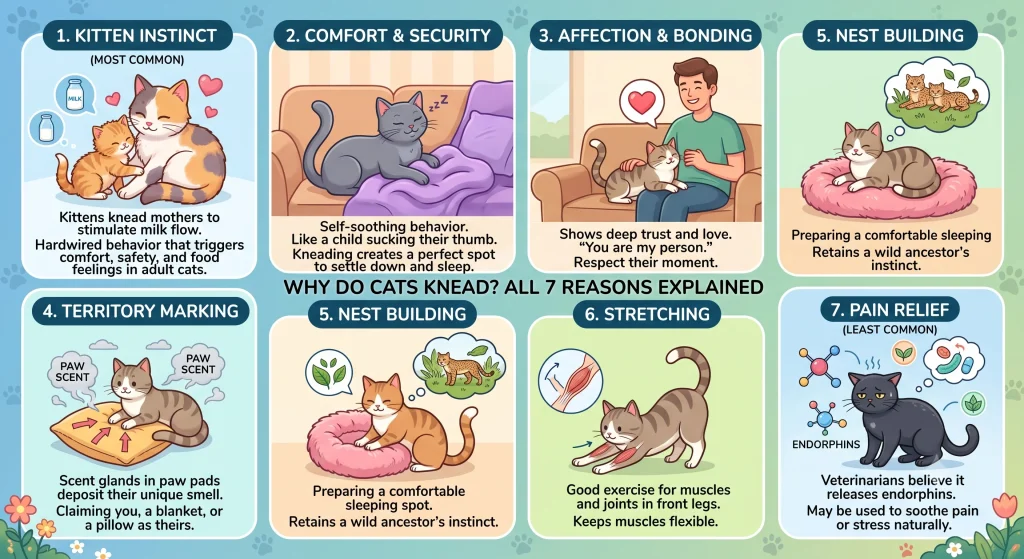
There are several reasons cats knead. And most cats knead for more than one reason. Here is every explanation. From the most common to the least.
1. Kitten Instinct
This is the most widely accepted explanation. Kittens knead their mother’s mammary glands to stimulate milk flow. This is hardwired into their brains from birth. It is one of the first behaviors kittens learn. Because it means food. Survival. Comfort.
When adult cats knead. They are reverting to this kitten behavior. It triggers feelings of safety. Comfort. And contentment. They are essentially returning to the emotional state of being a nursing kitten. Warm. Fed. Protected. Loved.
According to veterinary behaviorists. This instinct never fully goes away. Even adult cats who were weaned early still knead. The behavior is deeply embedded in their neural pathways.
2. Comfort and Security
Cats knead when they feel safe. It is a self-soothing behavior. Like a child sucking their thumb. When your cat kneads you. They are saying. I feel safe with you. You are my comfort place.
This is why cats knead before sleeping. They are creating a comfortable spot. Making the surface just right. Getting cozy. It is part of their settling down routine.
3. Affection and Bonding
Kneading is a sign of deep affection. When your cat kneads you specifically. They are showing you love. Trust. And connection. Your cat sees you as their person. Their safe harbor. Their source of comfort.
This is one of the highest compliments a cat can give. They do not knead just anyone. If your cat kneads on you. They trust you deeply. Respect that. Do not push them away. Let them have their moment.
4. Territory Marking
Cats have scent glands in their paw pads. When they knead. They deposit their scent on the surface. This marks the territory as theirs. Your cat is saying. This blanket is mine. This pillow is mine. This human is mine.
When your cat kneads you. They are marking you with their scent. Claiming you as theirs. This is possessive. But in a good way. Your cat wants you to smell like them. It makes them feel secure.
5. Nest Building
Wild cats knead grass and leaves to create a soft sleeping spot. Domestic cats retain this instinct. Even though they sleep on your expensive cat bed instead of a pile of leaves. Kneading is their way of preparing a comfortable resting place.
6. Stretching
Kneading provides a good stretch for the muscles and joints in the front legs. Cats who spend a lot of time sleeping benefit from kneading as a form of exercise. It keeps their muscles flexible. Their joints healthy.
7. Pain Relief
Some veterinarians believe kneading releases endorphins. Natural feel-good chemicals in the brain. This could explain why cats knead more when stressed. Or when in pain. Kneading might be their way of self-medicating. Naturally.
Why Do Cats Knead and Then Bite
This confuses a lot of cat owners. Your cat is kneading peacefully. Purring. Looking happy. Then suddenly they bite you. What happened.
Several possibilities. First. They might be overstimulated. Kneading builds up excitement. And that excitement can tip into overstimulation. The bite is their way of saying. I am done now.
Second. They might be transferring nursing behavior. Kittens knead their mother while nursing. And they sometimes nip at the nipple when the milk flow slows down. Your cat might be doing the same thing. It is not aggression. It is instinct.
Third. They might be playing. Some cats bite during kneading because they are in a playful mood. The kneading transitions into play. And play involves biting.
If your cat bites during kneading. Gently redirect them. Do not punish. Punishment ruins the bonding moment. And makes your cat afraid to knead in the future.
Why Do Cats Knead and Drool
Drooling during kneading is common. And it usually means your cat is extremely happy. Remember. Kneading comes from nursing. Kittens nurse and knead. And some milk drips. The drooling during adult kneading might be a leftover nursing reflex.
Some cats drool because they are so relaxed. Their muscles relax. Including the muscles that control their mouth. Drool happens. It is a sign of deep contentment.
If the drooling is excessive. Or happens at other times. Not just during kneading. See your vet. Excessive drooling can indicate dental problems. Nausea. Or other health issues.
Why Do Cats Knead Blankets
Cats love kneading blankets because blankets are soft. Warm. And remind them of their mother. A blanket provides the perfect texture for kneading. It yields under their paws. It holds their scent. It gets warm from their body heat.
Some cats are addicted to kneading specific blankets. They have a favorite. And they will not knead any other blanket. This is normal. It is about texture. Scent. And familiarity. Your cat has claimed that blanket as their kneading spot.
If your cat kneads blankets excessively. And it is causing damage. Provide a designated kneading blanket. An old. Thick. Durable blanket. Let them knead that one. And keep your good blankets away.
Why Do Cats Knead and Purr
Purring during kneading is the ultimate sign of contentment. Your cat is happy. Safe. Comfortable. And showing you love. The combination of kneading and purring means your cat is in their happy place.
When your cat kneads you and purrs. They are essentially hugging you. In cat language. This is the closest thing to I love you that a cat can express. Cherish these moments. They are special.
Why Do Cats Knead Before Lying Down
This is the nest-building instinct. Cats knead before settling down to create a comfortable spot. They are making the surface just right. Softening it. Warming it. Making it theirs.
In the wild. Cats knead grass and leaves to create a soft bed. Domestic cats do the same thing on your couch. Your bed. Your lap. It is preparation. Getting ready to rest.
This is why cats often knead for a few minutes. Then settle down and fall asleep. The kneading is the warm-up. Sleep is the goal.
When Do Cats Start Kneading
Cats start kneading as kittens. Usually within the first few weeks of life. Kittens knead their mother to get milk. This is when the behavior is learned and reinforced.
Most kittens continue kneading into adulthood. Some cats knead throughout their entire lives. Others stop as they get older. And some cats only knead during certain situations. Like when they are very relaxed. Or when they see a favorite blanket.
Do All Cats Knead
Most cats knead. But not all. Some cats never develop the behavior. Or they knead very rarely. This does not mean anything is wrong. Cats are individuals. Some knead. Some do not. Some knead a lot. Some knead a little.
Cats who were separated from their mothers very early might knead more. Because they did not get enough nursing time. The behavior was not fully satisfied during kittenhood. So they continue seeking it as adults.
Cats who were weaned gradually tend to knead less. Because their nursing needs were met during kittenhood. The behavior naturally faded.
Should I Stop My Cat from Kneading
No. You should not stop your cat from kneading. Kneading is a natural. Healthy. Positive behavior. It means your cat trusts you. Loves you. Feels safe with you. Stopping it would damage your bond.
If kneading hurts because of claws. There are solutions. Keep your cat’s nails trimmed. Place a thick blanket between you and your cat. Or redirect to a specific kneading pillow. But never punish. Never push them away. Never scold.
How to Make Kneading More Comfortable

If your cat kneads you and it hurts. Here are ways to make it better for both of you.
- Trim your cat’s nails regularly. This is the most effective solution. Short nails mean less poking. Trim every 2 weeks. Or have your vet do it.
- Use a thick blanket. Place a folded blanket on your lap before your cat kneads. This creates a buffer between claws and skin.
- Provide a kneading pillow. Give your cat a designated kneading surface. A soft. Durable pillow. They will learn to knead that instead of you.
- Wear long sleeves. Simple solution. Protect your arms with clothing.
- Redirect gently. If your cat kneads your chest. Gently move them to a nearby blanket. Do not push them off entirely. Just redirect the surface.
- Enjoy it. Honestly. Kneading is a sign of love. If it does not hurt too much. Let your cat have their moment. It means the world to them.
Expert Tips From My Practice

Here is what I have learned about kneading from years of working with cats.
The most important thing I tell cat owners about kneading is this. Never punish it. Never stop it. Never make your cat feel bad for kneading. It is one of the most positive behaviors a cat can show. When your cat kneads you. They are saying you are their person. Their safe place. Their home. That is a gift. Treat it like one.
- Respect the kneading moment. When your cat is kneading. They are in their happy zone. Do not interrupt. Do not distract. Let them enjoy it.
- Use kneading as bonding. When your cat kneads you. Talk softly. Pet them gently. This strengthens your bond. Your cat learns that kneading with you is safe. And wonderful.
- Watch for overstimulation. Some cats get overstimulated during kneading. If they start swishing their tail. Or their ears go back. Gently stop the interaction. Before they bite.
- Provide kneading surfaces. Give your cat soft. Cozy spots to knead. Cat beds. Blankets. Pillows. The more kneading surfaces. The less they knead your furniture.
- Do not declaw to stop kneading. Never. Declawing is cruel. And does not solve kneading. It just removes the claws. The behavior continues. But your cat is in pain. Keep claws. Trim them instead.
- Celebrate the behavior. Your cat kneading you is a sign of a healthy relationship. Many cat owners never experience this. If your cat kneads you. You are doing something right.
FAQ
What does it mean when a cat kneads you?
When a cat kneads you. It means they trust you. Love you. And feel safe with you. Kneading is a kitten behavior that comes from nursing. Adult cats knead when they feel content and secure. If your cat kneads you. It is one of the highest compliments they can give.
Why does my cat knead and purr at the same time?
Kneading and purring together means your cat is extremely happy and content. This is the ultimate sign of comfort. Your cat feels safe. Loved. And at peace. The combination means they are in their happy place. Cherish these moments.
Why does my cat knead and drool?
Drooling during kneading usually means your cat is extremely happy. It may be a leftover nursing reflex. Or just extreme relaxation. If drooling only happens during kneading. It is normal. If it happens at other times. See your vet.
Why does my cat knead and then bite me?
This is usually overstimulation. Kneading builds excitement. And that excitement can tip into biting. It can also be a nursing reflex. Kittens nip while nursing. Or your cat might just be transitioning to play. Gently redirect if they bite.
Why does my cat knead blankets but not me?
Your cat may prefer the texture of blankets. Or they may feel more comfortable kneading an object than a person. Some cats are less social kneaders. They prefer to knead alone. This is normal. Not a rejection of you.
Do all cats knead?
Most cats knead. But not all. Some cats never develop the behavior. Or knead very rarely. This does not mean anything is wrong. Cats are individuals. Some knead a lot. Some knead a little. Some never knead at all.
Why does my cat knead before lying down?
This is the nest-building instinct. Cats knead to create a soft comfortable spot. It is preparation for sleep. They are making the surface just right. Warming it. Softening it. Making it theirs. This is normal bedtime behavior.
Should I let my cat knead me?
Yes. Let your cat knead you. It is a sign of love and trust. If it hurts because of claws. Trim their nails. Use a thick blanket. But never stop the behavior. Kneading is positive. Let your cat express their affection.
Why does my cat only knead one person?
Cats often knead the person they feel most bonded with. If your cat kneads you and not your partner. They trust you more. Or feel more comfortable with you. This is a compliment. Not a problem.
Is kneading a sign of anxiety?
Kneading is usually a sign of contentment. But cats sometimes knead when anxious as a self-soothing behavior. If your cat kneads excessively. Or seems stressed while kneading. Consider whether something in their environment is causing anxiety.
Why does my cat knead me and then fall asleep?
This is the complete comfort cycle. Kneading creates comfort. Comfort leads to sleep. Your cat kneads to settle down. Then falls asleep because they feel safe. This is normal. And adorable.
Can I train my cat to stop kneading?
You could discourage kneading. But you should not. Kneading is natural. Positive. And a sign of trust. If kneading hurts. Address the cause. Trim nails. Use blankets. Do not punish the behavior.
Why do cats knead with their claws out?
Cats extend their claws on the down push during kneading. This is normal. It comes from the nursing instinct. Kittens extend claws to stimulate milk flow. Adult cats do the same thing. It is instinctive. Not intentional scratching.