

Table of Contents
How Much Should I Feed My Cat? The Honest Answer Nobody Gives You
Look. I have been a vet for almost two decades. And the number one question I hear in my office. Every single day. Without fail. Is how much should I feed my cat. It sounds simple. It is not. And the bag instructions are wrong more often than people realize.
Here is the thing nobody tells you. Feeding your cat is not just about dumping food in a bowl and walking away. I know. I know. You are busy. You have things to do. But your cat depends on you for everything. Including getting the right amount of food. Too much and they get fat. Too little and they get sick. Neither is what you want.
So let me just lay it all out. No fluff. No fancy words. Just straight talk about how much to feed your cat.
📚 Recommended Cat Guides
🐱 The Trainable Cat Book
Learn proven methods to train your cat and stop unwanted behaviors.
View Book →❤️ Complete Cat Care Manual
Your complete guide to cat nutrition, health, grooming, behavior, and daily care.
Get the Manual →The Short Answer
Most adult indoor cats need somewhere between 200 and 300 calories per day. That is it. That is the range. But it depends on a bunch of stuff. Like how big your cat is. How old they are. How active they are. And what kind of food you are giving them.
If your cat weighs around 10 pounds and does the typical cat thing of sleeping 16 hours a day and occasionally chasing a toy mouse, they probably need about 250 calories. Give or take. But again. It depends.
Why the Bag Instructions Are Usually Wrong
Let me tell you something that might tick you off. Those feeding guides on the back of cat food bags. They are often way off. And I mean way off.
Here is why. The feeding charts on pet food bags are based on the average cat. But your cat is not average. Nobody’s cat is average. Some cats are couch potatoes who sleep all day. Some cats run around like maniacs at 3 AM. Some cats are 7 pounds. Some are 18 pounds. The bag does not know your cat. It just gives you a rough estimate. And honestly. That estimate is usually too high. Why? Because pet food companies sell more food when you feed more. I am not saying they are evil. I am just saying. Keep that in mind.
Cat Feeding Amount by Weight
Here is a more accurate breakdown. Based on what I actually recommend to my clients. These numbers are for average adult indoor cats with moderate activity.
| Cat Weight | Daily Calories Needed | Dry Food Amount | Wet Food Amount | Combination |
|---|---|---|---|---|
| 5 pounds | 150-180 calories | 1/8 to 1/4 cup | 3-4 ounces | 2 oz wet + 1/8 cup dry |
| 8 pounds | 180-220 calories | 1/4 to 1/3 cup | 4-5 ounces | 3 oz wet + 1/8 cup dry |
| 10 pounds | 200-250 calories | 1/3 to 1/2 cup | 5-6 ounces | 3 oz wet + 1/4 cup dry |
| 12 pounds | 240-280 calories | 1/3 to 1/2 cup | 5-6 ounces | 3 oz wet + 1/4 cup dry |
| 15 pounds | 280-330 calories | 1/2 to 2/3 cup | 6-7 ounces | 4 oz wet + 1/4 cup dry |
| 18 pounds | 320-380 calories | 1/2 to 3/4 cup | 7-8 ounces | 4 oz wet + 1/3 cup dry |
These are starting points. Not gospel. If your cat is gaining weight. Feed less. If they are losing weight. Feed more. Watch your cat. Not just the numbers.
How Much to Feed a Kitten
Kittens are different. Way different. They are growing like weeds. Their little bodies need a ton of fuel. And they need it often.
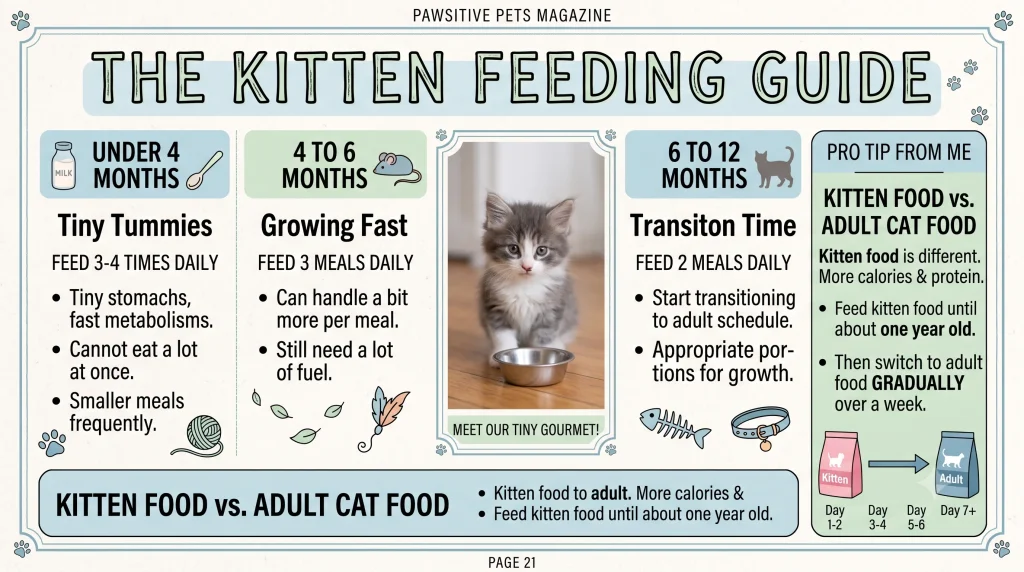
For kittens under four months. Feed them three to four times a day. They have tiny stomachs and fast metabolisms. They cannot eat a lot at once. So smaller meals more frequently is the way to go.
For kittens four to six months. Three meals a day works well. They are still growing but can handle a bit more per meal.
For kittens six to twelve months. Two meals a day is fine. Start transitioning them to an adult feeding schedule. But keep the portions appropriate for their growing bodies.
And here is a pro tip from me. Kitten food is different from adult cat food. It has more calories and protein. Feed your kitten kitten food until they are about one year old. Then switch to adult food gradually over a week.
How Much to Feed a Senior Cat
Older cats are tricky. Some lose weight because they are less active and eat less. Others gain weight because their metabolism slows way down. And some have health issues that change everything.
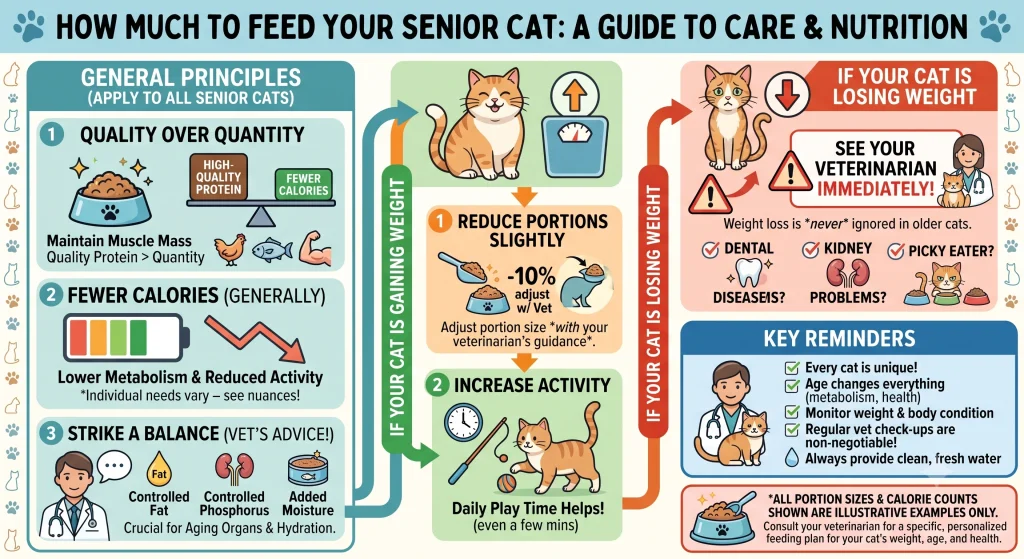
Generally. Senior cats need fewer calories than younger cats. But they need more protein to maintain muscle mass. This is where the quality of food matters more than the quantity.
If your senior cat is losing weight. Talk to your vet. It could be dental disease. Kidney problems. Or just a picky eater. But weight loss in older cats is never something to ignore.
If your senior cat is gaining weight. Reduce portions slightly and increase activity. Even a few minutes of play a day helps. Senior cats still need to move.
Wet Food vs Dry Food Portions
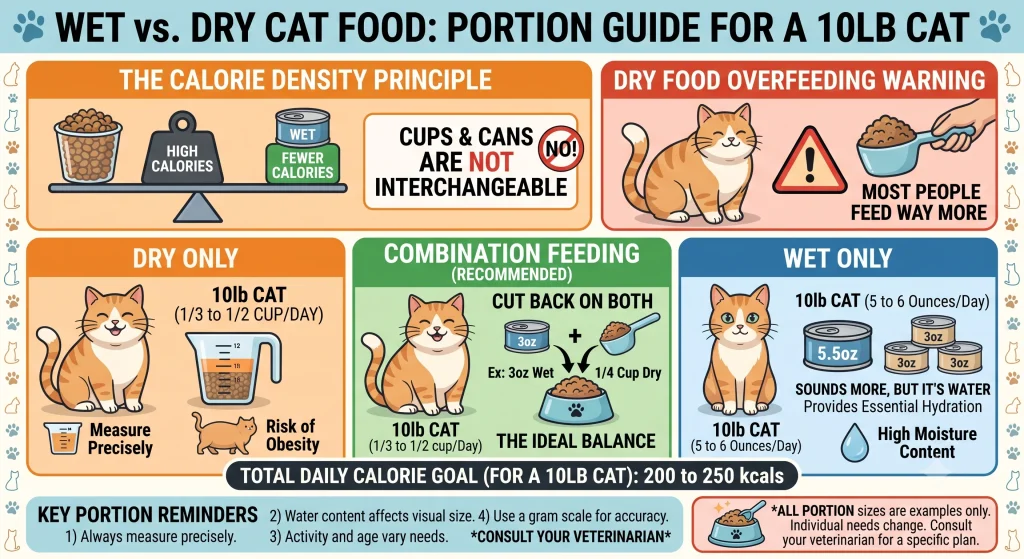
This trips people up. Because wet food and dry food have completely different calorie densities. A cup of dry food has way more calories than a can of wet food. So you cannot just interchange them.
Here is the deal. If you are feeding wet food only. Your cat needs about 5 to 6 ounces per day for a 10 pound cat. That is it. Sounds like a lot but wet food is mostly water. The actual calories are spread out.
If you are feeding dry food only. A 10 pound cat needs about 1/3 to 1/2 cup per day. That is it. Most people feed way more than this. And that is how cats get fat.
If you are doing a combination. Which I recommend. Cut back on both. Maybe 3 ounces of wet food plus 1/4 cup of dry. Total calories should still land in that 200 to 250 range for a 10 pound cat.
Free Feeding vs Scheduled Meals
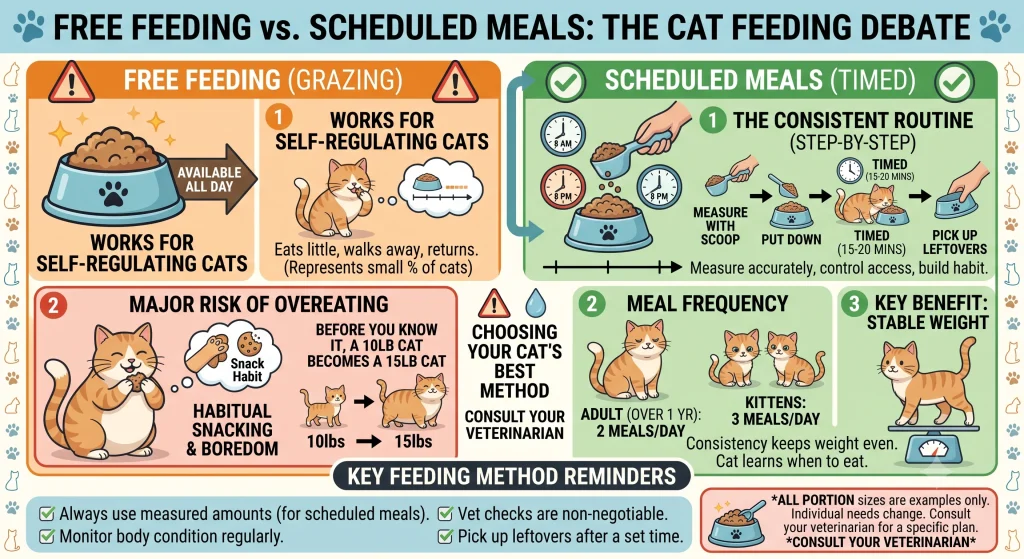
Okay. This is a big debate in the cat world. Free feeding means leaving food out all day. Your cat eats whenever they want. Scheduled meals mean you feed at specific times and pick up leftover food.
Here is my honest take. Free feeding works for some cats. The ones who naturally regulate their intake. They eat a little. Walk away. Come back later. No problem.
But most cats. And I mean most. Will overeat if food is always available. They get bored. They snack out of habit. And before you know it. Your 10 pound cat is a 15 pound cat.
Scheduled meals are better for most cats. Two meals a day for adults. Three for kittens. Measure the food. Put it down. Give them 15 to 20 minutes. Then pick it up. They will learn the routine. And their weight will stay more consistent.
The biggest mistake I see cat owners make is feeding on emotion instead of science. Your cat looks at you with those eyes and you want to give them more. I get it. But love is not measured in calories. Love is measured in keeping your cat healthy.
Signs You Are Overfeeding Your Cat
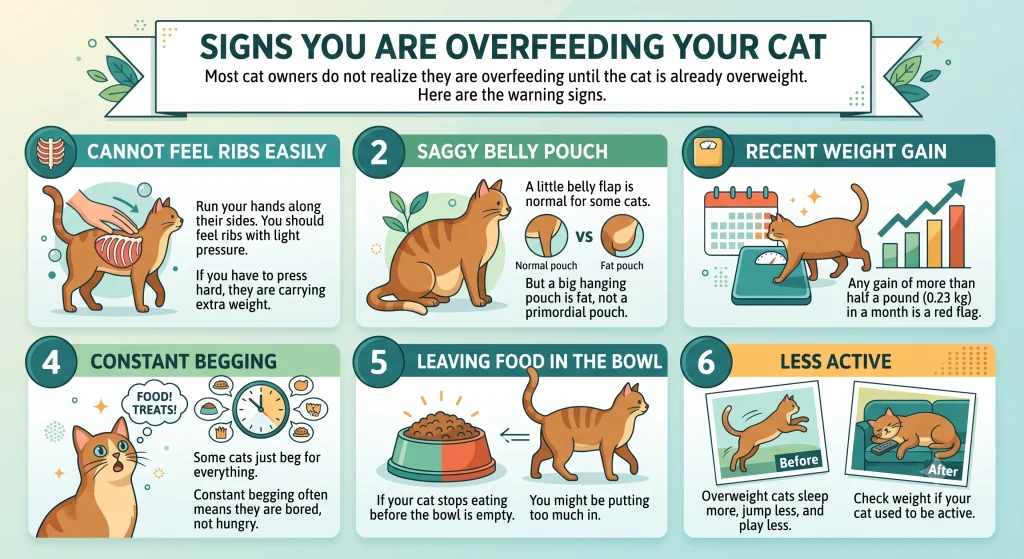
Most cat owners do not realize they are overfeeding until the cat is already overweight. Here are the warning signs.
- You cannot feel their ribs easily. Run your hands along their sides. You should feel ribs with light pressure. If you have to press hard. They are carrying extra weight.
- They have a saggy belly pouch. A little belly flap is normal for some cats. But a big hanging pouch is fat. Not a primordial pouch.
- They have gained weight recently. Weigh your cat monthly. Any gain of more than half a pound in a month is a red flag.
- They beg constantly. Some cats just beg. But constant begging often means they are bored. Not hungry.
- They leave food in the bowl. If your cat stops eating before the bowl is empty. You might be putting too much in.
- They are less active. Overweight cats sleep more. Jump less. Play less. If your cat used to be active and now they are a couch potato. Check their weight.
Signs You Are Underfeeding Your Cat
Underfeeding is less common but it happens. Especially with picky eaters or cats on weird diets.
- Visible ribs and spine. If you can see your cat’s bones. They are too thin.
- Low energy. Cats who do not get enough calories are lethargic. They sleep even more than usual cats.
- Poor coat condition. A dull. Matted coat often means nutritional deficiency.
- Constant hunger behavior. Your cat acts starving. Eats aggressively. And looks for food everywhere.
- Weight loss. Any unexplained weight loss needs a vet visit. Even if you think you are feeding enough.
How to Calculate Your Cat’s Exact Calorie Needs
Want to get precise? Here is the formula. It is a bit math-y but stick with me.
First. Calculate your cat’s resting energy requirement. That is RER. The formula is. 70 times your cat’s weight in kilograms raised to the 0.75 power. I know. Sounds complicated.
So for a 10 pound cat. That is about 4.5 kilograms. 70 times 4.5 raised to 0.75 power equals about 236 calories. That is the resting need. The bare minimum to stay alive.
Now multiply that by an activity factor. For an average indoor cat. Use 1.2. So 236 times 1.2 equals about 283 calories per day.
For a less active cat. Use 1.0 to 1.1. For a more active cat. Use 1.3 to 1.4. For a growing kitten. Use 2.0 to 2.5.
This is the most accurate way to figure out your cat’s needs. But honestly. If the math makes your head spin. Just use the chart I gave you earlier. It is close enough for most cats.
What to Do If Your Cat Is Overweight
If your cat is overweight. Do not panic. And do not suddenly slash their calories. That can cause health problems. Including a dangerous condition called hepatic lipidosis. Which is fancy talk for fatty liver disease. And it is serious.
Instead. Reduce calories gradually. Cut back by 10 to 15 percent. And increase activity. Play with your cat for 10 to 15 minutes a day. Use wand toys. Laser pointers. Anything that gets them moving.
Switch to a weight management food if needed. But only after talking to your vet. Some weight loss foods cut calories by reducing protein. Which is not what you want.
And be patient. Healthy weight loss in cats is slow. About 1 to 2 percent of body weight per week. That means your 15 pound cat should lose about 0.2 to 0.3 pounds per week. Not per day. Per week. It takes time.
Feeding Tips From My Practice
Here is what I actually tell my clients. The stuff that works in real life.
- Measure everything. Do not eyeball it. Use a measuring cup or kitchen scale. Every time. Eyeballing leads to overfeeding. Always.
- Count treats. Treats have calories. If you give five treats a day. That is 20 to 50 extra calories. Subtract that from their meal allowance.
- Use a slow feeder bowl. If your cat inhales their food. A slow feeder helps them eat at a natural pace. This prevents vomiting and overeating.
- Feed in a quiet spot. Cats eat better when they feel safe. Away from other pets. Away from loud noises. In a place where they can relax.
- Do not switch foods suddenly. Always transition over 7 to 10 days. Mix old and new food gradually. This prevents stomach upset.
- Check the calorie content. Not all cat foods are equal. Look at the calories per can or per cup. Compare brands. You might be surprised.
- Weigh your cat monthly. Keep a log. Track their weight over time. This is the best way to catch problems early.
- Talk to your vet. Every cat is different. Your vet knows your cat’s health history. They can give you personalized feeding advice that no chart can.
Feeding Schedule That Actually Works
Here is the schedule I use with my own cats. And recommend to most of my clients.
| Time | Meal | Amount (10 lb cat) | Notes |
|---|---|---|---|
| 7:00 AM | Morning meal | 3 oz wet food | Remove after 20 minutes |
| 12:00 PM | Midday snack | 1/8 cup dry food | Optional for scheduled feeding |
| 6:00 PM | Evening meal | 3 oz wet food | Remove after 20 minutes |
| 10:00 PM | Bedtime snack | 1/8 cup dry food | Optional for scheduled feeding |
This totals about 225 to 250 calories for a 10 pound adult cat. Adjust portions based on your cat’s response. If they are gaining weight. Cut the snacks. If they are losing weight. Add a bit more to meals.
Special Feeding Situations
Some cats need special feeding approaches. Here are the most common situations.
Pregnant and Nursing Cats
Pregnant cats need more food as the pregnancy progresses. In the last three weeks. They may need double their normal calories. Nursing cats need even more. Up to three times normal calories if they have a large litter. Feed them as much as they want. They know what they need.
Cats with Diabetes
Diabetic cats need consistent meal times. Usually twice a day. 12 hours apart. This配合配合配合胰岛素注射时间. Work with your vet on a specific feeding plan. Do not free feed diabetic cats.
Cats with Kidney Disease
Cats with kidney disease often need more calories but different protein levels. Your vet will recommend a prescription diet. Follow their feeding guidelines exactly.
Indoor vs Outdoor Cats
Outdoor cats burn more calories than indoor cats. If your cat goes outside. They may need 20 to 30 percent more food. But be careful. Outdoor cats also hunt. And they eat what they catch. Factor that into their intake.
Expert Tips From My Practice
Here is the stuff I have learned from feeding thousands of cats over my career.
The best feeding plan is the one you can stick with consistently. Perfection is not the goal. Consistency is. Feed the right amount most of the time. And your cat will be fine.
- Start good habits early. If you have a kitten. Establish a feeding routine from day one. Kittens who learn scheduled eating become adults who expect it. And that is easier to manage.
- Do not give in to begging. Your cat will beg. They are good at it. But begging does not mean hunger. It means they want food. There is a difference.
- Use food puzzles. They slow down eating. Provide mental stimulation. And make your cat work for their food. Which is how they would eat in the wild.
- Rotate proteins. Feed different flavors and brands. This prevents food sensitivities and keeps meals interesting.
- Read labels carefully. Some cat foods are basically junk food with a fancy label. Look for high protein. Low carbs. Named meat sources. And no artificial colors or flavors.
- Store food properly. Dry food goes stale. Keep it in an airtight container. Use it within six weeks of opening. Wet food should be refrigerated after opening and used within three days.
- Never feed table scraps. Most human food is not safe for cats. Onions. Garlic. Chocolate. Grapes. All toxic. Keep your cat on cat food. Period.
FAQ
How much should I feed my cat per day?
Most adult indoor cats need 200 to 300 calories per day. For a 10 pound cat. That is about 5 to 6 ounces of wet food. Or 1/3 to 1/2 cup of dry food. Or a combination of both. Adjust based on your cat’s weight. Activity level. And body condition.
How often should I feed my cat?
Adult cats do well with two meals a day. Morning and evening. Kittens under four months need three to four meals per day. Kittens four to six months need three meals. Kittens over six months can transition to two meals. Consistent timing helps regulate digestion.
Can I free feed my cat dry food?
Free feeding works for some cats who naturally regulate their intake. But most cats will overeat if food is always available. This leads to obesity. Scheduled meals with measured portions are better for most cats. Especially those prone to weight gain.
How much wet food should I feed my cat?
A 10 pound adult cat needs about 5 to 6 ounces of wet food per day. Split into two meals. That is 2.5 to 3 ounces per meal. Adjust based on the calorie content of the specific food. Always check the label for calories per can.
How much dry food should I feed my cat?
A 10 pound adult cat needs about 1/3 to 1/2 cup of dry food per day. Split into two meals. That is 1/6 to 1/4 cup per meal. Dry food is calorie dense. So small amounts go a long way. Measure carefully.
Is it better to feed cats wet or dry food?
Both have benefits. Wet food provides hydration and higher protein. Dry food offers convenience and cost savings. Most vets recommend a combination of both. This gives your cat the advantages of each. The best diet depends on your cat’s individual needs.
How do I know if my cat is the right weight?
You should be able to feel your cat’s ribs with light pressure. They should have a visible waist when viewed from above. And a slight tuck when viewed from the side. If you cannot feel their ribs. Or they have no waist. They are likely overweight. Your vet can assess body condition at annual checkups.
My cat always seems hungry. What should I do?
Cats are experts at looking hungry. Constant begging does not always mean they need more food. Try feeding smaller meals more often. Use food puzzles to slow eating. Make sure they are getting enough protein. Low protein diets increase hunger. If begging persists. Talk to your vet.
Should I feed my cat before or after I eat?
It does not matter as long as the timing is consistent. Many owners feed their cats at the same time they eat. This works well. Cats thrive on routine. Choose a schedule and stick to it every day.
What happens if I overfeed my cat?
Overfeeding leads to obesity. Which increases risk of diabetes. Heart disease. Joint problems. And shorter lifespan. Even a few extra calories per day add up over time. A 10 percent calorie excess leads to a pound of weight gain in about a year. Small overfeeding has big consequences.
How much should I feed a nursing mother cat?
Nursing cats need significantly more food. Up to two to three times their normal intake depending on litter size. Feed them as much as they want. They naturally increase their intake to meet demands. Make sure food is available at all times during nursing.
Can I feed my cat the same food every day?
Yes. As long as it is nutritionally complete and balanced. Cats do well on consistent diets. But rotating flavors and textures can prevent food boredom and reduce sensitivity risks. If you rotate. Do it gradually over one to two weeks.
How do I transition my cat to a new food?
Transition over 7 to 10 days. Start with 75 percent old food and 25 percent new food. Increase new food gradually. If your cat develops diarrhea or vomiting. Slow down the transition. Some cats need two full weeks to adjust.
Should I feed my cat grain-free food?
Grain-free does not automatically mean healthier. Some grain-free foods substitute high-carb ingredients like potatoes and peas. Focus on overall nutritional content. High protein. Low carbs. Named meat sources matter more than whether the food contains grains.
How do I know if my cat food is high quality?
Check the first ingredient. It should be a named meat. Like chicken. Turkey. Or salmon. Look for at least 30 percent protein on a dry matter basis. Avoid artificial colors. Flavors. And preservatives. Look for the AAFCO statement. And consult your vet for recommendations.